Why Social Exposure Is Essential for Puppies and How to Do It Right?
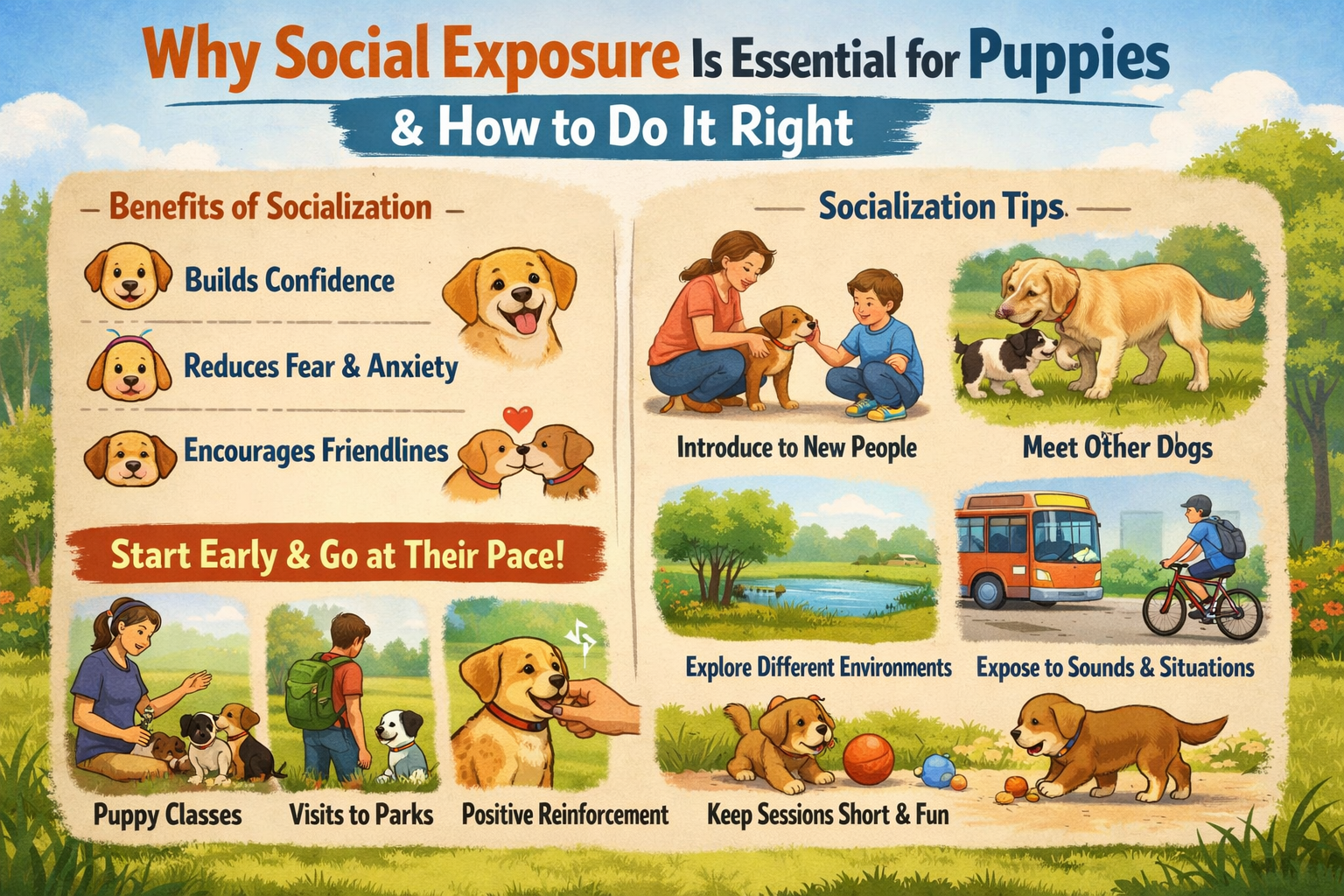
Social exposure plays a huge role in shaping how a puppy grows, learns, and interacts with the world. Those first few months are packed with learning moments that influence confidence, behavior, and emotional stability well into adulthood.
When done right, puppy socialization helps young dogs handle new people, places, sounds, and situations without fear or stress.
It teaches them how to communicate, build trust, and navigate everyday life with ease. For pet parents, understanding how and when to introduce these experiences is just as important as the exposure itself.
With the right guidance, your puppy becomes a well-adjusted, friendly companion who feels secure in a variety of environments.
Understanding Why Early Social Exposure Shapes Puppy Behavior
Early experiences influence how puppies react to the world around them.
Positive exposure builds confidence, reduces fear, and lays the foundation for stable behavior throughout adulthood, making social learning essential from the start.
- Builds Confidence in New Environments
Early exposure helps puppies feel safe around unfamiliar people, places, and sounds.
Consistent puppy socialization reduces hesitation, strengthens curiosity, and encourages calm behavior as they grow into confident, adaptable adult dogs.
- Prevents Fear-Based Behavior Later in Life
Puppies who experience variety early are less likely to develop anxiety or aggression.
Purposeful puppy socialization teaches them that new experiences are safe, making future transitions and challenges much easier to handle.
- Encourages Healthy Interactions With People and Pets
Early social learning teaches puppies how to read cues, communicate properly, and play gently.
These lessons build the foundation for friendly interactions, reducing conflicts and promoting lifelong positive relationships with humans and other animals.
Key Social Skills Every Puppy Should Learn
Puppies need a strong set of social skills to grow into confident, well-mannered dogs. These early lessons create smoother interactions, reduce fear, and help them thrive in busy homes and public spaces.
Handling and Touch Comfort
Teaching puppies to accept gentle handling, touching paws, ears, and tail, prepares them for grooming and vet visits.
This early comfort reduces stress and builds trust, shaping cooperative behavior throughout their adult lives.
Greeting People Politely
Puppies should learn calm, friendly greetings rather than jumping or barking.
Practicing controlled interactions helps them understand boundaries and improve their manners around guests, strangers, and children in everyday environments.
Playful Interactions With Other Dogs
Safe playtime with well-mannered dogs teaches bite control, body language reading, and social cues.
These early interactions build confidence and prevent rough or fearful behavior later in life as they mature.
Exposure to Different Environments
Introducing puppies to parks, sidewalks, car rides, and various indoor spaces helps them adapt confidently.
Gradual exposure ensures they feel secure and relaxed in diverse settings, reducing anxiety in future experiences.
Guided Learning Through Digital Tools
Using a puppy parenting app can help structure early lessons and track development.
It also offers helpful puppy socialization guidance, making it easier to teach skills consistently and support your puppy’s growth.
Safe and Effective Ways to Socialize Your Puppy
Socializing a puppy requires patience, planning, and safety. With the right methods, you can help your puppy explore the world confidently while protecting their health, emotional well-being, and long-term behavior.
Start With Low-Stress Introductions
Begin with calm, friendly people and controlled environments. Gentle exposure helps your puppy feel secure and prevents overwhelming experiences.
Positive reinforcement ensures each moment builds trust, confidence, and curiosity during early development.
Use Positive Rewards for New Experiences
Pairing new sights, sounds, and interactions with treats or praise helps puppies associate novelty with comfort.
This reward-based approach encourages relaxed behavior and reduces fear in unpredictable or unfamiliar situations.
Incorporate Safe Puppy Playdates
Small, supervised play sessions teach puppies valuable communication skills. Choose balanced, vaccinated dogs with gentle temperaments to ensure positive experiences.
These interactions improve social behavior and boost your puppy’s comfort around peers.
Introduce Real-World Sounds Gradually
Household noises, traffic, appliances, and public spaces can be intimidating. Gradual exposure, paired with calm reassurance, helps puppies adapt.
This reduces noise sensitivity and prevents fear-based reactions as they grow older.
Monitor Progress With Digital Support
Using a puppy community app
provides expert tips, shared experiences, and helpful puppy socialization reminders.
These resources guide safe introductions and keep your puppy’s learning experiences balanced and consistent during growth.
Common Puppy Socialization Mistakes and How to Avoid Them
Puppy socialization can go wrong when rushed or handled incorrectly. Understanding common mistakes helps you create safer, more positive learning experiences.
- Introducing Too Many Experiences Too Quickly
Overloading a puppy with nonstop new experiences can create stress and fear instead of confidence. Puppies need gradual exposure, not overwhelming situations that leave them anxious or unsure about their environment.
How to Avoid:
Start slow, introduce one new experience at a time, and watch your puppy’s body language. Build confidence gradually.
- Skipping Socialization Until They’re Older
Waiting too long to socialize a puppy increases the risk of fear-based behaviors later. Early experiences shape their reactions, confidence, and ability to adapt to everyday environments and interactions.
How to Avoid:
Begin socialization during the recommended early window—typically 8 to 16 weeks—using gentle, positive introductions.
- Forcing Interactions When Puppies Seem Scared
Pushing a frightened puppy to interact can worsen anxiety and lead to long-term distrust. Forced experiences make puppies feel unsafe and can damage their confidence around people and animals.
How to Avoid:
Let the puppy set the pace. Create distance, offer treats, and stop if they seem overwhelmed.
- Allowing Rough or Unsupervised Play
Uncontrolled play with overly energetic or rude dogs can frighten puppies. Poor early interactions may cause long-term fear, reactivity, or defensive behaviors around other dogs in the future.
How to Avoid:
Supervise all interactions. Choose calm, well-socialized dogs, and step in if play becomes too rough.
- Ignoring Exposure to Everyday Sounds and Objects
Puppies not exposed to normal sounds vacuums, traffic, and appliances, may become noise-sensitive. These fears often appear in adulthood and can be difficult to reverse fully.
How to Avoid:
Introduce sounds gradually at a low volume and pair them with treats and positive reinforcement.
Final Thoughts
Socializing your puppy the right way sets the foundation for a lifetime of confidence, good behavior, and emotional stability.
These early experiences shape how your dog views the world, how they interact with others, and how they respond to new challenges as they grow.
With patient guidance, gradual exposure, and positive reinforcement, you can help your puppy build strong social skills without overwhelming them.
Avoiding common mistakes and approaching each experience with intention makes a meaningful difference.
Remember, socialization isn’t about rushing; it’s about creating safe, positive moments that help your puppy feel secure.
When you invest in these early steps, you’re shaping a happier, friendlier, and more adaptable companion for years to come.