The Quantum Mirror: How Physics Rewrites Philosophy
For centuries, classical physics painted a comforting, predictable picture of the universe. It was a giant clockwork mechanism, operating according to deterministic laws—if you knew the position and velocity of every particle, you could theoretically map the entire future. Then came quantum mechanics, and with it, the collapse of our philosophical certainty.
Quantum theory doesn’t just challenge our understanding of subatomic particles; it demands a radical overhaul of metaphysics. At the heart of this disruption is the concept of superposition and the role of the observer. In the classical world, objects exist independently of us.
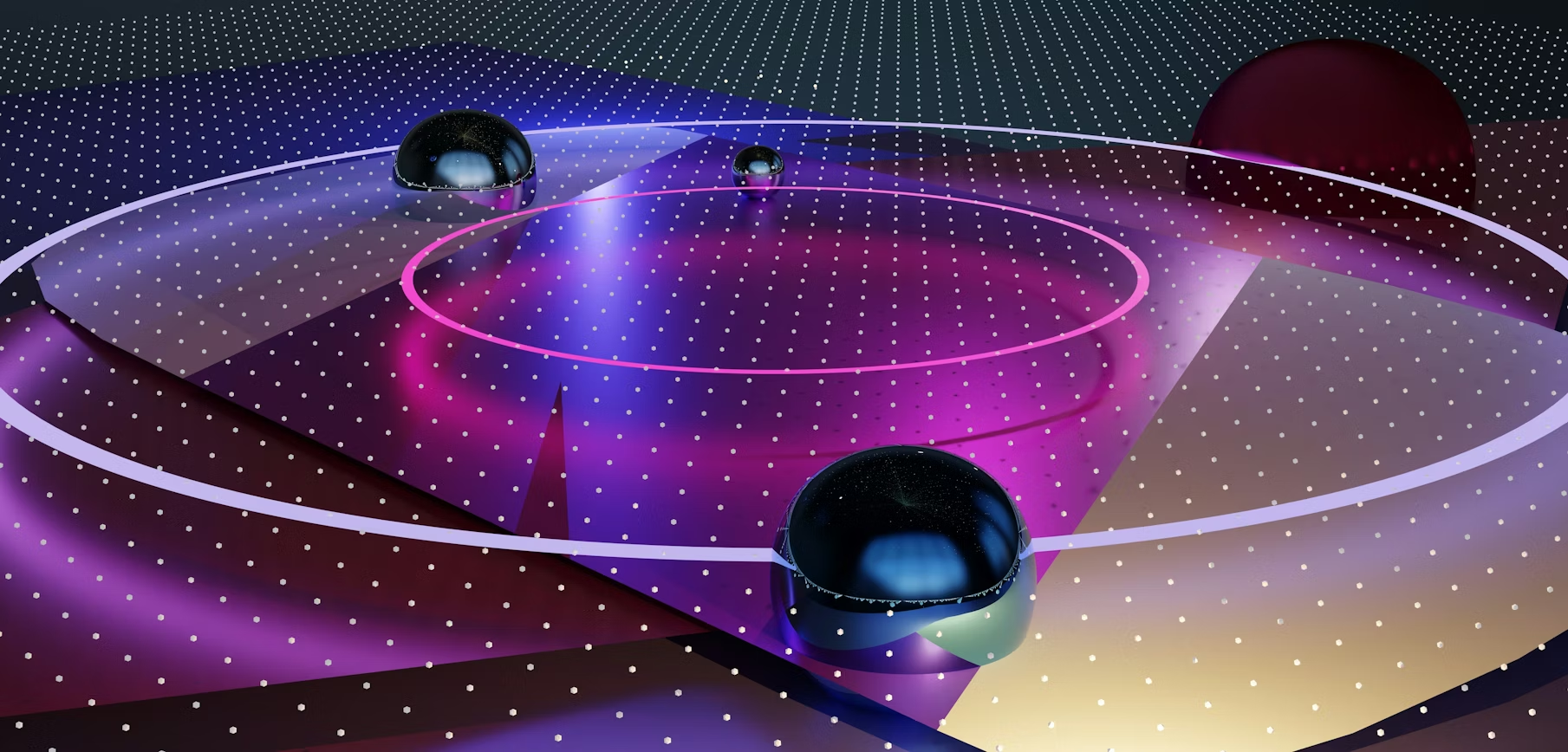
In the quantum realm, the act of measurement appears to "collapse" a wave of possibilities into a single reality. This forces us to confront an uncomfortable question: Is there an objective reality independent of our observation, or is the universe participatory?
Furthermore, quantum entanglement—what Einstein skeptically dubbed "spooky action at a distance"—upends our traditional notions of locality and causality.
If two particles can remain connected across vast expanses of space, instantaneously influencing one another, our linear, cause-and-effect view of the world begins to fray.
This challenges the reductionist philosophy that suggests the whole is merely the sum of its parts. Quantum mechanics suggests that the universe is fundamentally holistic, interconnected in ways that defy classical spatial constraints.
These implications ripple into the philosophy of mind as well. Some theorists propose that if the fundamental fabric of reality is probabilistic rather than deterministic, there may be physical room for phenomena like free will.
Others argue that the enigma of consciousness is linked intrinsically to the wave-function collapse.
Ultimately, quantum mechanics serves as a humbling reminder that our intuition is not the measure of truth. By stripping away our illusions of a solid, independent, and deterministic world, quantum physics invites philosophy to step out of the clockwork era and into a deeper, more mysterious dialogue with reality.