Krishnachura Flower: The Fiery Poetry of Summer
The Krishnachura flower is one of those rare natural sights that feels almost painted into the landscape rather than grown from it. When it blooms, the tree seems to catch fire without burning, filling streets, fields, and schoolyards with a blaze of red-orange brilliance. In South Asia, especially during late spring and early summer, its presence becomes a familiar yet always striking part of the season’s emotional rhythm.
There is something unforgettable about the way Krishnachura flowers spread across the branches like flames held in suspension. From a distance, the tree looks alive with movement even when the air is still. Its blossoms do not feel delicate in a fragile sense; instead, they carry a boldness that seems to announce the fullness of life itself—unapologetic, wide, and glowing against the sky.
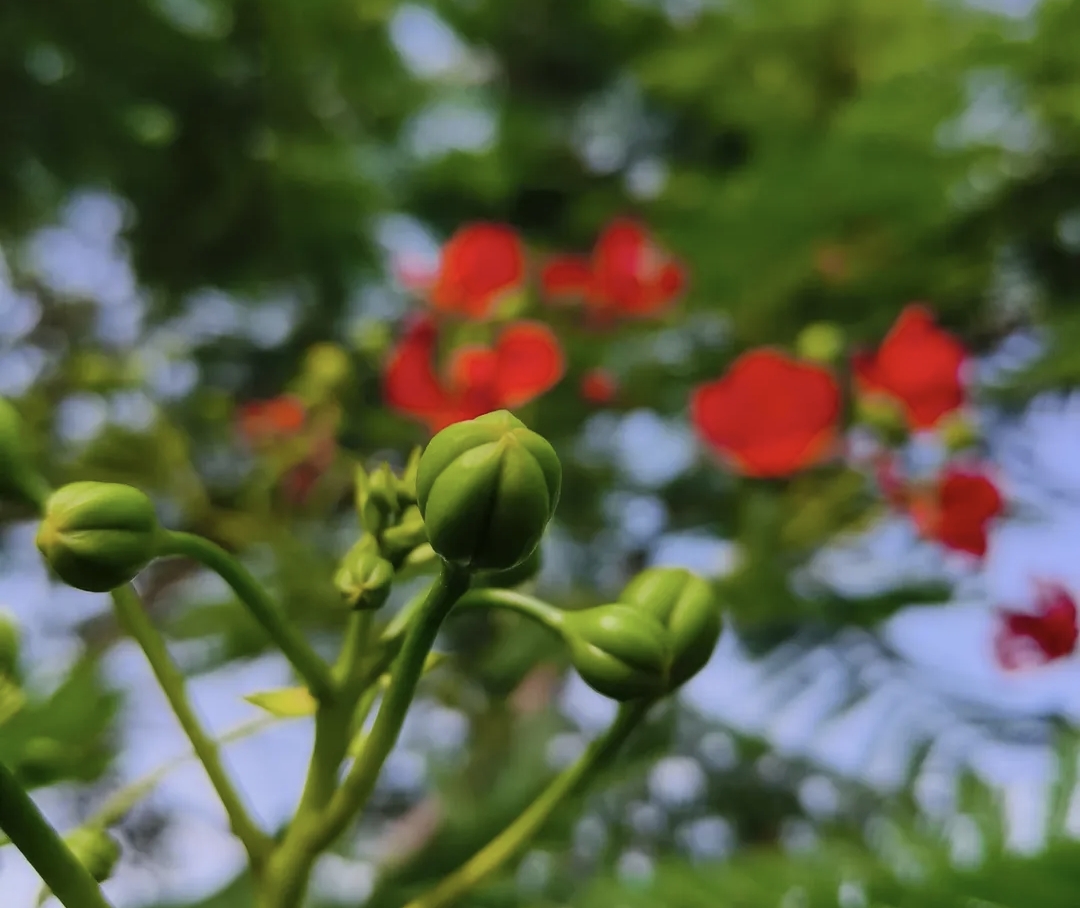
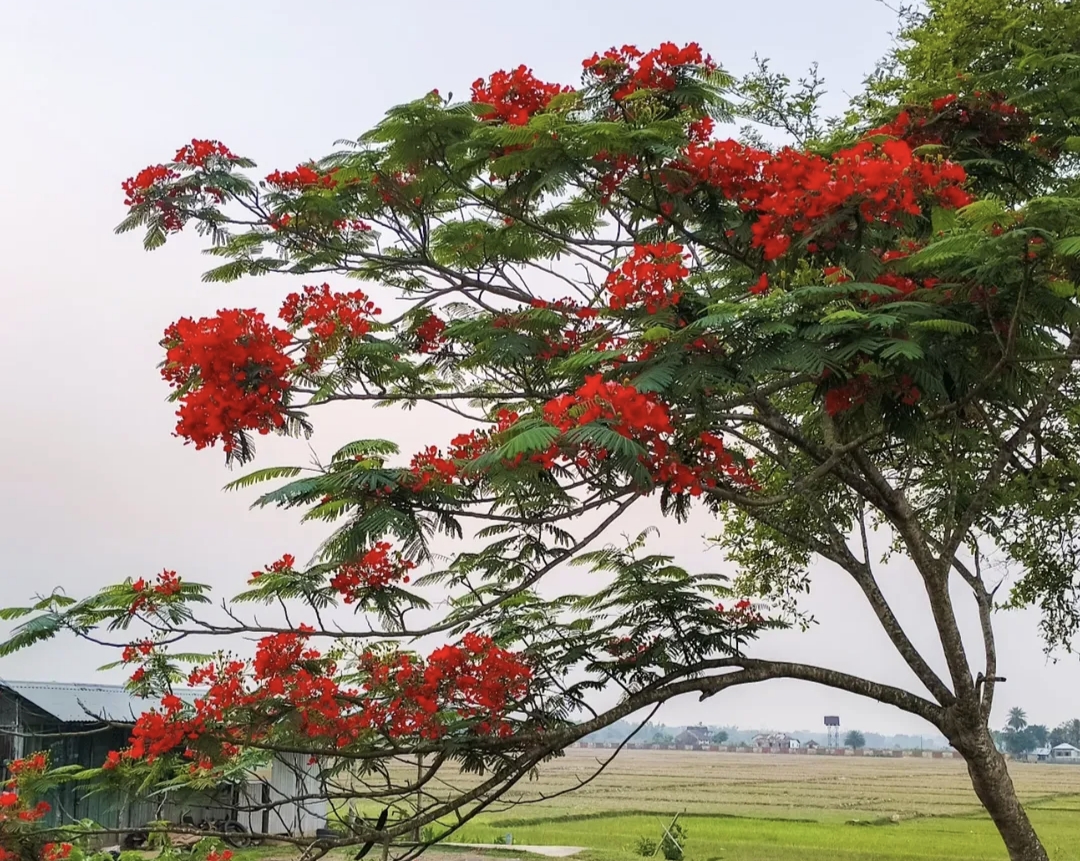
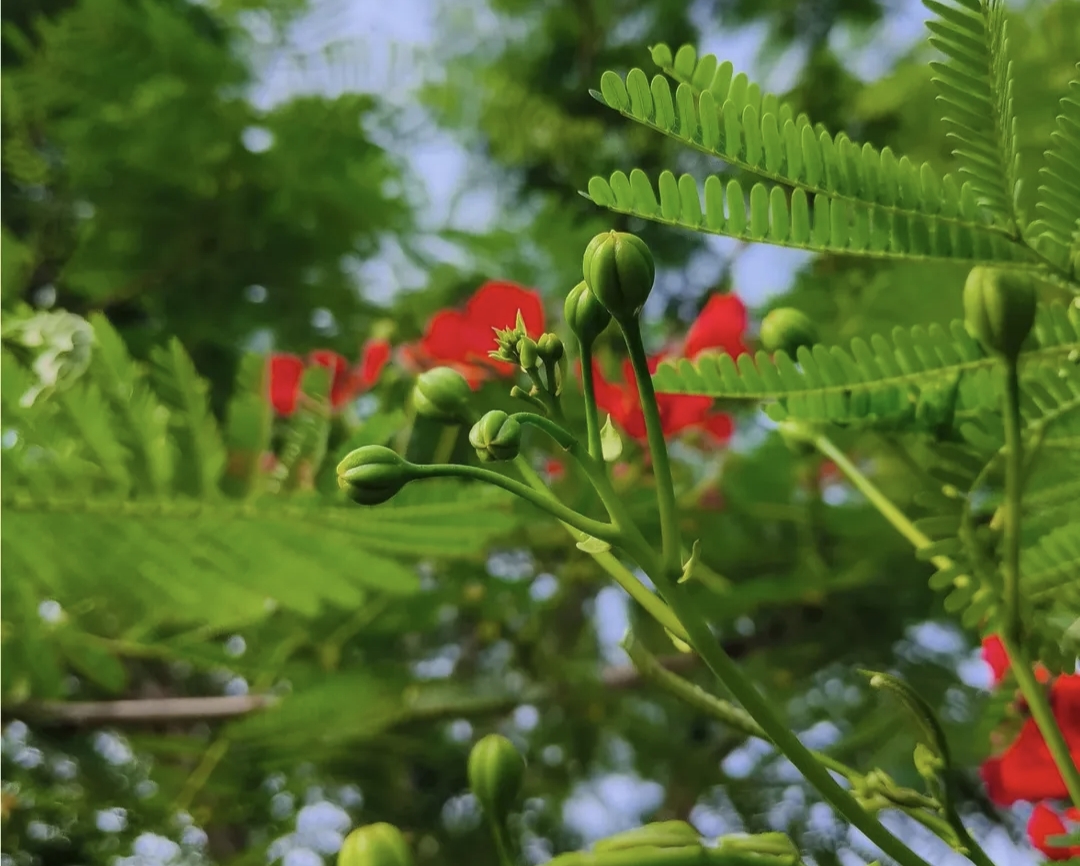
For many people, the Krishnachura tree is tied to memory more than description. It often stands near schools, roadsides, and open fields, quietly marking the passage of time. Children grow under its shade, seasons change around it, and yet it returns every year with the same intensity. That reliability makes it feel less like a plant and more like a companion to human life, witnessing moments that are easily forgotten but deeply felt.
Even when petals fall, the ground beneath the tree transforms into a soft red carpet, as if nature is offering a gentle farewell to its own display. There is a quiet contrast in this—between the boldness of the bloom above and the calm carpet below. It is in this balance that the Krishnachura reveals its deeper character: not just beauty, but rhythm, return, and release.