Peacock Flower: The Flame of Tropical Gardens
The Peacock flower, scientifically known as Caesalpinia pulcherrima, is one of nature’s most dramatic creations. With its fiery shades of red, orange, and yellow, the flower looks like a tiny burst of sunlight dancing among green leaves. Its long, graceful stamens stretch outward like delicate feathers, which is why many people compare it to the beauty of a peacock’s tail. In tropical gardens, this flower does not simply bloom—it performs, turning ordinary spaces into vibrant scenes filled with life and energy.
What makes the Peacock flower truly special is its fearless personality. Even under intense heat and bright sunlight, the plant continues to flourish with confidence. In many warm regions around the world, it grows beside roads, fences, and village homes, bringing color to places that might otherwise seem plain. Its resilience reminds us that beauty often survives in difficult conditions. The Peacock flower teaches a quiet lesson about standing strong while still remaining graceful.
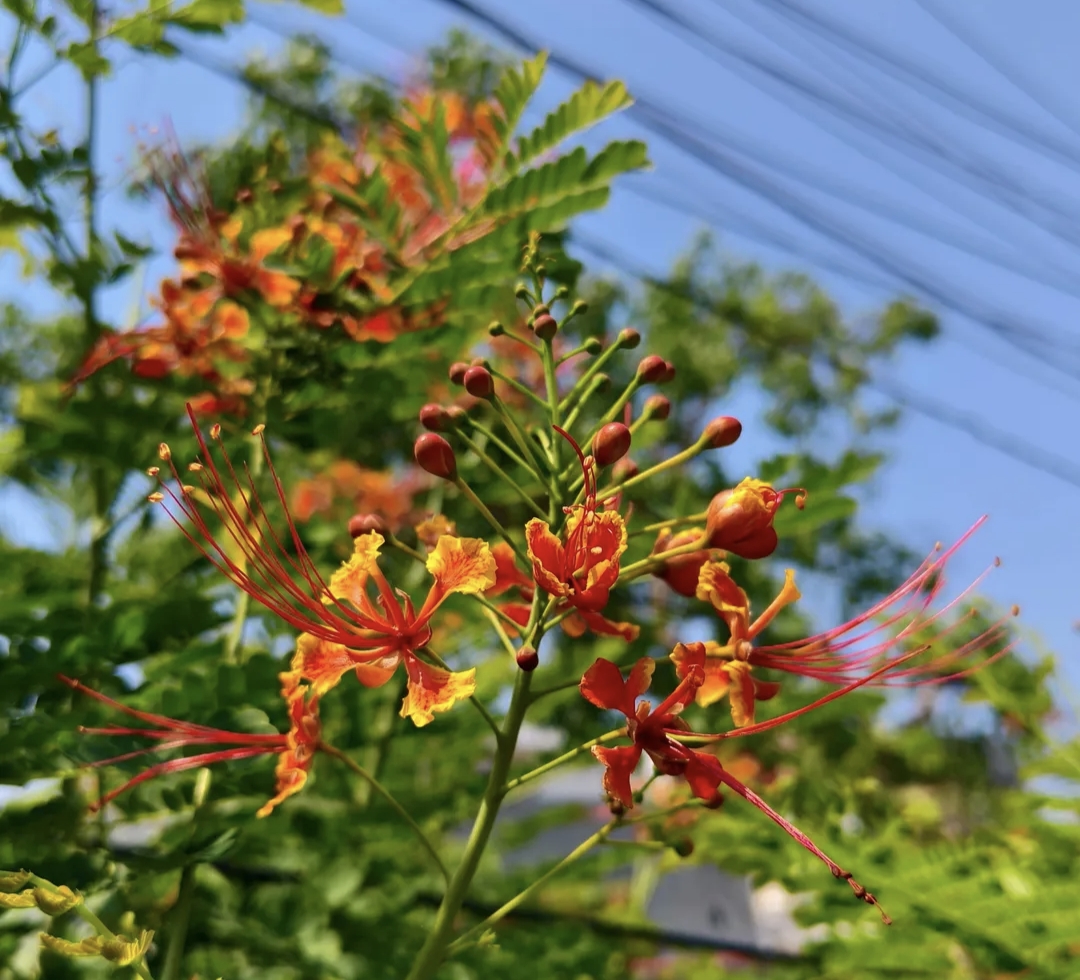
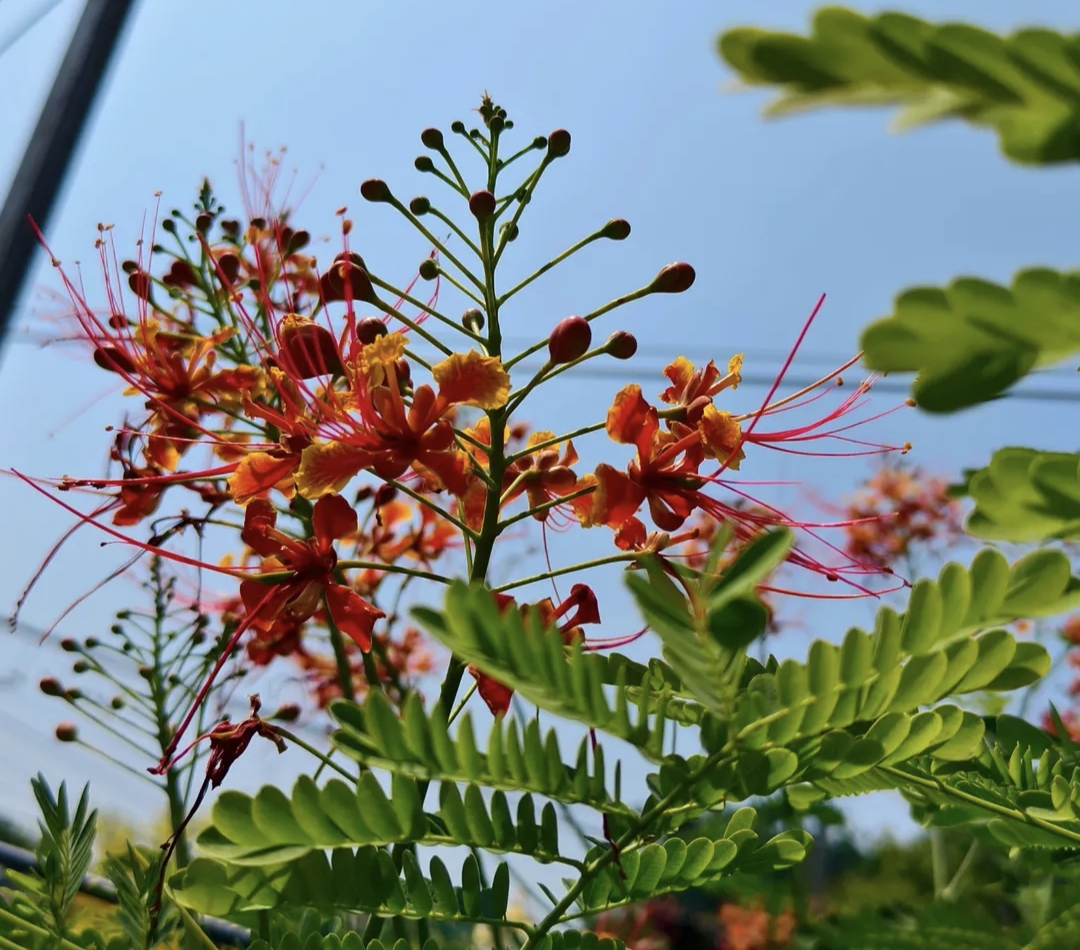
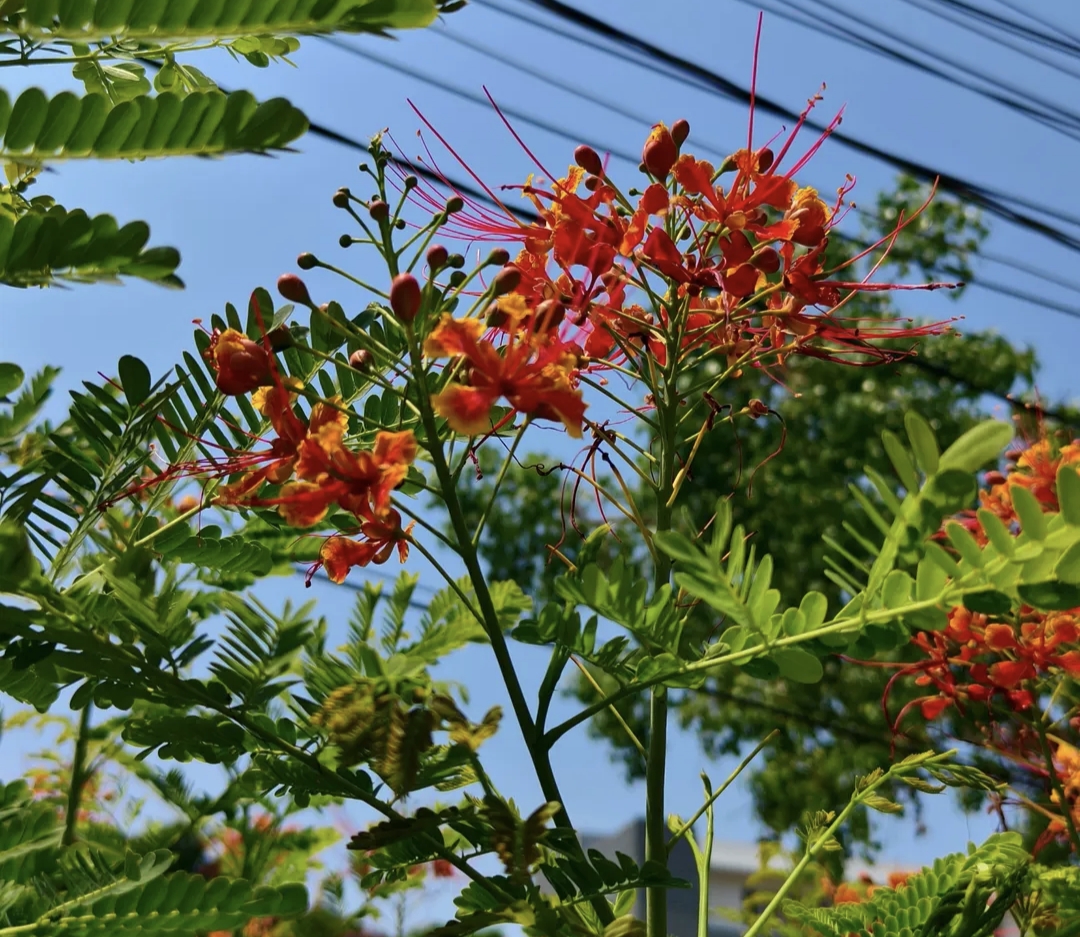
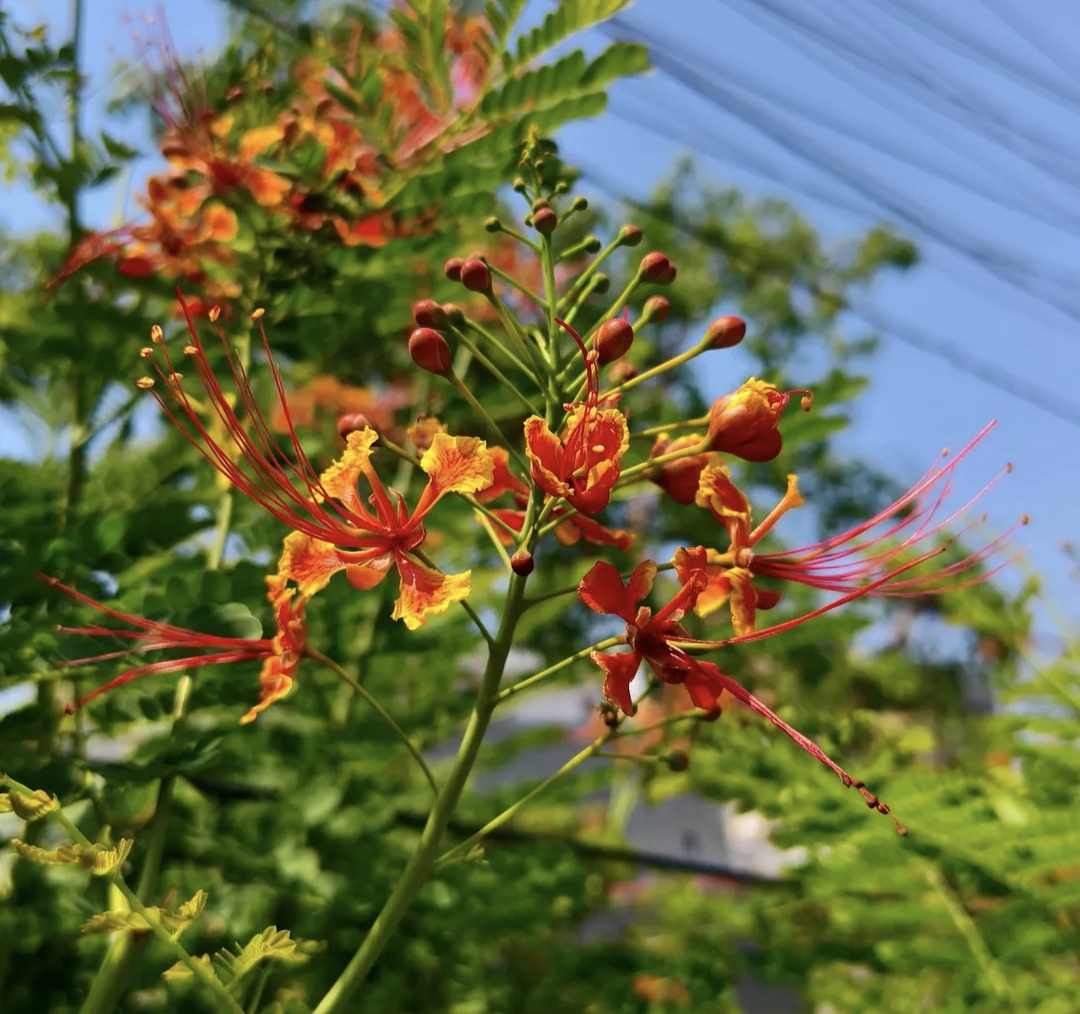
Beyond its appearance, the flower also creates a lively connection with nature. Butterflies and bees are naturally drawn to its bright petals, making the plant an important part of the garden ecosystem. When the flowers sway gently in the breeze, they seem to invite every passing creature to pause for a moment. Watching these colorful blooms alongside fluttering butterflies creates a peaceful scene that feels almost magical, especially during the calm light of early morning or sunset.
In many cultures, the Peacock flower symbolizes pride, joy, and celebration. Its vibrant colors carry a sense of happiness that instantly lifts the spirit. People often plant it near homes not only for decoration but also because it brings warmth and positivity to the surroundings. The flower’s lively appearance feels like a celebration of life itself, reminding us to embrace our own brightness and uniqueness without fear.