Spotted Owlet Bird
The Spotted Owlet is a small, charming bird that captures attention with its bright yellow eyes, rounded head, and mottled plumage. Found widely across the Indian subcontinent and parts of Southeast Asia, this little owl is a common yet fascinating resident of both urban and rural landscapes. Despite its modest size, it plays an important role in maintaining ecological balance, and its nocturnal calls have made it a familiar presence in many villages and towns.
Physical Appearance
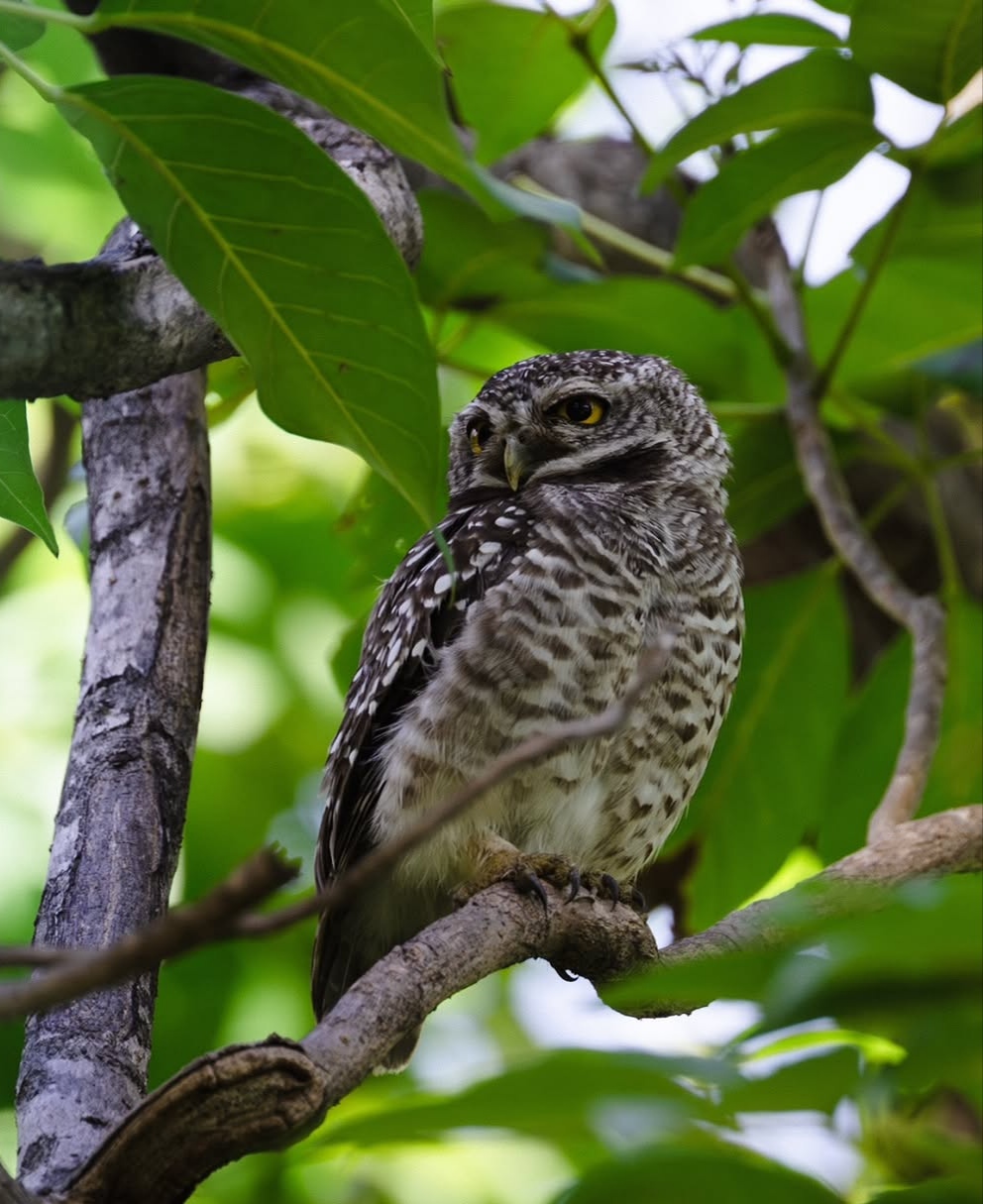
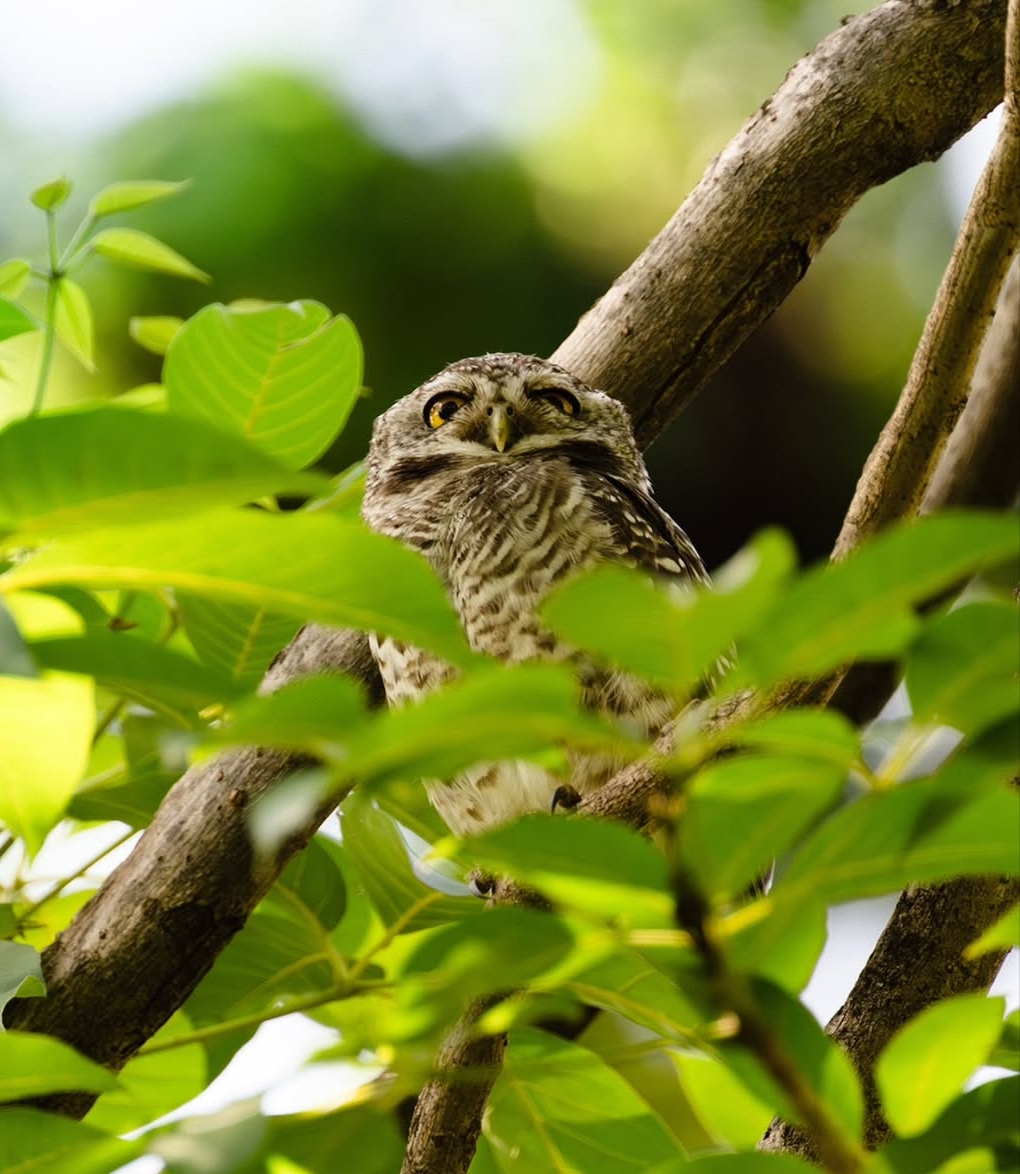
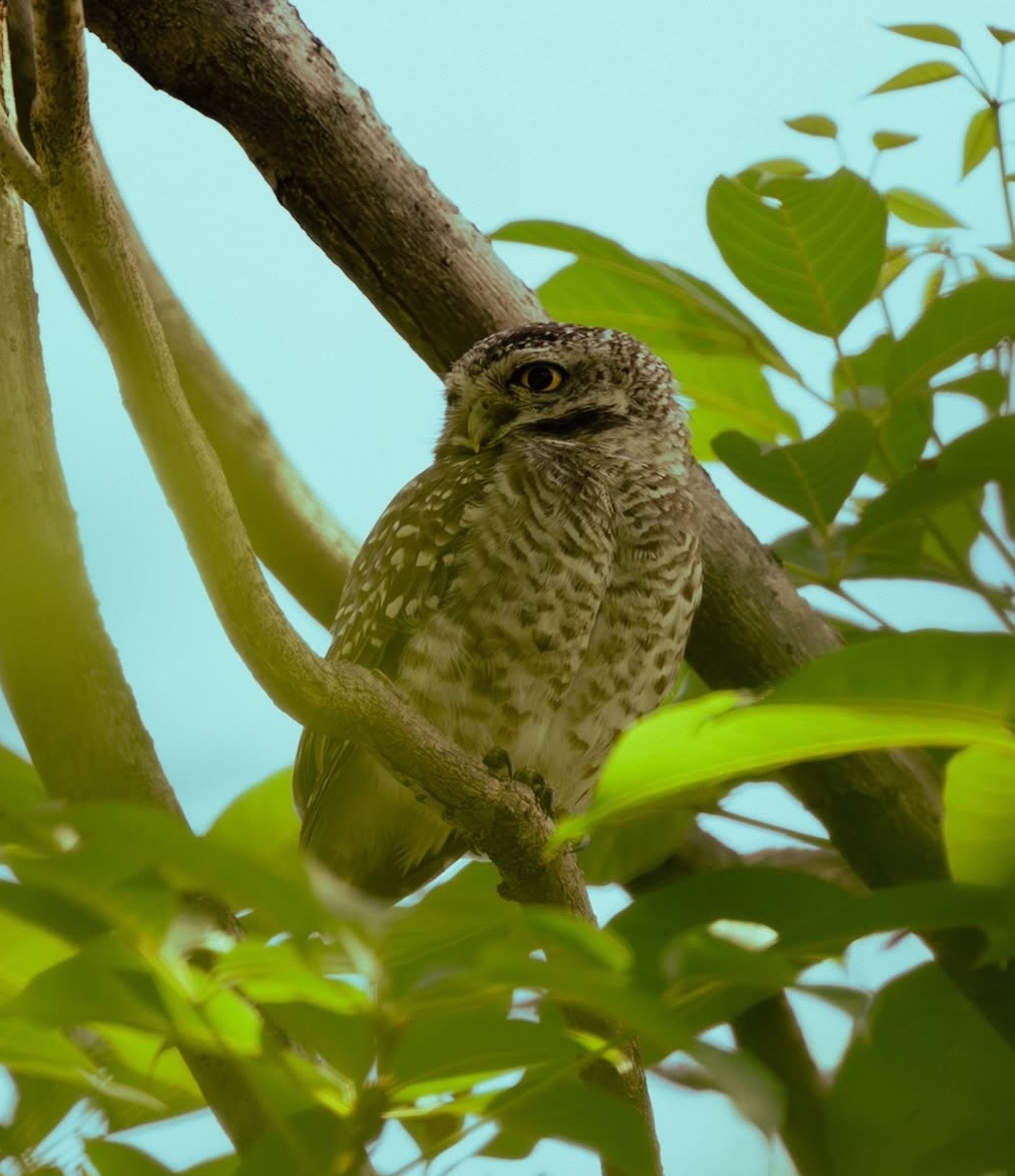
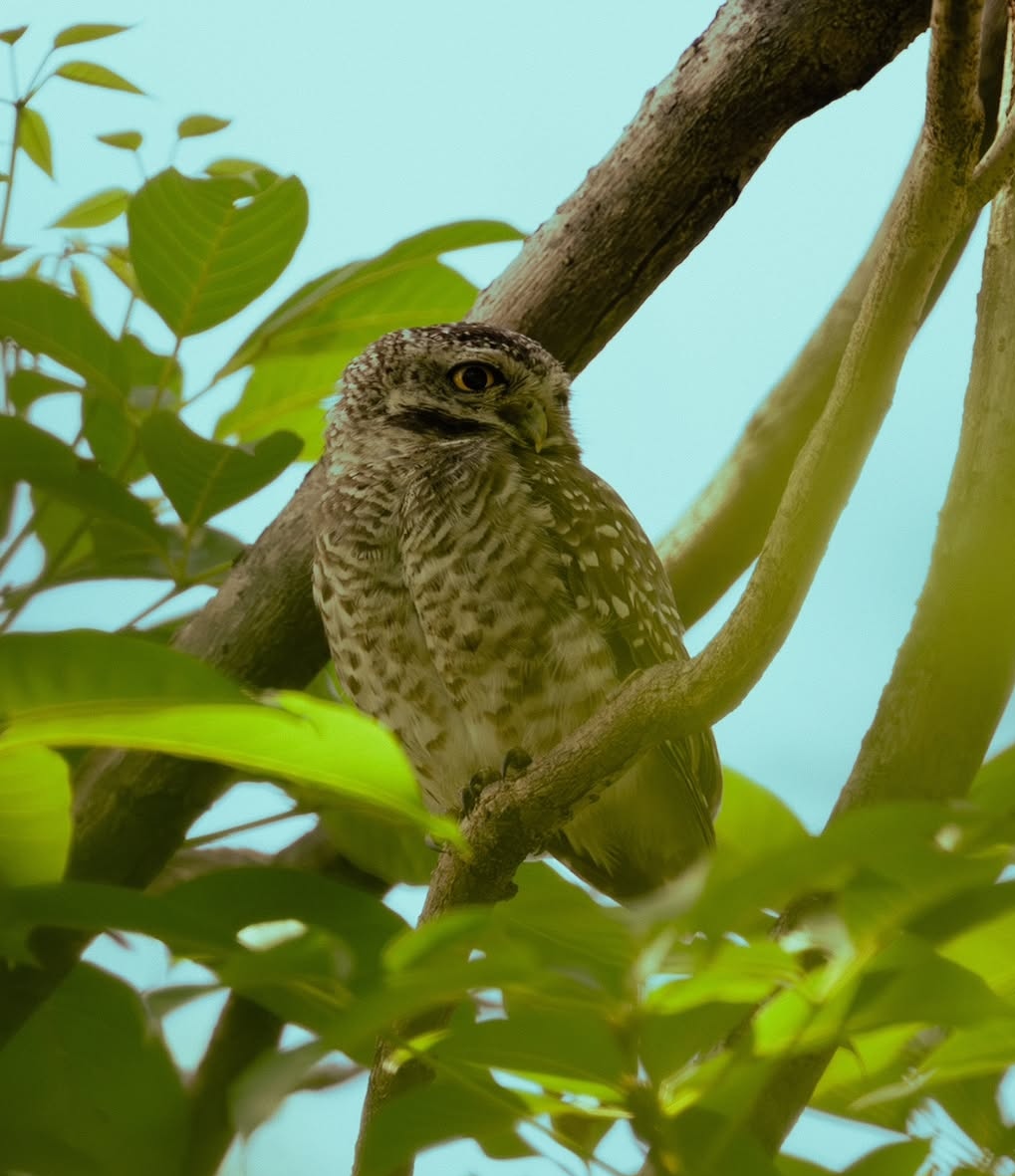
The spotted owlet is a small bird, measuring about 20–21 centimeters in length, with a stocky build and short tail. Its plumage is brownish-gray, patterned with white spots across the head, back, and wings—hence the name “spotted.” The underparts are paler, streaked with dark markings. Its rounded head lacks ear tufts, and its large, forward-facing yellow eyes give it an alert and somewhat comical expression. The bird’s hooked beak and strong talons mark it as a capable predator, despite its small stature.
Habitat and Distribution
Spotted owlets are highly adaptable birds that thrive in a variety of habitats. They are commonly seen in open farmlands, gardens, groves, and even within bustling cities. These owls prefer areas with scattered trees, old buildings, or ruins that provide suitable nesting sites. Their range spans across India, Bangladesh, Sri Lanka, Nepal, Myanmar, and parts of Thailand, where they are often spotted perched on tree branches, rooftops, or telephone wires during dusk or dawn.
Behavior and Lifestyle
Unlike many owl species that are strictly nocturnal, the spotted owlet is partly diurnal. It is most active at dawn and dusk, though it hunts at night as well. During the day, it can often be seen roosting in tree hollows, wall crevices, or shaded nooks. These owlets are known for their curious and bold behavior; they often bob their heads, stare intently at intruders, and even scold them with sharp chirps and whistles when disturbed.
Spotted owlets are monogamous, and pairs often remain together year after year. They nest in tree cavities, crevices in old buildings, or holes in walls. The female lays 3–5 eggs, and both parents share the responsibility of feeding and protecting the chicks. Their loud, repetitive calls—often described as chuckles, screeches, or harsh “chirurr” notes—are a distinctive part of the rural night soundscape.