The Different Types of Piercings
Piercings are a popular way to express your personal style. From a simple ear piercing to a bold eyebrow or lip piercing, there are many options to choose from.
However, every piercing is different. The location, jewelry, healing time, comfort level, and daily care can all vary.
Before getting pierced, it is important to understand what you are choosing and what will be required after the appointment.
This guide covers some of the most popular types of piercings and what you should know before getting each one.
For a broader look at choosing a piercing, jewelry, and caring for a new piercing, see our Piercing: A Complete Guide to Choosing the Right Piercing, Jewelry, and Aftercare guide.
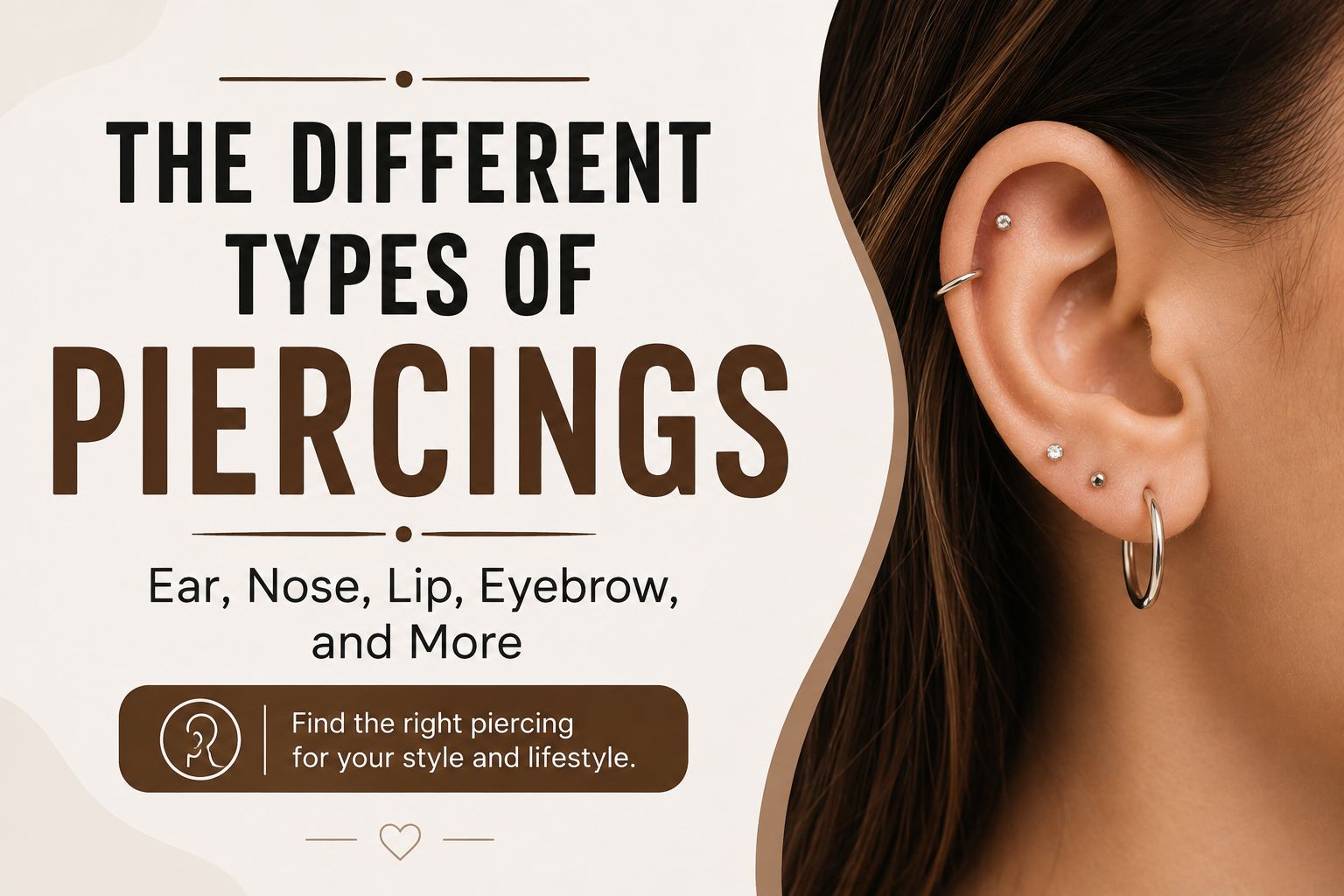
Ear Piercings
Ear piercings are some of the most common piercings. They range from simple lobe piercings to more detailed cartilage placements.
Lobe Piercing
The earlobe is one of the most common places to get pierced. It is often a popular choice for a first piercing because the area is relatively soft and easy to care for.
You can wear many different types of jewelry in a healed lobe piercing, including studs, hoops, and small decorative pieces.
If you want a simple and classic piercing, the earlobe is a good place to start.
Helix Piercing
A helix piercing is located on the upper outer part of the ear. It is a cartilage piercing and can be worn with a small stud or hoop after it has properly healed.
Because cartilage generally takes longer to heal than the earlobe, you need to be patient with a helix piercing.
Sleeping directly on the piercing or repeatedly catching it on clothing or hair can cause irritation.
Forward Helix Piercing
A forward helix piercing is placed on the front part of the upper ear, close to where the ear meets the head.
It can look very stylish, especially when combined with other ear piercings. However, the available space and shape of the ear can affect whether this piercing is suitable for you.
A professional piercer should check your ear before deciding on the exact placement.
Tragus Piercing
The tragus is the small piece of cartilage that sits in front of the ear canal.
A tragus piercing can be a subtle choice, but you should consider how often you use earbuds or headphones. Pressure and friction around a healing piercing can cause irritation.
Conch Piercing
A conch piercing is placed through the central cartilage of the ear.
It can be worn with a stud or, after appropriate healing, different styles of rings. Because it is located in cartilage, proper care is important during the healing period.
Industrial Piercing
An industrial piercing usually involves two holes connected by a single barbell.
It creates a distinctive look, but it requires careful placement. Not every ear has the shape needed for a traditional industrial piercing.
This is one reason why you should have your anatomy checked by an experienced piercer before choosing this style.
Nose Piercings
Nose piercings can be subtle or bold depending on the placement and jewelry.
Nostril Piercing
The nostril is one of the most popular areas for a nose piercing.
You can usually choose from different jewelry styles depending on the piercing and healing stage. A small stud can create a simple appearance, while a hoop can give a different look once the piercing is ready for it.
The exact placement should be discussed with your piercer because even a small difference in position can change how the jewelry looks.
Septum Piercing
A septum piercing passes through the tissue in the middle area of the nose.
It has become a popular choice because it can create a noticeable look while still allowing different jewelry styles.
One benefit of some septum jewelry is that it can sometimes be flipped or hidden, depending on the jewelry and individual circumstances.
Proper placement is very important, so choose a professional piercer with experience in septum piercings.
Bridge Piercing
A bridge piercing is placed horizontally through the skin near the upper part of the nose, between the eyes.
It has a very different appearance from a nostril or septum piercing. Because of its location and the way the skin sits in that area, it requires careful assessment by a professional.
Ask your piercer about suitability, jewelry, healing, and the possibility of migration before choosing this piercing.
Lip Piercings
Lip piercings can be placed in different positions around the lips and lower face.
Some popular styles include labret piercings and side lip piercings.
Because lip piercings can involve both the outside of the face and the inside of the mouth, you need to follow professional aftercare instructions carefully.
Jewelry that is not properly fitted can also cause problems. Your piercer should select an appropriate size and style for the placement.
It is also important to understand that oral piercings can come into contact with teeth and gums. Discuss these considerations with an experienced professional before getting one.
Eyebrow Piercings
An eyebrow piercing is usually placed through the skin around the eyebrow.
It gives a bold look without requiring a large piece of jewelry. Curved barbells are commonly associated with this type of piercing.
Before getting an eyebrow piercing, ask your piercer about suitable placement and jewelry. The area can be exposed to accidental bumps and snagging, especially when washing your face or changing clothes.
Following aftercare instructions can help reduce unnecessary irritation while the piercing heals.
Navel Piercings
Navel piercings are placed around the belly button and are a popular choice for people who want a piercing that can be covered or shown depending on their clothing.
Healing can take time, and tight clothing may rub against the area.
If you regularly wear clothing that presses against your stomach, discuss this with your piercer before getting the piercing.
Your anatomy also matters. A professional should examine the area and determine the most suitable placement rather than using exactly the same position for everyone.
Tongue Piercings
Tongue piercings are oral piercings that require particular attention because of their location.
The mouth contains many bacteria, and the jewelry can also come into contact with teeth and gums.
If you are considering a tongue piercing, talk to an experienced professional about the risks, jewelry, healing process, and proper care before making your decision.
Cheek Piercings
Cheek piercings are placed through the cheek area and can create a distinctive appearance.
They are more involved than many common ear or nose piercings because of the anatomy of the cheek.
If you are interested in this type of piercing, it is especially important to work with a professional who has experience with the placement.
Surface Piercings
Surface piercings are placed through areas of relatively flat skin rather than passing through a thicker part of the body.
They can be placed in different locations and can create an unusual look.
However, surface piercings may have a higher chance of problems such as migration or rejection compared with some other types of piercings.
Your piercer should explain the risks and whether the area is suitable before proceeding.
Dermal Piercings
A dermal piercing, sometimes called a microdermal piercing, uses an anchor placed under the skin with a decorative top visible on the surface.
Dermal piercings can be placed in different areas of the body and can create the appearance of a single decorative piece.
Because the jewelry is anchored beneath the skin, it should only be performed by a trained professional using appropriate equipment and techniques.
How Do You Choose the Right Piercing?
With so many options, choosing one can be difficult.
Start by thinking about the look you want and how the piercing will fit into your everyday life.
Ask yourself:
- Do I want something subtle or noticeable?
- How much time can I spend on aftercare?
- Will my work or daily activities affect the piercing?
- Do I regularly wear headphones or helmets?
- Will clothing rub against the area?
- Am I comfortable waiting for the piercing to heal?
- Do I have suitable anatomy for the piercing?
Your piercer can also help you make a decision based on your anatomy and lifestyle.
Your Anatomy Matters
A piercing that looks great on one person may not be suitable for another person.
The shape, thickness, and structure of different body parts can vary. This is particularly important for piercings such as industrial, eyebrow, navel, and some cartilage piercings.
A professional piercer should examine the area before piercing it and explain the options available to you.
Do not choose a placement simply because you saw it on someone else.
Think About the Jewelry Too
The jewelry is an important part of your piercing.
The material, size, shape, and style should be appropriate for the piercing and its healing stage.
For a fresh piercing, your piercer should recommend jewelry that is suitable for the location and allows enough room for normal swelling.
Once the piercing has healed, you may have more options for changing the style.
Do not rush to replace the initial jewelry simply because you want a different look.
Healing and Aftercare
Every piercing has its own healing process.
Some may heal faster than others, while cartilage and certain body piercings can take considerably longer.
During healing, avoid unnecessary touching, twisting, pulling, and pressure.
For detailed instructions on caring for a new piercing, read Piercing Aftercare: How to Clean and Care for a New Piercing.
Following proper aftercare is one of the most important things you can do after getting pierced.
Choosing a Professional Piercer
The person performing your piercing matters just as much as the type of piercing you choose.
Look for a professional who follows good hygiene practices, uses sterile equipment, provides suitable jewelry, and takes time to explain the procedure and aftercare.
Do not choose a studio based only on the cheapest price.
A professional studio such as Rise Up Tattoo can be one of the options you consider when researching where to get your piercing. Take time to look at the studio's work, ask questions, and make sure you feel comfortable with the piercer before your appointment.
Questions to Ask Before Getting a Piercing
Before getting pierced, you can ask:
- Is this piercing suitable for my anatomy?
- How long does it normally take to heal?
- What jewelry will be used?
- What material is the jewelry made from?
- How is the equipment sterilized?
- What should I do during the healing period?
- When can I change the jewelry?
- What activities should I avoid while it heals?
A good piercer should be happy to answer your questions.
Final ThoughtsThere is no single piercing that is right for everyone. The best choice depends on your personal style, anatomy, lifestyle, and willingness to follow proper aftercare.
Ear, nose, lip, eyebrow, navel, tongue, surface, and dermal piercings all have different considerations. Understanding those differences before your appointment can help you make a better decision.
Take your time, choose a professional piercer, use appropriate jewelry, and follow the recommended aftercare.
If you are still deciding which piercing is right for you, start with our complete guide to piercing, jewelry, and aftercare before booking your appointment,