AI Can Write Code — But It Can’t Feel Bad Code
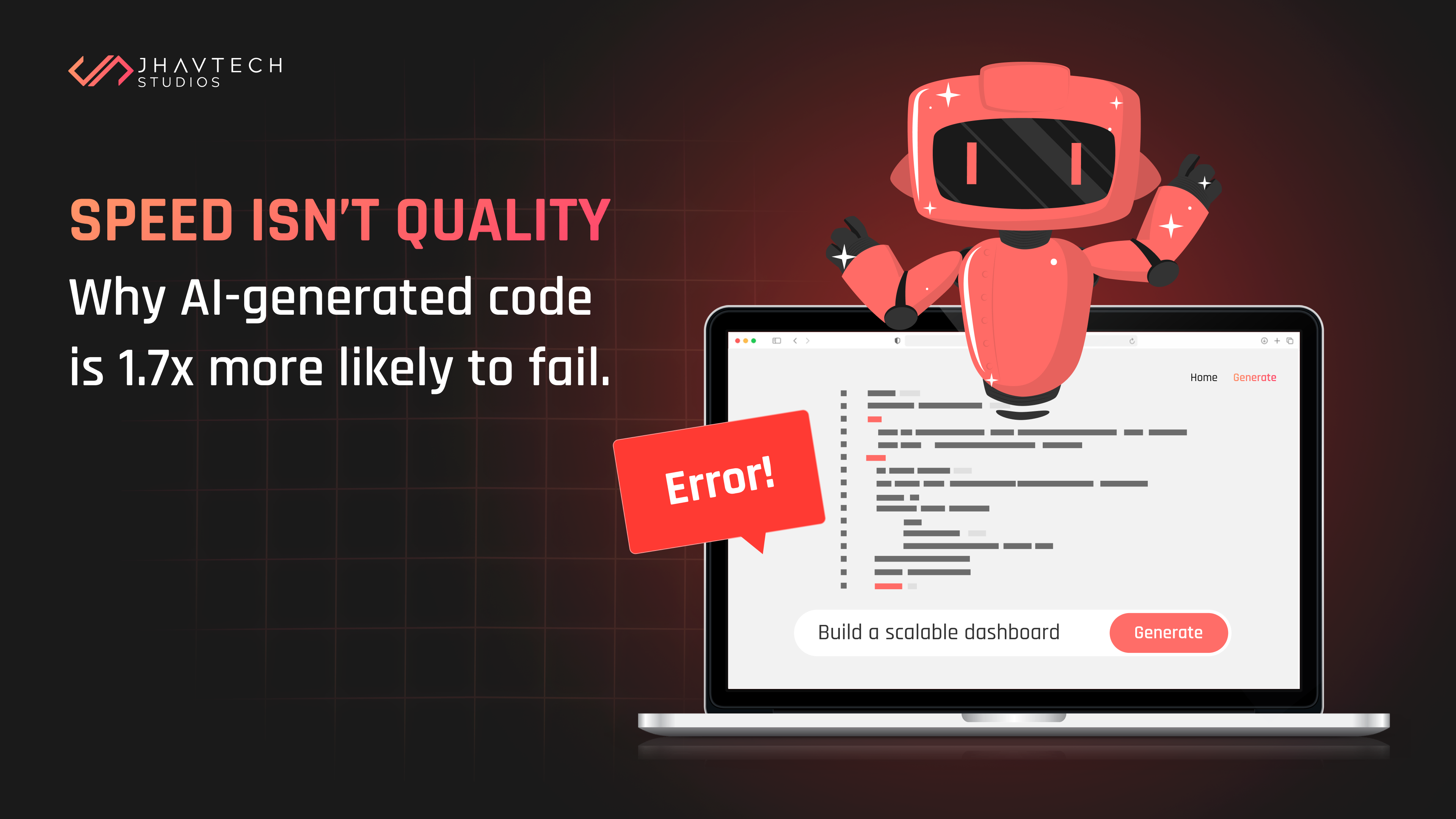
The year 2026 has brought us to a fascinating crossroads in software engineering. If you take a stroll through the latest tech forums or scroll through Steemit’s dev community, you will notice a recurring theme: everyone is using AI to build, but fewer people are certain about what they are actually shipping. We have entered the era of high-speed generation, where the friction between an idea and a functioning prototype has practically vanished. However, as we lean more heavily into automated assistants, we are discovering a silent truth that every seasoned developer knows in their gut: AI can write code, but it is physically and logically incapable of "feeling" when that code is bad.
The Illusion of Perfection: AI vs. Human Code Quality
At first glance, AI-generated snippets look immaculate. They are perfectly indented, use modern syntax, and often come with helpful comments. But if you look deeper, the cracks begin to show. A recent 2026 study highlighted a staggering reality in the AI vs. human code quality debate: while AI can increase pull request volume by over 20%, the number of incidents per pull request has actually spiked by nearly 24%.
The problem is not that the AI is "stupid." It is that AI lacks the sensory perception of a developer who has lived through a 3 AM production crash. When we talk about human-authored vs. synthetic code, we are really talking about the difference between statistical probability and architectural intent. AI predicts the next token; humans predict the next three years of maintenance. Because AI does not have to maintain the systems it builds, it doesn’t "feel" the weight of a 500-line function or the looming shadow of a poorly implemented dependency.
The Rise of Vibe Coding
This shift in how we build has birthed a new phenomenon known as vibe coding. Coined back in early 2025 and matured today, vibe coding is the practice of describing a desired outcome in plain English and letting the AI handle the implementation details without the developer ever fully peering under the hood. It’s "vibing" with the output rather than verifying the logic.
While this is incredible for rapid prototyping, it creates a dangerous disconnect. When you are vibe coding, you are prioritizing the "what" over the "how." For a simple landing page, that is fine. But for complex app development, relying purely on vibes is like building a skyscraper on a foundation of sand just because the lobby looks pretty.
Facing the Reality of AI Coding Limitations
If you have ever tried to use an LLM to refactor a massive legacy codebase, you have run right into AI coding limitations. AI struggles with "local context." It might suggest a brilliant fix for a single file while inadvertently breaking three other modules it didn't "see" in its context window.
The limitations aren't just about logic errors; they are about empathy for the future self. AI doesn't care if a variable name is slightly ambiguous or if a module violates the "Single Responsibility Principle." It is just trying to satisfy your prompt. This lack of "taste" is precisely why the AI vs. Human code quality gap remains wide. Humans possess a biological alarm system, a literal "feeling" of unease, when they see a "God Object" or a deeply nested loop that they know will be a nightmare to debug later.
Technical Debt in AI-Assisted Programming
We are currently seeing a global explosion of technical debt in AI-assisted programming. Because AI makes it so easy to generate code, developers are tempted to "copy-paste" their way to a finished product. Recent reports from 2025 and 2026 indicate that code duplication has increased nearly eightfold since the widespread adoption of AI agents.
This isn't just "messy" code; it’s a financial liability. Gartner estimates that nearly 40% of IT budgets are now swallowed by the cost of dealing with technical debt. When AI generates code, it often follows "textbook" patterns that aren't tailored to your specific infrastructure. It solves the immediate problem but leaves behind a trail of "fragile" code that is too rigid to change and too bloated to run efficiently. The comparison of AI vs. human code quality often fails here because the debt is hidden until the system needs to scale.
Why AI Generated Code Needs Human Oversight
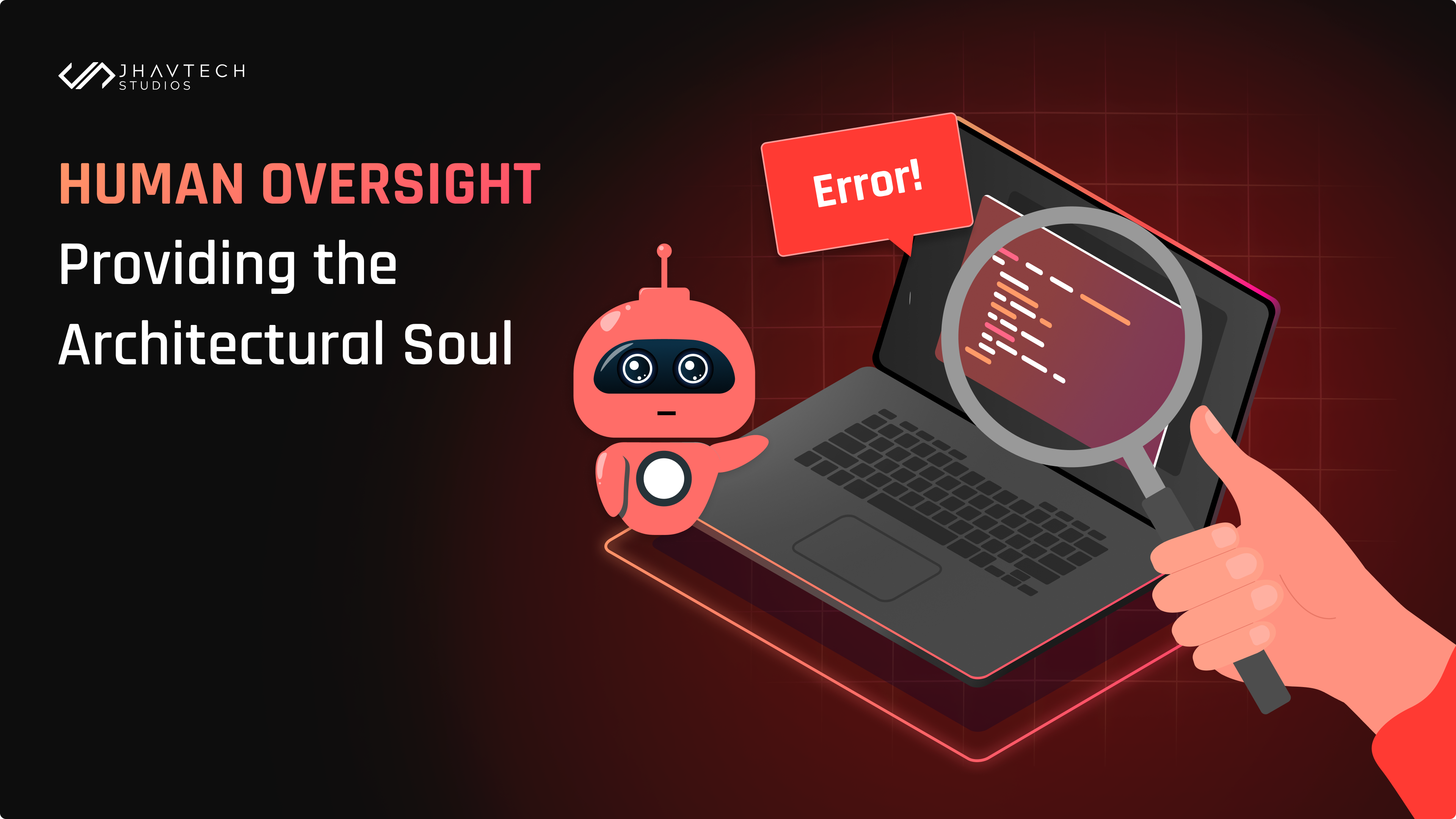
The industry is slowly waking up to the fact that acceleration without steering is just a faster way to crash. This is why AI generated code needs human oversight. We need humans not just to check for syntax errors, but to provide the "architectural soul" that machines lack.
A human reviewer asks: "Does this align with our long-term goals?" "Is this secure?" "Will a junior dev be able to understand this in six months?" AI doesn't ask those questions because it doesn't exist in time. It exists in a static snapshot of training data. When it comes to code quality, the human’s role has shifted from being a "writer" to being a "curator" and a "guardian."
The Importance of a Rigorous Code Review
This brings us to the most critical stage of the modern workflow: the code review. In 2026, a code review is no longer just about catching typos; it’s a deep audit of architectural integrity.
Experts in the field, such as the team at Jhavtech Studios, have seen this firsthand. In a recent analysis of over 200 applications, Jhavtech identified that "code smells" appear more frequently in projects that rely too heavily on automated generation without professional intervention. Their findings suggest that while AI can deliver speed, only a disciplined human-led review can ensure a project doesn't become a "software rescue" case later on. For businesses, this means the difference between a successful launch and a project that stalls because it’s too "brittle" to scale. The AI vs. human code quality gap is most visible when these reviews are skipped.
Software Architecture in the Age of AI
As we look toward the future, the definition of a "great developer" is changing. It is no longer about who can memorize the most APIs or write the fastest C++ loops. It’s about software architecture in the age of AI. The developers who will thrive are those who can leverage AI as a high-powered engine while remaining the master architects of the system.
They understand that AI vs. human code quality is a collaborative metric. You use the AI to handle the boilerplate and the repetitive "scaffolding," but you reserve the high-level decision-making for yourself. You ensure that the balance stays in favor of the human by setting the constraints, defining the boundaries, and refusing to accept "almost right" as "good enough."
The Reality of Modern App Development
In the realm of professional app development, the stakes are simply too high to leave the "vibes" in charge. Whether you are building a healthcare platform or a new DeFi protocol on Steemit, the code must be more than functional; it must be resilient.
The data is clear: 45% of the world's code is now deemed "fragile." This fragility often stems from a lack of "human touch" in the initial build phases. As we've seen in the AI vs. human code quality metrics, AI-authored changes often result in 1.7x more issues than human-only contributions. This doesn't mean we should stop using AI; it means we should stop trusting it blindly.
AI Coding Tools vs Developer Intuition [H2]
This brings us to the heart of the matter: AI coding tools vs developer intuition. Intuition is not a mystical power; it is the subconscious synthesis of thousands of hours of failure and success. It is what tells a developer that while a piece of code works today, it is "smelly" and will break tomorrow.
AI tools operate on patterns, but intuition operates on experience. When a developer looks at a piece of logic and feels a slight tension in their chest, that is "the feeling." AI tools can suggest five different ways to write a loop, but they cannot tell you which one feels "cleanest" in the context of your specific team's culture or your project's future.
Finding the Balance for the Future
So, where does that leave us? Are we doomed to a future of bloated, AI-generated "spaghetti" code? Not if we change our approach. We need to treat AI like a highly talented but incredibly literal intern. It can do the work, but it cannot be held responsible for the outcome.
The goal is to reach a state where AI vs. human code quality isn't a competition, but a synergy. We use AI to eliminate the "drudgery" of coding so we have more mental space to focus on the "feeling" of the architecture. We need to stay "invested" in our codebases, much like the philosophy at Jhavtech Studios, where the focus is on sustainable performance rather than just "getting it done."
Final Thoughts: The Heart in the Machine
At the end of the day, code is a human language designed to solve human problems. AI can simulate the language, but it cannot truly understand the problem. It cannot "feel" the frustration of a user dealing with a slow interface, nor can it "feel" the pride of a perfectly elegant solution.
As we continue to navigate the AI vs. human code quality landscape in 2026, let’s remember that the "vibe" that matters most isn't the one in the prompt—it's the one in the craftsmanship. Use the tools, embrace the speed, but never stop "feeling" your code.
Spot on! While AI tools can generate functional code in seconds, they lack the intuition for clean architecture, long-term maintainability, and security. That’s exactly why the most effective modern workflow is "vibe coding" with human oversight — letting AI speed up execution while senior engineers review, refine, and enforce quality standards. For those looking to leverage AI velocity without sacrificing code quality, check out https://apprecode.com/services/vibe-coding-development-services — it highlights how combining fast AI generation with senior tech supervision delivers the best of both worlds.