Show me your home and I tell you who you are... (Home as A Symbol of Identity - Part 2)

Home interiors – but similarly office furniture and design – tell a lot about our taste, lifestyle, interest, and values. Believe it or not, seeing snapshots of your home, even those not knowing you will find out quite precisely what sort of a person you are, how many friends you have and similar characteristics. Interesting, isn't it? This series is intended to reveal the symbolic language of our homes.
I finished the previous, introductory part with a question: What exactly your home communicates and how? - well, this is what I manage to summarize briefly in the upcoming posts.

What makes a house "home"?
Home is where you feel at home and are treated well. (Dalai Lama)
A super-conveniently organized 6-star hotel room is not home; it is nice to stay there for a few days, but you will hardly be able to settle in the long-run. Why? You'll probably have everything there (or even more) that you might need, but still, it's not yours, it just does not feel "home". So what is the essence of home?
Let's imagine that you buy a new flat or house and start to plan to furnish and decorate it. What things do you usually consider at this point? Research shows that – independently from culture – everybody personalizes his or her home interior. It means that taking into consideration our restrictions we choose furniture and decorative elements that reflect our needs and style. The inner design evolves as we continue to live there; day by day we "equip" our living quarters with things that are important for us, so intentionally or unintentionally we surround ourselves with objects reflecting our identity. In this process we arrange and re-arrange our environment, we shape it and get used to it at the same time – personality and environment mutually and gradually assimilate to each other. So in a way home is the sum of our personalized objects, moreover home itself becomes a personalized entity.
We shape our buildings; thereafter they shape us. (Winston Churchill)
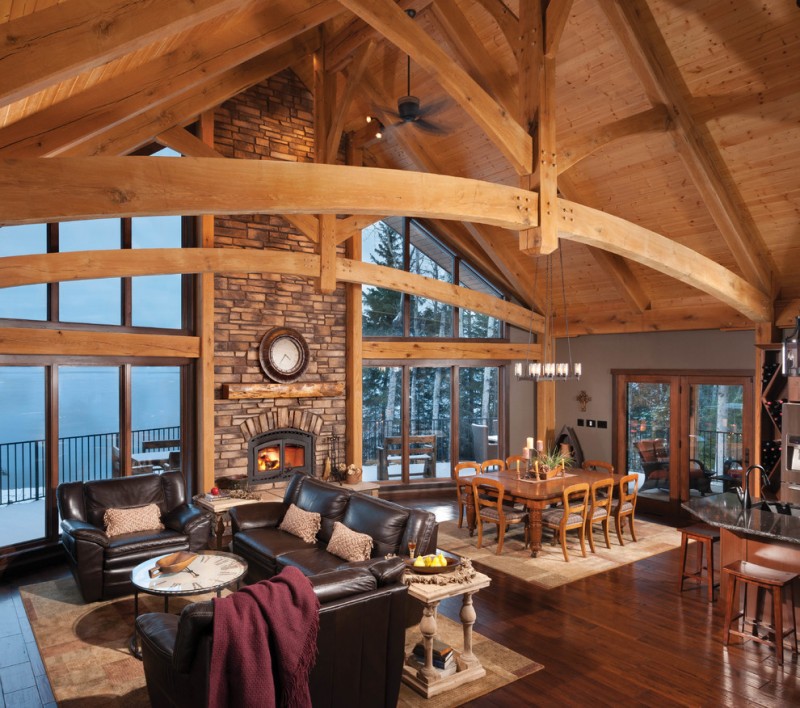
How can our home communicate?
Probably the most significant feature of symbols is that their meaning is limited: they are only meaningful to a specific community. For example, you might drive a luxury car, but it will only become a status symbol after your reference groups share this view.
There are very important differences between verbal and nonverbal communication:
- We cannot "read" nonverbal clues one by one (as with words), they only have a certain meaning in bigger clusters. You need a sort of a "helicopter view" to understand them, therefore one cannot make a "dictionary", like this: oh, if you have a red sofa in your living room that means… NO! When we try to understand symbols, we always take the big picture.
- Many cases symbols "talk" to our subconscious. It means that we usually use symbols unintentionally and also understand them intuitively. (The only difference probably is the above-mentioned status symbols.) Have you ever had the feeling after talking to someone that he/she was not telling the truth? Well, we subconsciously detect that the information coming to us via nonverbal channels is not in line with the verbal message. You probably cannot explain why, but you have a gut feeling. Same happens when we understand symbols.
- Culture has a strong effect on what symbols we use and how do we interpret them, however, within a culture our possessions usually carry very explicit and similar meanings.

Look at my house! What do you see from outside?
"We are all just actors trying to control and manage our public image, we act based on how others might see us." (Erving Goffman)
Have you ever tried walking in a suburban area and actually watch the facade of houses there? They tell complete stories if you are attentive enough! I like playing a little bit with trying to find out what kind of people live there, what do they do etc. So what can we see from outside?
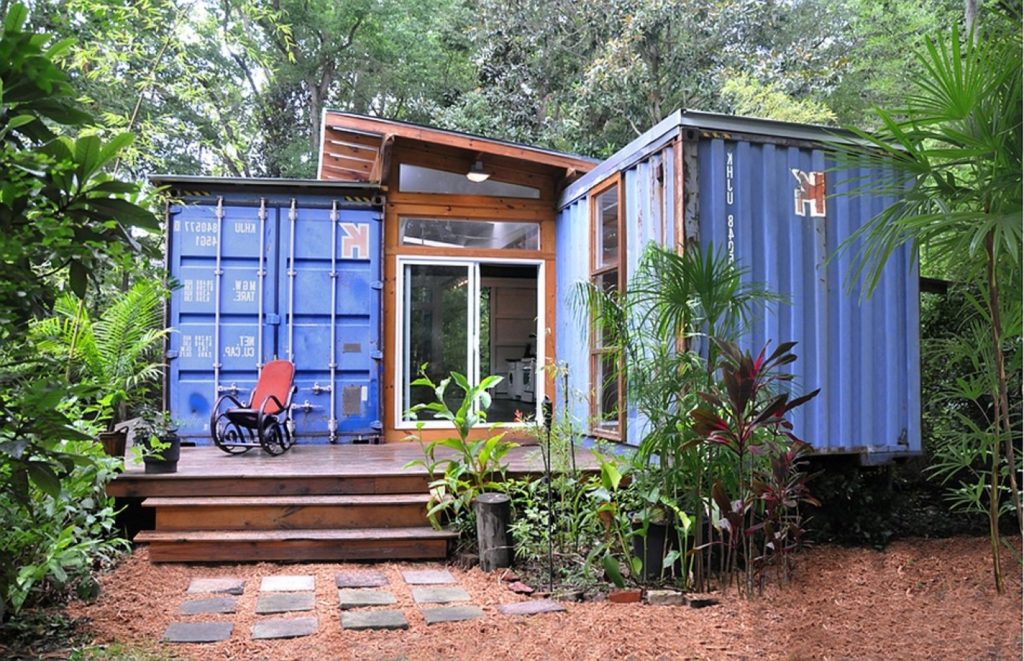
Demographic data
The size, condition and estimated price of the house can give you clues about the social status of the people living in it. The house from outside usually reflects the men's identity, whereas interior tells more about the women.
Cherulnik and Souders went even further and asked university students to try to find out the profession of owners by looking at their houses and they had quite a significant match.

Sociability
Looking at the house from outside, you may have a clue about how friendly and sociable the owners are. For example, huge bushes in front of the main door or a tall fence hiding the entrance might suggest introverted, closed persons living there. Similarly, flowers and decorations in front of the house can also suggest friendly and social inhabitants.
Werner and his associates made an interesting research where they concluded that Christmas lights and decoration has a strong message about the sociability of house owners. They concluded that the absence of Christmas decoration is usually decoded as „less open" and nonsociable, whereas homeowners with nice holiday decoration were thought to be more friendly, open and more attached to their neighbours. (The interesting thing was that they double-checked the results and homeowners own ratings were quite close to the judgements of the „naive raters").
Maturity, personal integrity
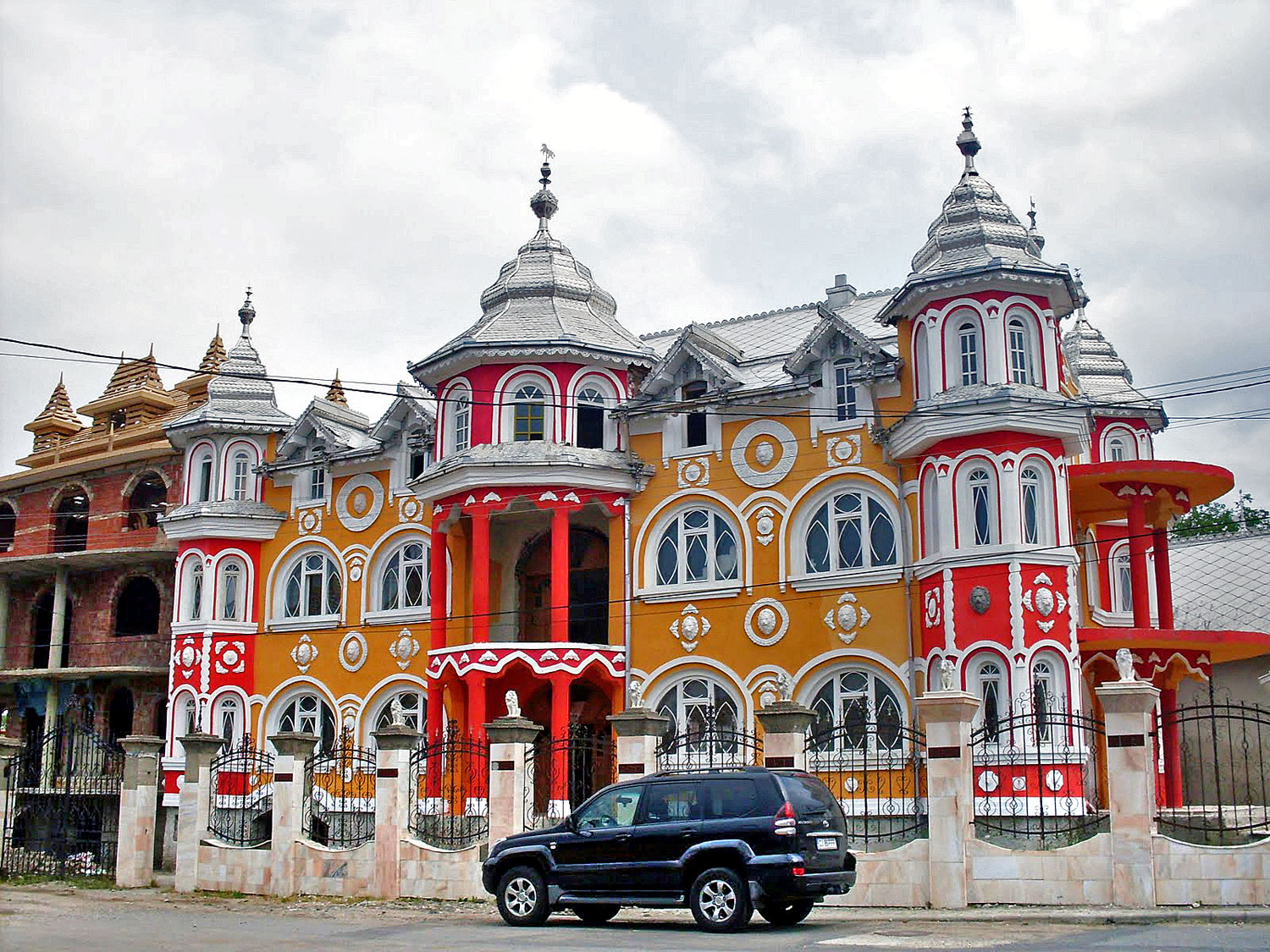
The question of decoration is an interesting one, as there are many houses with excessive, frumpish decoration. This is meaningful also, but instead of friendliness it "talks" about something else. Owners of these houses want to show desperately that they can afford such exteriors, they intend to communicate their social status, but it is not coherent with their identity. Maybe they got rich in a short period of time? Immature? Maybe they just do not have the personal integrity to show adequate values? Too much decoration is like incoherent communication.
On the contrary houses with a coherent style show taste and integrated personality, it reflects that the owners are "at their place" and they are satisfied with it.
In the next post I am going to deal with the interior of a house, stay tuned. If you like this series, here you can read the previous part:
Thanks for visiting, I am interested in your comments and thoughts on the topic!
References
Cherulnik, P. D., Souders, S. B. (1984). The social contents of place schemata: People are judged by the places they live and work. Population and Environment, 7: 211–233.
Csíkszentmihályi M. and Rochberg-Halton, E. (1981). The Meaning of Things: Domestic Symbols and the Self. Cambridge, Cambridge University Press
Dittmar, H. (1992). The Social Psychology of Material Possessions. To Have is To Be. Hemel Hempstead, Harvester Whetsheaf
Goffman, Erving (1959). The presentation of self in everyday life. New York: Anchor Books.
Werner, C. M., Peterson-Lewis, S., Brown, B. B. (1989). Inferences about homeowners sociability: Impact of Christmas decorations and other cues. Journal of Environmental Psychology, 9: 279–296.
Sources of pictures
1 - my drawing on a T-shirt made for the research presentation
2
3
4
5
6
7

Being A SteemStem Member
An interesting analysis again, @ksolymosi! Thank you. Here, in Serbia there is one symbol of showing up social status of people who worked in Germany or Austria or Italy or...where ever, and gained some fortune (We call them "gasterbeiters". Many or them are gypsies,). It is some ornaments -lions or hores in front of the house.
These people worked some very hard jobs, and they need to show their wealth, so they make their houses standout by everything, from the size to shape, color, curtains. But these lions stayed a symbol of this type of untasteless, nonstylish aesthetics of the rich.
There is one more phenomena, I would like to tell, during 50es and 60es, many people never wanted to show their wealth in fear of being called the burgeoasie. That is how many houses never got the shiny looks, although very rich aristocratic families lived behind these modest walls.
Ah, yessss - we have these lions in Hungary, too.
Thanks a lot for the kind words @semipermeabile!
You got a 100.00% upvote from @luckyvotes courtesy of @ksolymosi!
Show me your home, and I’ll reveal your personality—spaces reflect who we are. At Chilled Haven, every detail speaks volumes, from decor to ambiance. Your home is a mirror of your soul, blending comfort and style. Share it, and let the story unfold.
https://forums.desmume.org/profile.php?id=416819
https://www.bunity.com/chilled-haven-cooling-heating-llc-b08bff5a-a1be-424e-807a-072140282a32
https://recordsetter.com//user/ChilledHaven
https://rallycarsforsale.net/author/chilledhavenair/