Blockchain Adoption Challenges in Developing Nations and Emerging Economies
Blockchain is one of the latest trending technologies in the world today. It is believed that it can enhance the way that businesses, governments, banks, hospitals and many other organizations store and share information. Blockchain is a digital system that is safe and transparent for storing records. However, if information is added, it will be very difficult to alter or delete it without everyone in the network being aware of the update. That's why blockchain is sometimes referred to as a technology that builds trust, security, and transparency. While many developed countries are advancing in its adoption, developing countries and emerging economies have many hurdles to surmount before they can adopt this technology. I'm convinced blockchain has a lot of potential, but there are a few challenges that need to be addressed before the technology can become widely accepted in these countries.
A major challenge is a lack of proper infrastructure. Blockchain relies on stable power supply, internet connections and up-to-date computer systems. Unfortunately, many of the developing countries still have to face issues of poor electricity supply and slow internet connections. People in some rural areas might even not have access to the internet. This makes it hard for businesses and government agencies to effectively leverage blockchain systems. Blockchain is all the rage, but if it doesn't function the way it's supposed to, then it's pretty useless, regardless of all the amazing things it can do.
One of the other biggest problems is the implementation costs. Establishing a blockchain system involves having computers, software, internet services, and knowledgeable experts. These resources can cost a lot of money, particularly for small businesses and government institutions that are on a tight budget. Many organizations in developing countries have other urgent needs such as healthcare, education, and road construction. With all these priorities vying with each other, investing in blockchain technology might not appear to be the top priority. I believe there are a lot of organizations that want to use the blockchain, but financial constraints may make that difficult for them.
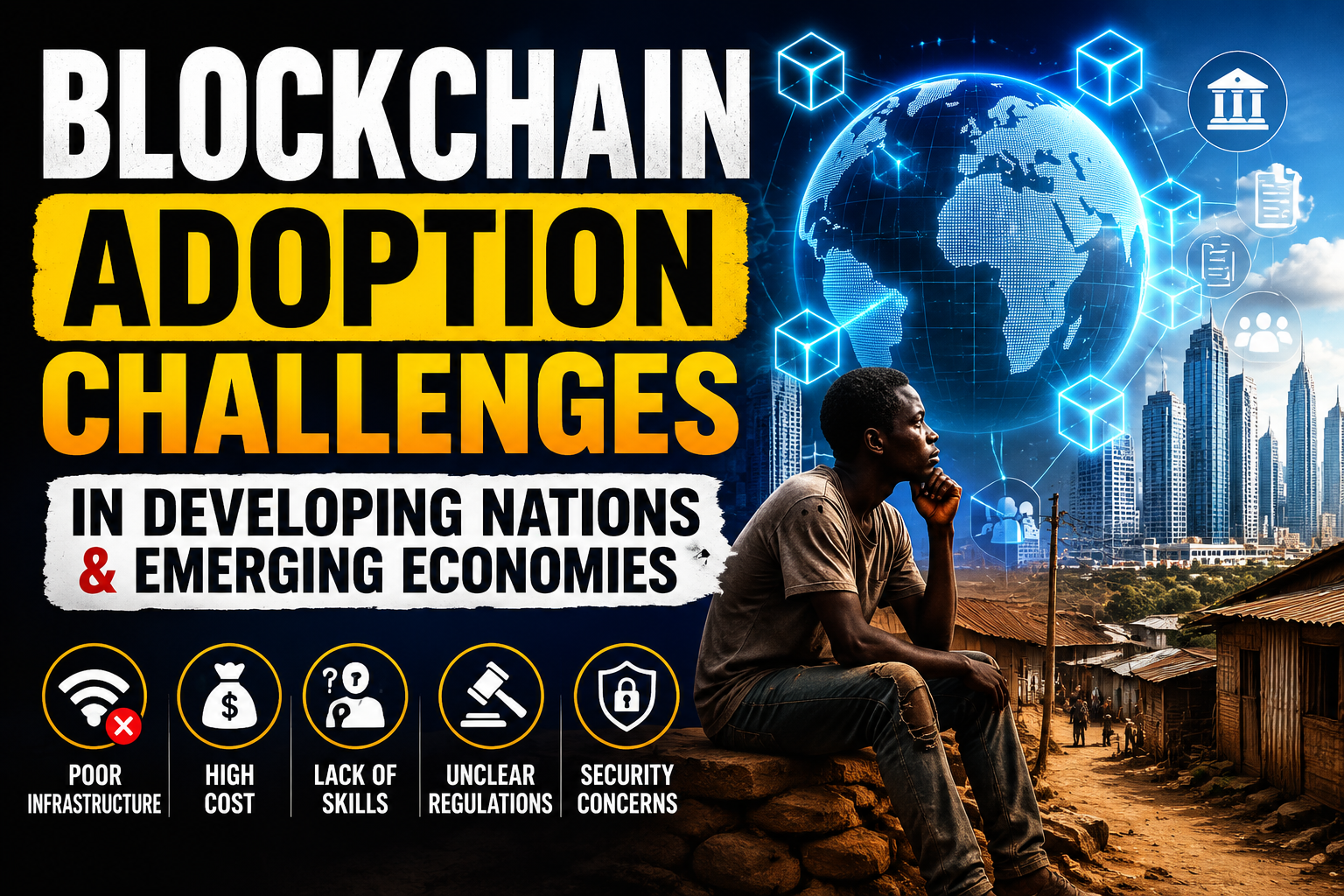
There's also a lack of qualified workers. Blockchain is a specialized technology, which means that you need to know computer programming, cyber security, networking and data management. But, there are not enough experts in these fields in many developing countries. There might not be sufficient courses on blockchain at universities and training centers, thus challenging students to obtain the skills. This leaves organizations with to hire costly foreign experts or having to put their blockchain projects on hold.
Lack of awareness and understanding is another big challenge. There are many people who have heard of the term "blockchain" primarily due to the cryptocurrencies such as Bitcoin. They tend to confuse blockchain and cryptocurrency. This confusion and fear are caused by this misunderstanding. In fact, blockchain technologies have numerous applications beyond digital currencies. It can enhance supply chains, health and patient records, voting, land registration, and financial services. There's a need to educate the public and let them know the real power of blockchain technology.
The government also plays a role in blockchain adoption. In many developing countries the laws around blockchain are still in a state of flux or not yet defined. Companies can not be certain that blockchain applications are legally accepted, or that future regulations will alter their businesses. The uncertainty deters investment as businesses are not willing to invest in technologies that could be limited in the future by legal barriers. Attractive and supportive government policies can make it more likely for businesses to invest in blockchain solutions.
But cybersecurity and privacy issues are a drag on the blockchain's growth as well. While the blockchain technology is generally secure, the systems that rely on it can be vulnerable to hackers if not properly secured. People are also concerned about how their personal information will be stored and accessed. Some organizations are concerned about disclosing sensitive business information if there isn't a strong security system in place. To guarantee the trustworthiness of blockchain systems, robust cybersecurity measures and appropriate data security laws are essential.
Changing is another hurdle that must be faced that needs to be respected. Traditional systems have been employed by many organizations for many years. These systems may be comfortable for employees/managers and they may not want to learn something new. There are others who believe blockchain will make their work more challenging or even their job redundant. Such fear can translate into the lack of support of blockchain projects. I believe that with a correct training and communication, people will realize that blockchain shouldn't be there to take the place of people but to help them work better.
The lack of access to financial services is also a hindrance to blockchain adoption. In many developing countries, significant populations do not have banking accounts nor can they access digital financial services. Although blockchain can be a solution to this, people will still need their phones, internet and digital knowledge to use these services. If these fundamental needs are not met, blockchain financial solutions can't reach those who need them the most.
Corruption and poor institutions pose difficulties as well. Government systems in some developing countries may not be transparent and accountable. While blockchain has the potential to curb corruption by maintaining transparent and permanent records, the implementation of blockchain technology also could run into problems with those who profit from the status quo. For the successful adoption of blockchain, good governance, honest leadership and a desire for enhanced public services is needed.
Blockchain has some great promising possibilities for the developing world and emerging economies, despite all these obstacles. It can enhance financial inclusion, combat fraud, boost transparency, streamline record keeping, bolster supply chains and enhance government services. There are already several countries experimenting with blockchain in the agriculture, healthcare, education, banking, and public administration sectors. With the advancement of technology and the growing internet penetration, blockchain is expected to gain momentum. The existing challenges need to be addressed through a collaborative effort between government, private sector, education bodies and international organizations.
https://x.com/i/status/2078210598064594983