Blockchain-Based Charity and Transparent Donations
Charity is one of the greatest means by which a man can aid others. People, businesses, churches, governments, and organizations raise funds daily for people that need food, education, medical care, shelter, and other essentials. The lack of transparency is, however, one of the great issues facing in charity. Donors aren't always certain of the impact of their giving after they give. This can lead to mistrust and decrease the willingness to donate. The blockchain offers a solution to this problem by providing a more transparent, traceable and secure way to make charitable donations.
Blockchain is a digital system that is hard to modify information secretly. It is most famous for its applications in cryptocurrencies, yet its applications surpass digital currencies. A blockchain can be used to log transactions and facilitate the verification of those transactions by those who have authorization. If information is well documented, it is quite hard to alter it without notice. This is the reason why blockchain can be beneficial for charity organizations that would like to provide a visual representation of funds received and spent by the organization.
Transparency is one feature that proves to be beneficial to the blockchain-based charity. A donor may contribute funds to a charity, and receive a receipt for the donation, but may not be able to observe what happens with the funds after they are contributed. The funds can go through various accounts until they are in the final project account. Donations can be tracked with blockchain and be recorded digitally. If I give money to a clean water project in a community, then blockchain can be used to track the money from me to the organization, to the project.
One more benefit is accountability. Giving to charity is trusted to being used for the intended purpose. If any transactions are documented on a blockchain, then organizations can have a clear financial trail. Authorized persons or donors can verify receipt and transfer of funds. This can make it more challenging for a person to covertly alter monetary records or obscure a number of transactions. It is not a foolproof security measure, but it can simplify financial transactions.
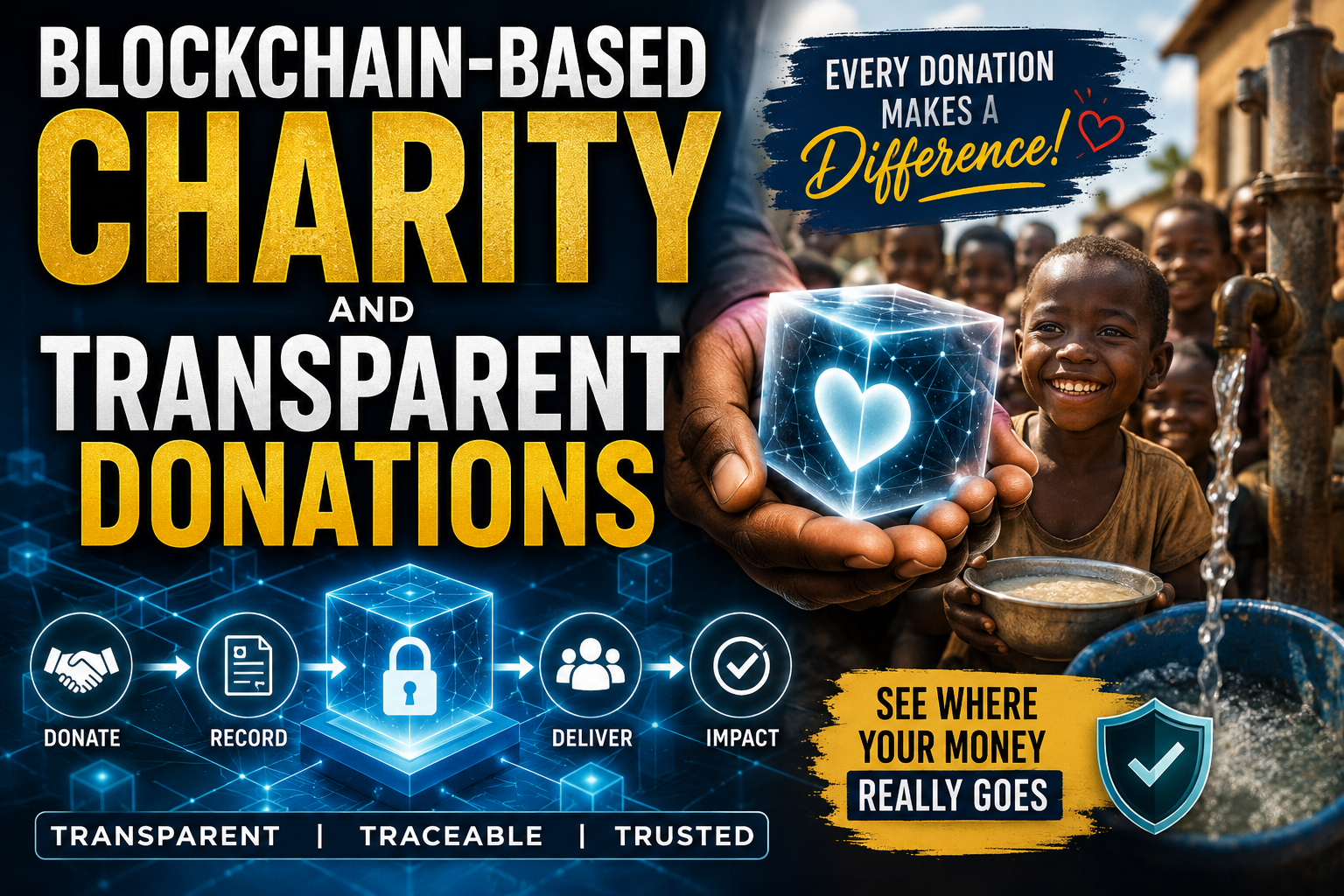
Smart contracts also have the potential for improving charitable giving. A smart contract is a program that is stored on a blockchain that is capable of executing an agreement automatically when specific conditions have been fulfilled. Let's say, for instance, that a charity gets funding for a school. The release of the money might be made piecemeal as project requirements are met. Some may be released when construction starts, some after a stage is completed and some after proper verification of the project is made. This can help to ensure that dollars are spent exactly where they are needed most.
One of the other major benefits of blockchain is that it can track the progress of charitable projects. People often ask me, "Is there any way to know if my donation is really being used for the people I gave it to?Many people ask me if there is a way of knowing if my donation is really being used for the people I gave it to? One could imagine a platform on blockchain that is linked to certain projects for which funding is provided. Details of payments, project phases and approved expenses can be documented and made available to donors. This might lead to a more robust connection between the donor and the charity organisation as they will be able to find out more about what the donation has achieved.
International charity is another use of blockchain that could be beneficial. In some instances, transferring funds across countries might be slow, as well as expensive, since traditional financial systems may include banks, payment providers, and other intermediaries. Some cross-border transactions may be able to be made quicker and incur fewer fees using blockchain-based payments. This can help to ensure greater impact of the donation for the designated group or community. Transferring digital assets to local currency, however, provides various benefits depending on the blockchain network, local regulations, and exchange rates, as well as the method of converting the digital asset to local currency.
While there are benefits, blockchain charity also has hurdles to overcome. The problem is that blockchain can only store data that is added to it. When human beings enter false information in the blockchain when delivering physical goods or finishing a project, the blockchain does not necessarily know the information is false. This implies there is still a need for human verification. Real-world activities may require trusted audit, community representatives, photos, receipts, and other evidence to support the activities.
The other ease is technical knowledge. Some donors and charity organizations might not be acquainted with how blockchain functions. Ordinary citizens may find blockchain donation platforms too complicated to use because of the public key/private key and cryptocurrency systems. To gain widespread acceptance, blockchain charity solutions must be made easy and straightforward to use. It should be possible to donate without having to have advanced technical knowledge.
Privacy and regulation are also concerns. Sensitive data may be gathered from donors and recipients by charitable institutions. Hence, blockchain systems need to be carefully designed to ensure the privacy of individual data is not revealed. There might also be rules by governments and financial institutions related to cryptocurrency, cross-border transfers, tax and money laundering. Any blockchain charity that is established in a country where it will function must adhere to the country's laws.
In my opinion, blockchain isn't the panacea to replace conventional charity systems. Rather, it is to be seen as a means by means of which they can enhance. But, as the success of a charity, honest leadership, good governance, effective monitoring and genuine care for those being helped are still all a part of it. While blockchain can offer more records and transparency, it cannot be the source of honesty.
In conclusion, blockchain-based charity has the potential to change the way donations are managed. Blockchain can help to increase transparency, improve tracking, enable smart contracts, and enhance accountability, which fosters trust between donors and charitable organizations. It can also raise awareness for donors on how the money is being spent and promote accountability in big projects. But issues like misinformation, technical issues, privacy and regulations need to be addressed. With proper management, blockchain can prove a formidable resource in the development of a charity system that can give donors more reassurance that their giving is going to the people and projects in greatest need.
https://x.com/i/status/2090117357590978571
https://coinmarketcap.com/currencies/pussfi/
https://x.com/i/status/2088342261742580216