Blockchain Technology and the Elimination of Counterfeit Products in Global Markets
There are many different areas in the world where counterfeit goods are an extremely serious issue. These products appear of the same make and model as the original products but are manufactured without the approval of the original manufacturer. They are present in garments, shoes, electronic devices, pharmaceuticals, food products, luxury goods and various other products. Numerous people purchase them without realizing that they are bogus. This is a problem for businesses as they lose money, for customers because they lose trust, and even for individuals who could face death if the products are fake medicines or food. Given this issue, numerous people and businesses are increasingly searching for alternative solutions to prevent counterfeit products. Blockchain technology is one of the most promising solutions that is currently being considered.
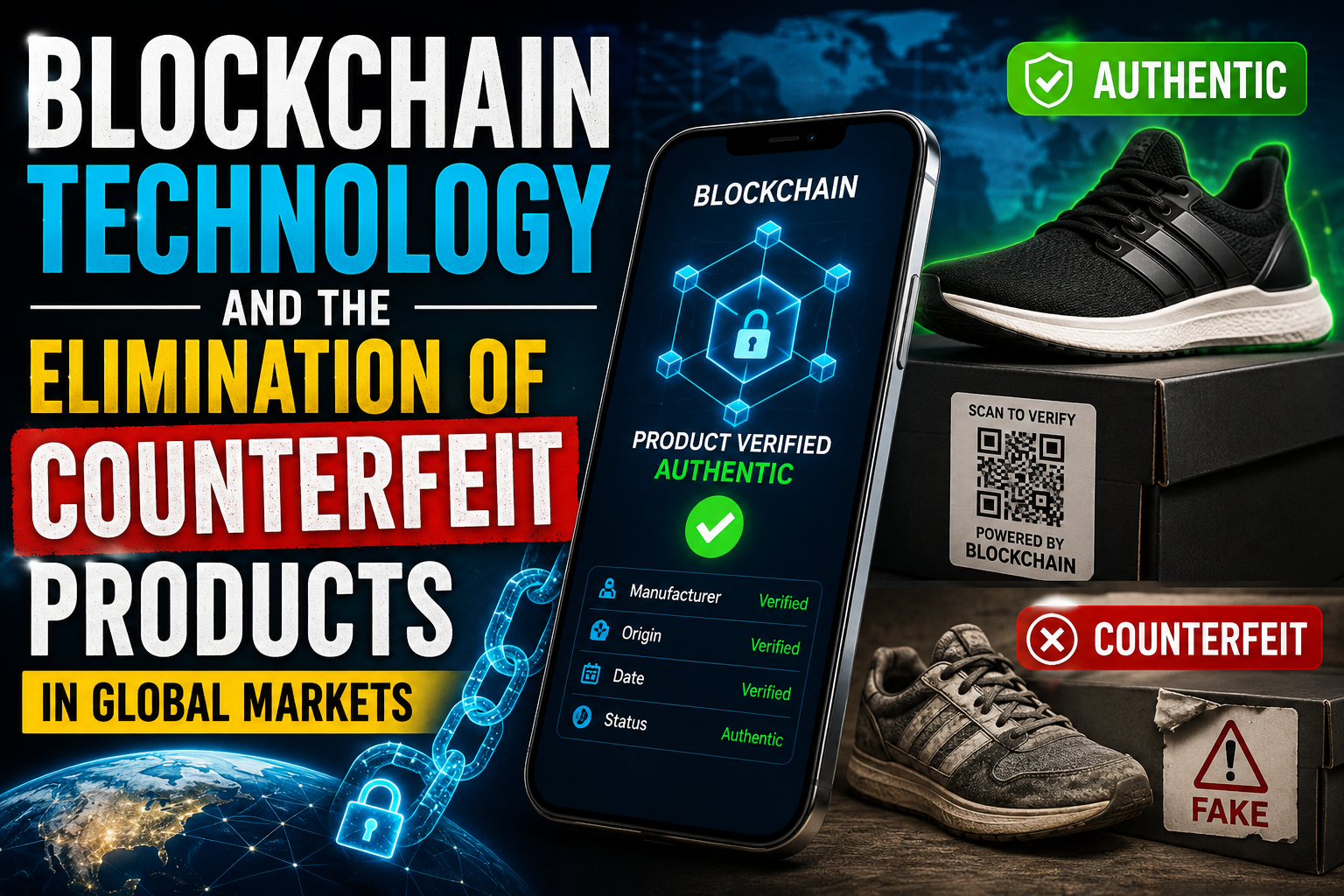
Blockchain is a digital system for securely and transparently recording information. One key distinction is that records are not stored on a single computer in blockchain—they're stored on multiple computers. After the information is incorporated into the blockchain, it is nearly impossible to alter or take out without everybody realizing. This ensures the system is highly reliable. Each transaction is documented with the exact date and time of its occurrence, thus allowing the easy tracking of the history of any product from its place of manufacture to the final consumer.
Product traceability is one of the best features of blockchain technology. Each product can be assigned a unique identifier like a QR code or serial number, which is linked to the blockchain. Any time the product goes from the manufacturer to the distributor, retailer, and then to the customer, every step is documented. It is easy to verify if the product is genuine or fake by observing the code on it. This makes it difficult to get counterfeit products into the supply chain.
I think this technology can make shopping safe for all. At times, I wanted to purchase some kind of product online, but I was not sure if it was authentic or not. While the images appeared real, I still had my doubts. I would feel more confident in the purchase of the product if blockchain technology became commonplace because it would be easy for me to see that it was the real thing. I would save money on buying fake products, and would be able to believe sellers more.
One more vital benefit of blockchain is that it safeguards businesses and their reputations. Building customer trust is a process that takes many years for many companies to accomplish by creating products of good quality. But counterfeit products can harm that reputation, as consumers might believe that a fake is the real product of the original company. Blockchain allows businesses to establish authenticity of their products. It aids customers in their decision-making process as well as prevents companies from losing income to counterfeit sellers.
The medical industry is also a great beneficiary of the blockchain technology. Fake medicines are considered to be one of the most hazardous fake products in the world. Some bogus medicines are made with chemicals that can be dangerous, or with a small or nonexistent amount of medicine. This can lead to sickness or even death. With the blockchain technology, hospitals, pharmacies and patients have the ability to check where medicines came from and whether they are genuine before they are used. This can save numerous lives and boost confidence in healthcare systems.
Food companies too could be leveraging blockchain technology. Occasionally, bogus food products or old products are sold under false labels. By using blockchain, consumers can have access to information on the origin of their food, its transportation process, and whether it is safe for consumption. This will help to create more transparency and enable people to make healthier choices. It also enables companies to determine the source of contaminated food in case of a health hazard.
While blockchain can offer numerous advantages, it also comes with some drawbacks. Establishing blockchain systems is costly and complex, particularly for small businesses. New equipment, trained employees, and technical experts may be required for the system's management by companies. There are also countries that do not have the digital infrastructure to effectively use blockchain. Furthermore, the system will not be successful unless all the parties involved in the system (governments, manufacturers, suppliers, and retailers) cooperate with one another. If blockchain is not co-operated, it cannot completely resolve the issue of counterfeit products.
Despite the hurdles, we are seeing the future of blockchain is bright. However, as technology develops, the expense of blockchain use could drop and become accessible to additional businesses across the globe. Customers are also gaining awareness on the origin of their products and if they are genuine or not. It will lead to an increased uptake of blockchain technology from companies.
In summary, blockchain technology has the potential to be a significant solution to the counterfeit product issue that affects the world today. It is one of the strongest tools to combat fake goods because it allows to maintain safe records, enhance transparency and trace products from the source to the end consumer. It benefits consumers, helps honest businesses and contributes to increased trust in the global markets. If more industries continue to implement blockchain technology, the world should get closer to a time when it will be much more challenging to produce and sell counterfeit goods, and everyone will be able to shop more safely and reliably.
Thank you for sharing on steem! I'm witness fuli, and I've given you a free upvote. If you'd like to support me, please consider voting at https://steemitwallet.com/~witnesses 🌟
https://x.com/i/status/2074063441120141402
https://coinmarketcap.com/currencies/pussfi/
https://x.com/i/status/2073212724083908917
Note:-
Regards, @adeljose