Why Concrete Density Matters in Structural Construction
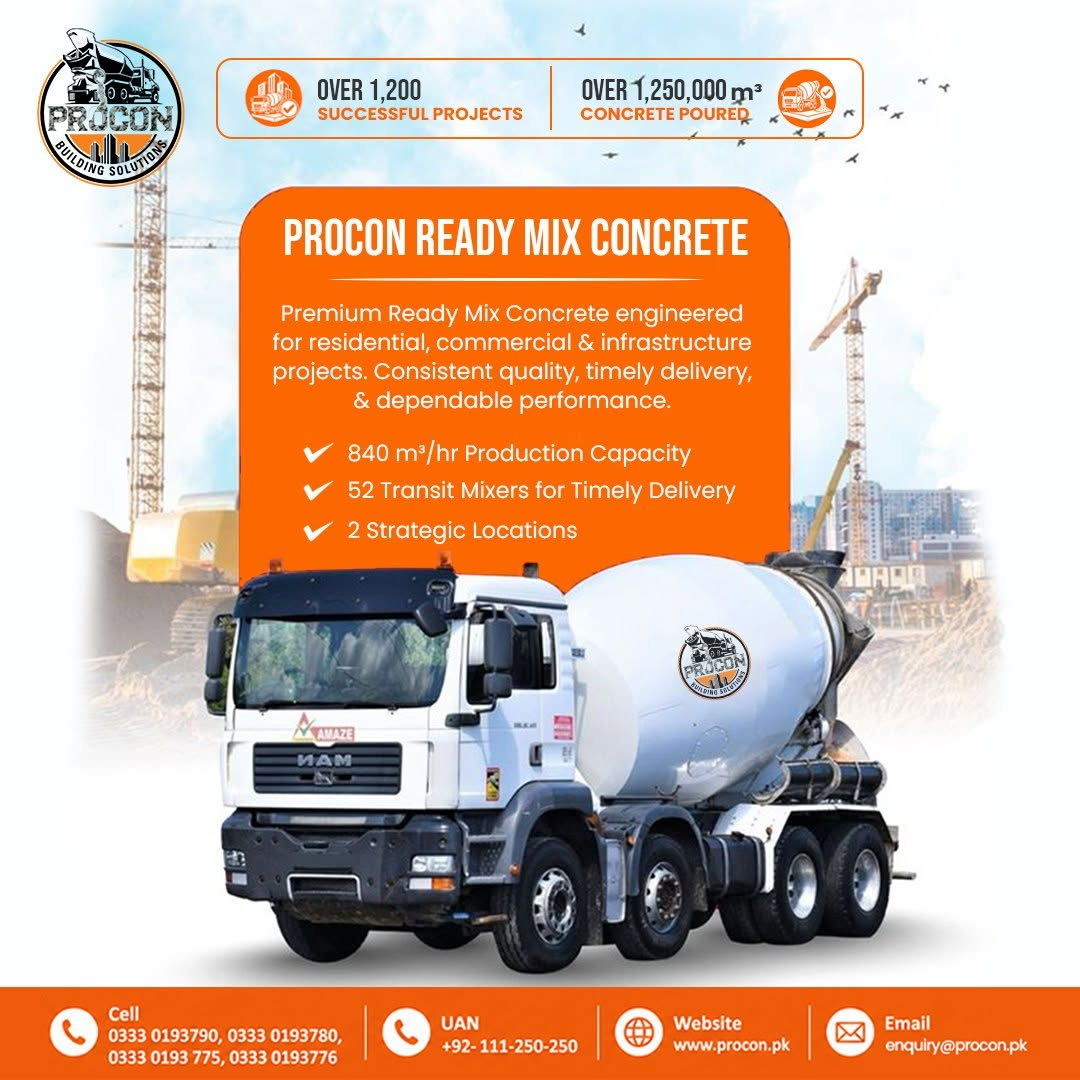
Concrete density is a fundamental property in material science and civil engineering that directly governs structural performance, durability, and load-bearing stability. Measured as mass per unit volume, concrete density reflects how tightly aggregate particles, cementitious paste, and microscopic crystals are packed within the internal matrix. Higher density generally signifies superior compressive strength, lower permeability, and greater resistance to environmental degradation. When executing high-rise commercial towers, heavy raft foundations, or civil infrastructure, sourcing high-performance ready mix concrete in Karachi from trusted industry leaders like Procon guarantees precise aggregate grading and automated batching to achieve optimal concrete density across every structural element.
Understanding the direct connection between density and building quality helps project managers and structural engineers safeguard project longevity.
1. The Correlation Between Density and Compressive Strength
The internal matrix of concrete consists of coarse and fine aggregates bound together by hydrated cement paste. The proportion of air voids within this matrix dictates both its density and load-bearing capacity:
- Eliminating Void Volume: Entrapped air bubbles created during mixing or placing act as structural weak points. Maximizing density by removing air voids ensures uniform load distribution throughout the mass.
- Higher Compressive Capacity: Well-consolidated, high-density concrete provides the compressive strength needed to support heavy structural loads in columns, shear walls, and transfer plates.
- Enhanced Elastic Modulus: Dense concrete exhibits a higher elastic modulus, reducing structural deflection and creep under sustained long-term loading.
2. Lowering Permeability and Protecting Internal Steel Reinforcement
A building’s long-term resistance to environmental weathering depends on how effectively its concrete matrix blocks moisture and chemical ingress:
- Sealing Capillary Pore Networks: High-density concrete forms a tightly packed microscopic structure that closes interconnected capillary pores.
- Preventing Corrosion: Lower permeability stops moisture, oxygen, and airborne chlorides from reaching embedded steel rebar, preventing rust expansion, cracking, and spalling.
- Sulfate and Chemical Resistance: High density shields underground retaining walls and foundations from aggressive subterranean soil sulfates and chemical groundwater.
3. Structural Weight Management and Specialized Concrete Types
While normal-weight concrete satisfies standard structural applications, specific engineering challenges require tailoring concrete density:
- Heavyweight Concrete for Radiation Shielding: In medical facilities and nuclear installations, high-density aggregates like magnetite or baryte produce heavy concrete capable of absorbing radiation.
- Lightweight Structural Concrete: Incorporating expanded shale or clay aggregates reduces dead load on long-span bridges and high-rise floor slabs without sacrificing structural safety.
- Mass Concrete Considerations: High-density mixes require carefully managed hydration heat to prevent steep thermal gradients and mass cracking during large foundation pours.
4. Field Practices That Preserve Concrete Density
Achieving target design density requires field control during placement and curing:
- Thorough Mechanical Vibration: Proper consolidation using internal poker vibrators forces trapped air to escape, transforming fresh concrete into a dense, solid mass.
- Controlled Water-Cement Ratios: Adding excess water on-site increases fluidity but leaves behind porous voids as free water evaporates, severely reducing final density.
Conclusion
Concrete density is a critical quality metric that influences structural strength, permeability, and overall building durability. Eliminating internal air voids through proper mix design, controlled water-cement ratios, and mechanical compaction protects load-bearing elements against structural failure and chemical decay. Combining computerized batching with high-density aggregate selection ensures that foundations, columns, and slabs maintain their performance over time. To schedule continuous site deliveries, consult on high-density mix formulations, and order certified ready mix concrete in Karachi, connect with the concrete technology specialists at Procon today.
Survey No. 423, Ibrahim Hydri, behind Bol head quarter, Korangi creek road, Karachi-74900
+92 21 111 250 250