Why Mix Design Is Critical for Structural Concrete
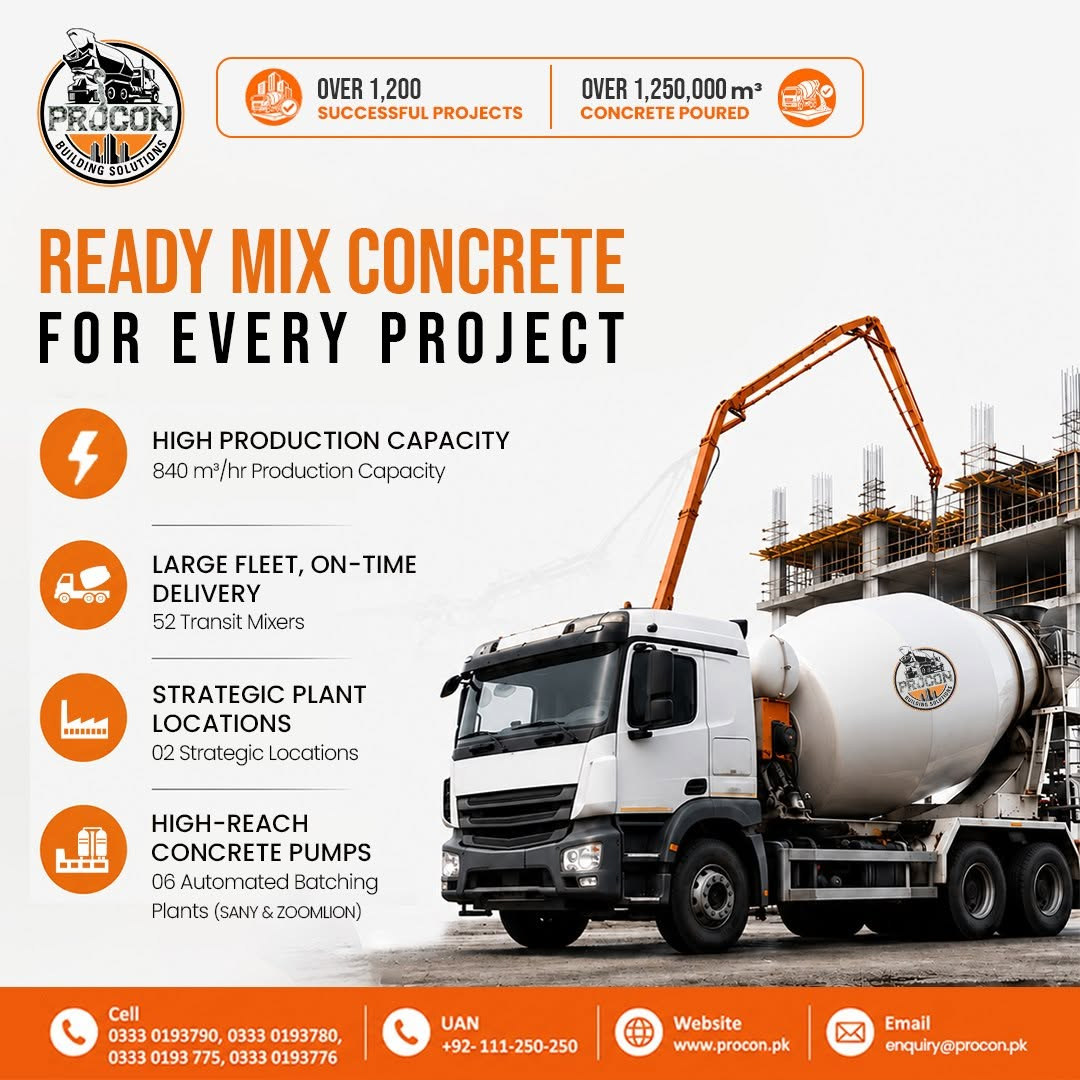
The construction sector across Pakistan is expanding rapidly, marked by high-rise commercial centers, multi-story residential towers, and major infrastructure projects. At the core of every safe and lasting project is structural concrete—the primary load-bearing material responsible for carrying building loads and withstanding environmental stresses. Historically, job sites relied heavily on traditional, manual site mixing. However, manual mixing relies on volumetric estimation, frequently leading to erratic water-cement ratios, aggregate segregation, and inconsistent compressive strength. In modern structural engineering, concrete is no longer treated as a basic commodity; it is a precise material engineered to satisfy exact strength, workability, and durability targets. Achieving these engineering metrics requires custom-designed mix formulations produced through computerized batching systems. Spearheading this technical standard with advanced laboratory testing and precision batching, dedicated suppliers such as Procon support modern developments with engineered formulations of ready mix concrete in Pakistan.
Balancing Compressive Strength and Elasticity
The primary goal of concrete mix design is to ensure that cured concrete achieves the exact compressive strength and elastic modulus required by structural engineers. Columns, shear walls, transfer slabs, and foundation rafts all face different load-bearing demands.
Scientific mix design optimizes structural load capacity through targeted chemistry:
- Tailored Water-Cement Ratios: Engineers balance water and cementitious content to maximize strength while eliminating surplus water that creates internal microscopic voids.
- Optimized Aggregate Grading: Blending crushed stone and coarse sand of varying sizes creates a dense mechanical matrix, reducing air voids and increasing compressive resistance.
- Elastic Resistance: Customized mixes prevent structural deformation and excessive sway in high-rise towers subjected to dynamic wind forces and seismic activity.
Enhancing Workability and Pumping Dynamics
Concrete must not only reach high ultimate strength after curing; it must also exhibit superior fluidity and cohesion during placement. Mixes that lack workability can block delivery pump pipelines, create honeycombing in formwork, or segregate during placement.
Engineered mix designs optimize site handling and mechanical pumping:
- Integration of Plasticizers and Superplasticizers: High-range water reducers enhance slump and flow without adding extra water, allowing concrete to fill dense rebar cages easily.
- Pumping Line Friction Reduction: Admixture formulations lubricate pump pipelines, facilitating smooth vertical pumping to upper floor decks without line blockages.
- Controlled Setting Times: Hydration retarders are added to maintain workability during transit across busy urban traffic routes, preventing cold joints during placement.
Safeguarding Multi-Decade Durability and Corrosion Resistance
Structures built in humid coastal areas, industrial zones, or aggressive soils face constant exposure to chlorides, carbonation, and soil sulfates. Poorly designed concrete allows moisture penetration, leading to internal steel rebar rust, expansion, and severe surface spalling.
Targeted mix design protects internal steel reinforcement from environmental decay:
- Low-Permeability Matrix: Incorporating supplementary cementitious materials creates a dense structural barrier that prevents water and chloride ingress.
- Sulfate and Salt Resistance: Specialized cement types and chemical additives protect subterranean foundations from soil chemical attacks.
- Shrinkage Control: Balanced mix proportions lower heat of hydration and internal drying shrinkage, preventing micro-cracks from forming on exposed slabs.
Optimizing Project Budgets and Execution Schedules
Over-designing concrete mixes by adding excess cement to ensure safety inflates project budgets, while under-designing risks catastrophic structural failure. Strategic mix design delivers exact performance metrics cost-effectively while accelerating project timelines.
Precise mix engineering provides clear economic and operational benefits:
- Accelerated Early Strength: High-early-strength formulations allow contractors to strike formwork ahead of standard schedules, speeding up floor-by-floor construction cycles.
- Elimination of Material Waste: Computerized plant batching ensures precise ingredient usage, eliminating raw material degradation from job-site storage.
- Verifiable Engineering Compliance: In-house laboratory testing verifies load performance for every mix design before site placement, providing documented compliance for project auditors.
Conclusion
Mix design is critical for structural concrete because structural safety, load capacity, daily execution speed, and multi-decade durability depend directly on precise material science. Transitioning from unverified site mixing to computerized batching and customized mix engineering enables developers, structural engineers, and contractors to execute ambitious architectural projects with complete confidence. As urban skylines continue to expand across the region, scientific mix design remains the fundamental cornerstone of safe engineering. To secure lab-tested, customized mix formulations engineered specifically to your project's load requirements, partner directly with Procon for continuous material supply and certified ready mix concrete in Pakistan.
Survey No. 423, Ibrahim Hydri, behind Bol head quarter, Korangi creek road, Karachi-74900
+92 21 111 250 250