Is Rubber Flooring Good for Commercial Kitchens?
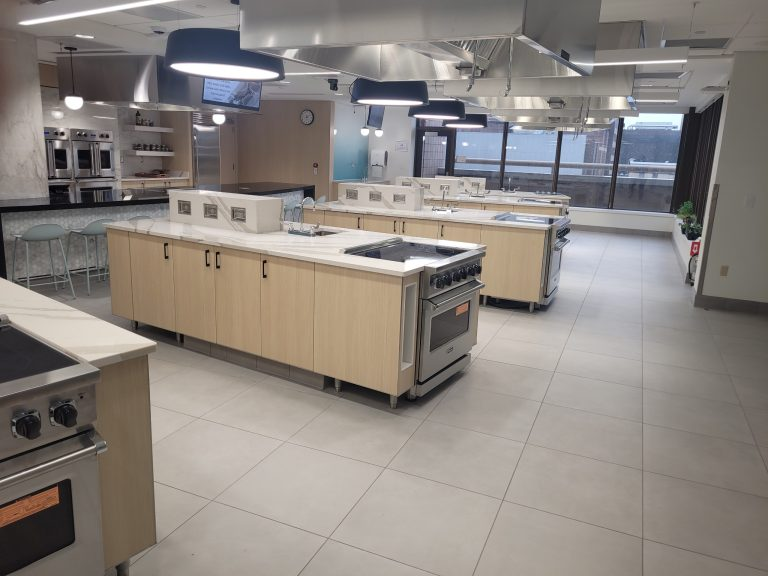
Introduction
Ask any kitchen manager what keeps them up at night and the floor probably isn’t the first answer. But it should be somewhere on the list. Grease finds its way onto tile no matter how careful your line cooks are. Ice melts by the walk-in. Someone spills a hotel pan of soup during the dinner rush, and for the next ten minutes that spot is a liability waiting to happen. The floor underneath all of that isn’t just background it’s doing real work, every shift, whether anyone notices or not.
Rubber flooring comes up a lot when restaurant owners and facilities managers start comparing options, usually in the same breath as epoxy and quarry tile. It’s got a reputation for being the safer, more forgiving choice, and that reputation is mostly earned. But “mostly” is doing some heavy lifting there. Below, we’ll get into where commercial kitchen rubber flooring actually delivers, where it falls short, and whether it can even pass a health inspection in the first place.
Why Flooring Matters in Commercial Kitchens
It is easy to think of flooring as the last decision on a kitchen build-out something you pick after the equipment layout is settled and the walk-in is placed. In practice, it deserves more attention than that, because a commercial kitchen floor takes abuse that almost no other surface in the building does.
Grease is the obvious one. A single boil-over near the fryer can turn a few square feet into a skating rink in seconds. Then there’s the moisture mopping, dish pits, ice machines, condensation off the walk-in door kitchens are wet more often than they’re dry. Add heat radiating off ranges and dish machines, staff moving fast while carrying hot pans, and you’ve got a surface that’s basically never given a break.
And then health inspectors show up and care about none of that in the way you’d expect. They’re not grading on how the floor looks. They want to know if it can actually be sanitized, whether grease and bacteria can hide in seams or pitted spots, and whether it’s a slip hazard waiting for someone to find it the hard way. A floor that looks spotless can still fail an inspection or worse, cause an injury if it’s the wrong material for the job. That’s really the whole conversation in a nutshell: everything else is secondary to slip resistance and cleanability.
Pros and Cons of Rubber Flooring in Commercial Kitchens
Rubber earns its spot in a lot of back-of-house discussions, and for good reason but it’s not the automatic right answer for every kitchen. Here’s the honest version, pros and cons both.
On the plus side, slip resistance is where rubber genuinely shines. Textured rubber is often the material people mean when they ask about non slip commercial kitchen flooring, because it grips even when the surface is wet or greasy which, in most kitchens, is most of the time. That matters most in prep areas and around dish pits, where footing tends to get sketchy fast.
There’s also the comfort factor, which gets overlooked until you talk to the people actually standing on it for eight or ten hours a shift. Rubber has some natural give to it. Staff who spend their whole day on rubber tend to complain less about sore feet and backs by the end of the night, and tired feet late in a shift are exactly when mistakes happen. It’s quieter underfoot too — noticeably so compared to sealed concrete or hard tile, which some kitchens genuinely value for communication during a busy service. And depending on the format, rubber tile or rolled goods can go down faster than a multi-day epoxy cure, which is worth something if you can’t afford to shut a kitchen down for long.
Now the trade-offs. Heat is rubber’s weak spot placed too close to a fryer or a range without proper protection, it can soften, discolor, or break down faster than epoxy or tile would in the same spot. Grease exposure over time is another one; certain rubber compounds will actually absorb oils if they’re not rated for it, leading to swelling or the surface breaking down at the fry station specifically. Seams need attention too if they’re not sealed properly during installation, they become a place for grease and moisture to collect, which defeats a lot of the purpose. And on cost, rubber usually runs more per square foot upfront than a standard epoxy system, though it can pay some of that back in durability underfoot over the years.
None of this makes rubber a bad choice. It just means the product spec and the installation matter as much as the material itself, especially anywhere near heavy grease.
How Rubber Compares to Other Commercial Kitchen Flooring Options
Rubber isn’t operating alone in this conversation most working kitchens end up with more than one flooring material depending on the zone, and that’s usually the smarter approach anyway.
Epoxy flooring tends to win out directly around the cook line, since it forms a seamless, chemical-resistant surface that handles heat and grease without much fuss. A lot of kitchens run epoxy near the range and rubber in the prep and dish areas, splitting the difference between durability where it’s needed most and comfort where staff spend the most time standing still. If epoxy’s on your radar too, our page on epoxy flooring goes into more detail on how it holds up in commercial spaces.
Quarry tile is the old standby it’s tough, it handles heat well, and it’s been the default in kitchens for decades. The catch is the grout lines. Left unsealed, they become both a maintenance headache and a slip risk over time.
Vinyl is the budget option, and in the right product line it offers decent slip resistance. But it generally can’t take the heat and equipment loads a busy kitchen throws at it the way rubber, epoxy, or tile can.
There’s more nuance here than we can fairly cover in one section — layout, ventilation, and traffic patterns all shift the calculus. Our full guide to commercial kitchen flooring options breaks it down material by material if you want the deeper comparison. And if you’re thinking beyond back-of house to the dining room itself, our restaurant flooring page covers those front-of-house considerations too.
How Rubber Compares to Other Commercial Kitchen Flooring Options
Rubber isn’t operating alone in this conversation most working kitchens end up with more than one flooring material depending on the zone, and that’s usually the smarter approach anyway.
Epoxy flooring tends to win out directly around the cook line, since it forms a seamless, chemical-resistant surface that handles heat and grease without much fuss. A lot of kitchens run epoxy near the range and rubber in the prep and dish areas, splitting the difference between durability where it’s needed most and comfort where staff spend the most time standing still. If epoxy’s on your radar too, our page on epoxy flooring goes into more detail on how it holds up in commercial spaces.
Quarry tile is the old standby it’s tough, it handles heat well, and it’s been the default in kitchens for decades. The catch is the grout lines. Left unsealed, they become both a maintenance headache and a slip risk over time.
Vinyl is the budget option, and in the right product line it offers decent slip resistance. But it generally can’t take the heat and equipment loads a busy kitchen throws at it the way rubber, epoxy, or tile can.
There’s more nuance here than we can fairly cover in one section — layout, ventilation, and traffic patterns all shift the calculus. Our full guide to commercial kitchen flooring options breaks it down material by material if you want the deeper comparison. And if you’re thinking beyond back-of house to the dining room itself, our restaurant flooring page covers those front-of-house considerations too.
Is Rubber Flooring NSF/Health-Code Compliant?
This is usually the question that ends up deciding things for a facilities manager, and the honest answer is: it depends entirely on the product, not on rubber as a category.
Commercial-grade rubber flooring built for foodservice use can meet NSF standards and satisfy local health codes but it has to check a few boxes to get there. The surface needs to be non-porous or properly sealed so it resists bacteria. Seams need to be welded or sealed correctly, not just butted together, so moisture and debris can’t work their way in underneath. The material itself needs to be rated for the kind of grease and chemical exposure a real kitchen produces, not just general foot traffic. And it needs to actually be maintained the way the manufacturer specifies compliance doesn’t end at installation.
Here’s where people get tripped up: not every rubber product on the market is built for this. Gym flooring and generic rubber matting might look similar to a commercial kitchen-rated system, but they’re not the same thing, and using the wrong one is where most compliance headaches and early failures start. If you’re serious about passing inspection without drama, working with a contractor who installs anti slip commercial kitchen flooring specifically for foodservice clients makes a real difference they know which products are actually rated for it, not just which ones look the part in a showroom.
Conclusion
Rubber flooring can be a smart choice for commercial kitchens when it’s used in the right areas and matched to the demands of the space. Its comfort, durability, and traction make it especially useful in prep areas, dishwashing zones, service areas, and other places where employees spend long hours on their feet. However, it may not be the best fit around high-heat cooking equipment or every area exposed to heavy grease and moisture. The best commercial kitchen flooring solution is rarely about choosing one material for the entire space. A combination of commercial kitchen rubber flooring, epoxy, or tile can provide better performance by giving each zone the surface it needs. The key is choosing flooring based on traffic, heat, moisture, cleaning requirements, and how the space is actually used.