Inside the Alligator’s Brain: Intelligence and Secrets of an Apex Predator
Inside the Alligator’s Brain: Intelligence and Secrets of an Apex Predator
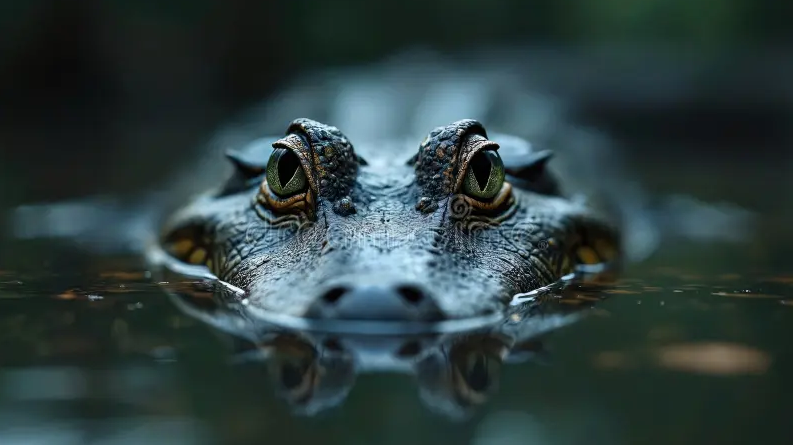
When people imagine the American alligator, they usually visualize a massive, armored reptile basking along a muddy riverbank or snapping its powerful jaws shut on unsuspecting prey. For decades, traditional popular culture has dismissed crocodilians as simple, mindless killing machines driven solely by basic instinct. However, modern scientific research into the alligator's brain reveals a far more complex, adaptable, and remarkably intelligent apex predator.
Watch Video On The Secret Inside the Alligator’s Brain
Despite being evolutionary survivors that have endured for millions of years, crocodilians possess neural architecture that rivals many birds and mammals in problem-solving and social communication. Understanding the structure and capabilities of an alligator's brain helps explain how these ancient reptiles have successfully dominated their wetland habitats for so long.
The Physical Structure of an Alligator's Brain
At first glance, the physical size of an alligator's brain might seem underwhelming compared to its massive bodily proportions. In an adult alligator measuring ten feet in length, the brain weighs only around eight to ten grams—roughly the weight of a single walnut or a couple of U.S. quarters.
However, neurobiologists emphasize that brain size relative to body size does not dictate cognitive potential. Rather, the specialized regional organization within an alligator's brain allows it to process complex environmental sensory data with remarkable efficiency:
- Olfactory Bulbs: Comprising a massive portion of the forebrain, these structures give the alligator an exceptional sense of smell, allowing it to track prey across vast distances underwater or through thick vegetation.
- Cerebrum: Responsible for processing sensory input, learning, and decision-making. The cerebral hemispheres in an alligator's brain are more developed than those found in most other reptiles.
- Optic Lobes: Highly tuned visual centers that process movement, night vision, and spatial awareness in murky aquatic environments.
- Cerebellum: Coordinates smooth muscular movements, explosive strikes, and precise swimming mechanics.
Watch Video On The Secret Inside the Alligator’s Brain
Evolutionary Marvel: Advanced Neural Features
What makes the alligator's brain particularly fascinating to evolutionary biologists is its close relation to avian species and extinct archosaurs like dinosaurs. Crocodilians and birds are the only surviving members of the Archosauria clade, and their neuroanatomy reflects this shared lineage.
Unlike most cold-blooded reptiles whose neural pathways are relatively rudimentary, the alligator's brain features a well-developed cerebral cortex structure. This advanced neural mapping enables crocodilians to exhibit behaviors once thought exclusive to mammals and birds, including complex play behaviors, vocal communication, and parental care.
| Brain Region | Anatomical Focus | Practical Survival Function |
|---|---|---|
| Forebrain (Olfactory) | Scent processing | Detecting decaying matter, prey, and rival pheromones |
| Midbrain (Optic & Auditory) | Sensory integration | Pinpointing vibrations and low-frequency sounds |
| Hindbrain (Brainstem) | Autonomic controls | Regulating heart rate during deep, prolonged dives |
Watch Video On The Secret Inside the Alligator’s Brain
Tool Use and Problem Solving in Crocodilians
One of the most groundbreaking discoveries in reptilian cognitive research directly involved studying the capabilities governed by an alligator's brain. Ethologists observed American alligators using sticks and twigs as lures during bird-nesting season.
In areas where egrets and herons nest in trees above swamp waters, alligators will gather floating sticks and balance them precisely across their snouts. When wading birds dip down to collect nesting materials, the alligator strikes. This seasonal, context-dependent tool use requires executive function, planning, and environmental awareness—clear proof that an alligator's brain is capable of sophisticated learning strategies.
Social Intelligence and Complex Communication
The sophisticated nature of an alligator's brain is most evident in how these animals interact with one another. Far from being solitary, unsocial creatures, alligators possess a complex repertoire of acoustic, visual, and tactile signals:
- Sub-Audible Infrasound: Alligators generate low-frequency bellows that cause water to dance on their backs—a signal processed through specialized acoustic centers in the alligator's brain.
- Maternal Care: Female alligators guard their nests fiercely, respond to hatchling distress chirps, and gently crack open eggs with their teeth before carrying infants to safety in their mouths.
- Hierarchy and Dominance: Visual displays, snout-lifting, and territorial splashing demonstrate that an alligator's brain easily tracks social status within a shared stretch of water.
       [ Olfactory Bulbs ] ---> Scent Detection & Tracking
                |
     [ Cerebral Hemispheres ] ---> Learning, Tool Use, & Social Memory
                |
        [ Optic / Auditory ] ---> Motion Tracking & Infrasound Processing
                |
           [ Cerebellum ] ---> Precise Swimming & Explosive Strikes
Watch Video On The Secret Inside the Alligator’s Brain
Sensory Processing: The Brain's Direct Line to the Environment
The incredible responsiveness of an alligator's brain is fueled by thousands of microscopic sensory organs dotting their snouts and bodies. Known as Integumentary Sensor Organs (ISOs), these tiny dome-like structures detect minute pressure changes, water vibrations, and chemical shifts.
Information gathered by the ISOs travels directly through the trigeminal nerve system straight into the alligator's brain. This neural superhighway allows the alligator to strike at prey in pitch-black water within milliseconds of feeling a ripple, highlighting the incredible speed at which an alligator's brain processes physical data.
Watch Video On The Secret Inside the Alligator’s Brain
Re-evaluating Reptilian Cognition
Ultimately, exploring the inner workings of an alligator's brain challenges long-held misconceptions about reptilian intelligence. The American alligator is not merely a living fossil relying on primitive reflexes; it is a highly evolved, socially complex predator with impressive learning capacity and problem-solving abilities.
By recognizing the true capability of an alligator's brain, researchers and wildlife enthusiasts gain a deeper appreciation for these magnificent reptiles and their essential role in balancing delicate wetland ecosystems.