Google will build a waterless data center in a chronically drought-stricken state/Google construirá un centro de datos sin agua en un estado con sequía crónica

Source
Global data center water consumption is estimated at around 560 billion liters (0.56 km³) per year, according to recent reports from 2025. This figure is rapidly increasing due to the expansion of artificial intelligence (AI) and is projected to reach nearly 1.2 trillion liters by 2030. The rise of generative AI has driven up the need for water to cool high-density servers. A single AI session can consume the equivalent of a bottle of water for every 20 to 50 queries.
El consumo anual mundial de agua de los centros de datos se estima en unos 560 mil millones de litros (0.56 km³) al año, según informes recientes de 2025. Esta cifra está experimentando un rápido aumento debido a la expansión de la inteligencia artificial (IA) y se proyecta que podría alcanzar cerca de 1.200 mil millones de litros para 2030. El auge de la IA generativa ha disparado la necesidad de agua para refrigerar servidores de alta densidad. Una sola sesión de IA puede consumir el equivalente a una botella de agua por cada 20 o 50 consultas.
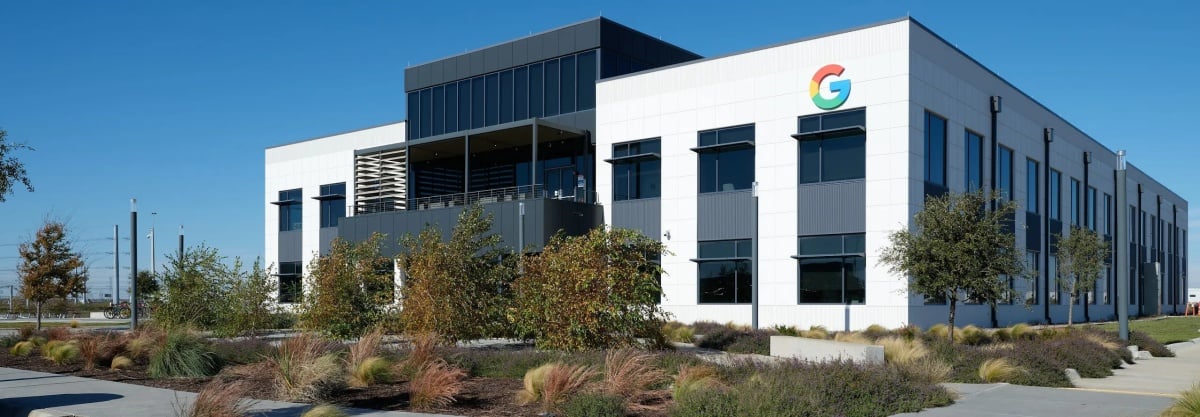
To mitigate this problem, Google is building a pioneering data center in Wilbarger County, Texas, a state facing chronic droughts and water stress. This project is particularly significant because it will not use water for cooling, limiting its consumption to critical operations such as kitchens. Instead, Google will use advanced air-cooling technology that employs fans and refrigerant distribution units to dissipate heat from the servers without water evaporation.
Para paliar este problema de alguna manera, Google está construyendo un centro de datos pionero en Wilbarger County, Texas, un estado que enfrenta sequías crónicas y estrés hídrico. Este proyecto es particularmente significativo porque no usará agua para refrigeración, limitando su consumo únicamente a operaciones críticas como cocinas. En su lugar Google utilizará tecnología avanzada de refrigeración por aire que usa ventiladores y unidades de distribución de refrigerante para disipar el calor de los servidores sin evaporación de agua.

Source
Heat exchangers transfer heat from the servers to the building's cooling system using air instead of water. Unlike traditional cooling tower systems that evaporate water (losing approximately 80%), the air system is a closed loop. Cool air is channeled to the front of the racks, and hot air is drawn in from the rear and physically separated to improve efficiency. It utilizes chillers and air-cooled chillers, cooling units that expel heat directly to the outside air via dry heat exchangers.
Mediante intercambiadores de calor transfieren el calor de los servidores al sistema de enfriamiento del edifico usando aire en lugar de agua. A diferencia de los sistemas tradicionales de torres de enfriamiento que evaporan agua (pierden ~80% del agua), el sistema de aire es de circuito cerrado. El aire frío se canaliza a la parte frontal de los racks y el aire caliente se recoge por la parte trasera y se separa físicamente para mejorar la eficiencia. Utiliza enfriadoras y “air‑cooled chillers”, unidades de refrigeración que expulsan el calor directamente al aire exterior mediante intercambiadores secos.
When the outside temperature allows, outside air is used almost directly for cooling, reducing the use of compressors. A suite of intelligent systems adjusts airflow, fan speed, and temperature setpoints to keep the servers warmer than traditional cooling methods, but still within a safe range, thus reducing the energy used for cooling. However, there is a slight drawback: eliminating water cooling means using more electricity. Therefore, companies often use water cooling to reduce their reliance on electric cooling systems.
Cuando la temperatura exterior lo permite, se usa aire del exterior casi directamente para enfriar, reduciendo el uso de compresores. Un conjunto de sistemas inteligentes ajustan caudales de aire, velocidad de ventiladores y setpoints de temperatura para mantener los servidores más calientes de lo tradicional, pero aún en rango seguro, reduciendo la energía gastada en enfriar. Aunque hay un pequeño problema, eliminar el agua significa usar más electricidad, por eso las empresas usan refrigeración por agua para usar menos sistemas de refrigeración eléctricos.
Source
In fact, Google is partnering with AES Corp to supply clean energy from new renewable energy plants that will be built alongside the data center. This isn't an isolated project but rather part of an industry trend. Microsoft is also developing "zero evaporation" systems that recirculate water in a closed loop, and Meta has announced that its data centers will use "zero water for cooling for more than half the year" using adiabatic cooling. Furthermore, Google had already announced that its data center in Mesa, Arizona, would also use waterless cooling.
De hecho Google está asociándose con AES Corp para suministrar energía limpia de nuevas plantas de energía renovable que se construirán junto con el centro de datos. Este no es un proyecto aislado sino que forma parte de una tendencia en la industria, Microsoft también está desarrollando sistemas de "evaporación cero" que recirculan agua en circuito cerrado y Meta ha anunciado que sus centros usarán "cero agua para refrigeración durante más de la mitad del año" usando enfriamiento adiabático. Además de que Google ya había anunciado que su centro en Mesa, Arizona también usaría refrigeración sin agua
In short, this project represents a significant step toward water sustainability in the technology industry, demonstrating that it is possible to operate massive data centers without depleting local water resources in drought-stricken regions. However, it raises new challenges regarding energy consumption that must be addressed with renewable sources. Even so, the waterless data center in Wilbarger County is most likely to be operational between the end of 2027 and 2028, depending on the speed of construction of the associated energy infrastructure.
En definitiva, este proyecto representa un paso importante hacia la sostenibilidad hídrica en la industria tecnológica, demostrando que es posible operar centros de datos masivos sin agotar recursos hídricos locales en regiones con sequía. Sin embargo, plantea nuevos desafíos sobre el consumo energético que deben resolverse con fuentes renovables. Aún así, lo más probable es que el centro de datos sin agua de Wilbarger County esté operativo entre finales de 2027 y 2028, dependiendo de la velocidad de construcción de la infraestructura energética asociada.
More information/Más información
https://mashdigi.com/ending-the-water-consuming-monster-reputation-google-announces-new-advanced-air-cooled-data-center-in-texas-that-consumes-virtually-no-water/