MIT researchers optimize building design using less material/Investigadores del MIT optimizan el diseño de edificios con menos material
Source
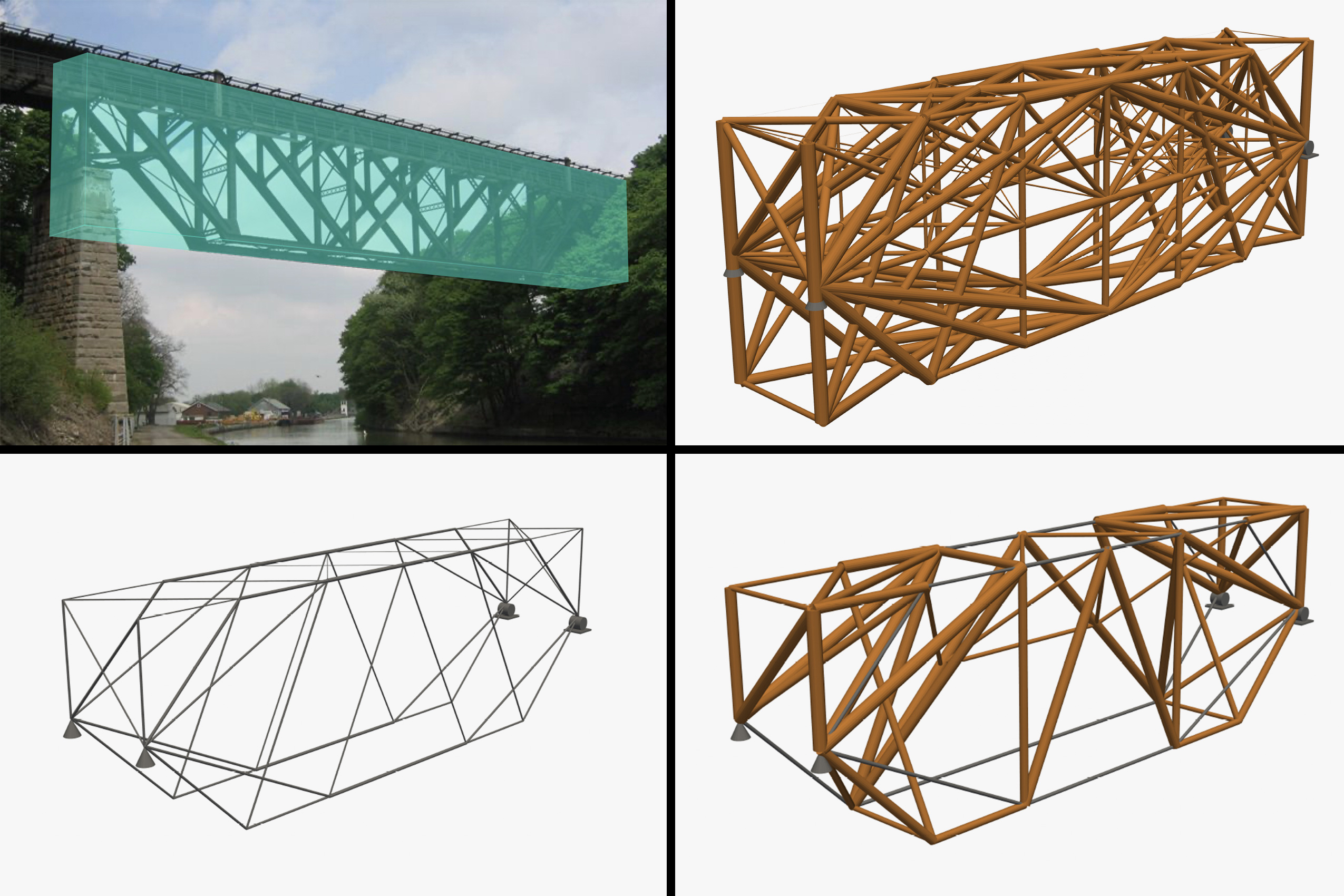
Researchers at MIT (Massachusetts Institute of Technology) have developed a new computational approach that enables the design of buildings and bridges using significantly less material than current designs, while maintaining their strength and safety. This could drastically reduce the cost and environmental impact of construction. The key lies in a technique known as topology optimization, combined with a new model that resolves the main issue preventing its use in actual construction.
Investigadores del MIT (Massachusetts Institute of Technology) han desarrollado un nuevo enfoque computacional que permite diseñar edificios y puentes que utilizan mucha menos cantidad de material que los diseños actuales, manteniendo su resistencia y seguridad. Esto podría reducir drásticamente el coste y el impacto medioambiental de la construcción. La clave se encuentra en una técnica llamada optimización topológica, combinada con un nuevo modelo que soluciona el principal problema que impedía su uso en la construcción real.
This technique uses computers to find the most efficient way to distribute material within a space, creating incredibly lightweight and strong structures that resemble "spiderwebs." However, these complex, organic shapes are nearly impossible to build in the real world using traditional construction methods, so their use was previously limited to 3D printing or research. The MIT team has created a new framework to make these optimized designs "buildable."
Esta técnica usa computadoras para encontrar la forma más eficiente de distribuir el material en un espacio, creando estructuras increíblemente ligeras y fuertes que parecen "telas de araña". Sin embargo, estas formas complejas y orgánicas son casi imposibles de construir en el mundo real con los métodos de construcción tradicionales, por lo que su uso se limitaba a la impresión 3D o a la investigación. El equipo del MIT ha creado un nuevo marco de trabajo para hacer que estos diseños optimizados sean "construibles".

Source
Instead of generating free-form shapes, the model focuses on lattice structures (like those of a bridge) and allows engineers to establish construction rules from the outset. For example, it can limit the number of members meeting at a single point or the minimum size of a component. This ensures that the final design—while far more efficient—can be built using conventional techniques and timeframes. Furthermore, this model offers another major advantage: it can combine multiple materials, such as wood and steel, within a single design.
En lugar de generar formas libres, el modelo se centra en estructuras de celosía (como las de un puente) y permite a los ingenieros establecer reglas de construcción desde el principio. Por ejemplo, puede limitar el número de barras que se unen en un punto o el tamaño mínimo de una pieza. Esto asegura que el diseño final, aunque sea mucho más eficiente, pueda ser construido con las técnicas y plazos convencionales. Además, este modelo tiene otra gran ventaja: puede combinar varios materiales en un mismo diseño, como madera y acero.
The algorithm determines which parts should be made of specific materials to achieve the optimal balance between strength, cost, and sustainability, without requiring the use of a single material for the entire structure. The potential impact of this technology is highly significant on several fronts. In some cases, optimization can reduce the amount of material required by up to 90%. Considering global construction material production—which accounts for over 7% of carbon emissions—the savings could amount to gigatonnes of carbon dioxide annually.
El algoritmo decide qué parte debe ser de un material u otro para lograr el mejor equilibrio entre resistencia, coste y sostenibilidad, sin tener que elegir un único material para toda la estructura. El impacto potencial de esta tecnología es muy significativo en varios frentes. La optimización puede reducir el material necesario en algunos casos hasta un 90% . Si pensamos en la producción global de materiales de construcción, que genera más del 7% de las emisiones de carbono, el ahorro podría ser de gigatoneladas de dióxido de carbono al año.
Source
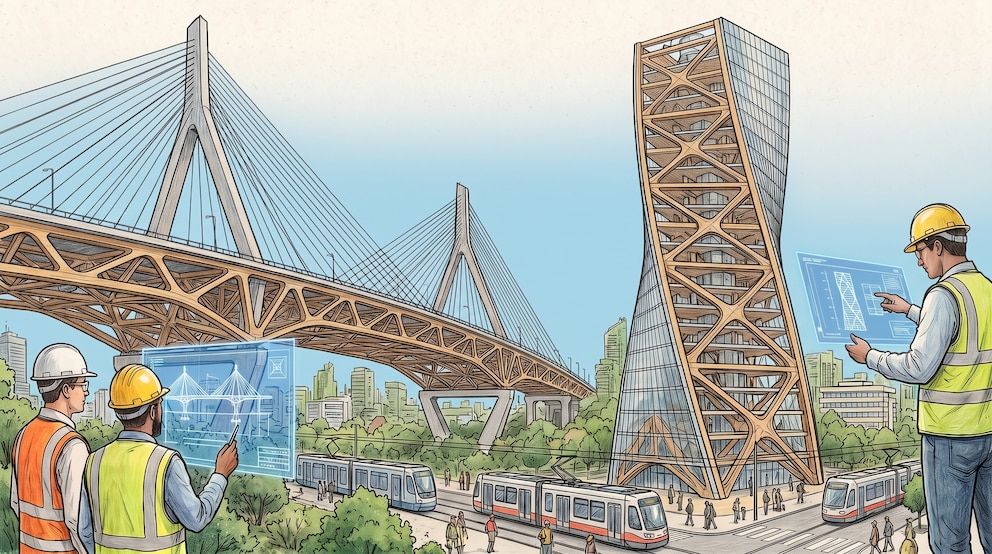
Using less material reduces resource extraction, transportation, and manufacturing, thereby lowering the construction project's carbon footprint. For instance, the model can opt to use wood—which is less polluting—wherever feasible, while reserving steel for areas requiring greater strength. Furthermore, using less construction material directly results in a lower-cost project. This provides a clear economic incentive for construction companies to adopt these types of technologies.
Al usar menos material, se reduce la extracción de recursos, el transporte y la fabricación, con lo que se logra disminuir la "huella de carbono" de la construcción. El modelo puede elegir, por ejemplo, usar madera (que es menos contaminante) en lugares donde sea viable y reservar el acero para los puntos que necesiten más resistencia. Además, el uso de menos material de construcción se traduce directamente en un proyecto más barato. Esto da un incentivo económico claro a las empresas constructoras para adoptar este tipo de tecnologías.
Although the model is complex, researchers managed to run it on a standard laptop—such as a MacBook Pro—making it practical and accessible for most civil engineering firms. In short, the MIT work represents a crucial step toward making construction more efficient and sustainable. It adapts topology optimization—a powerful technique that was previously impractical to implement—for use in real-world projects, enabling the design of lighter, more affordable, and eco-friendly structures without compromising safety.
Aunque el modelo es complejo, los investigadores lograron ejecutarlo en un ordenador portátil estándar, como un MacBook Pro, lo que hace que sea práctico y accesible para la mayoría de las firmas de ingeniería civil . En resumen, el trabajo del MIT es un paso crucial para hacer que la construcción sea más eficiente y sostenible. Adapta la optimización topológica, que era una técnica poderosa pero imposible de llevar a la práctica, para que pueda usarse en proyectos reales, permitiendo diseñar estructuras más ligeras, baratas y ecológicas sin sacrificar su seguridad.
More information/Más información
https://climate.mit.edu/posts/computer-model-could-enable-bridges-and-buildings-use-less-material
Your explanation of the topology optimization technique is fascinating, and I'm curious to know how this approach would be applied in a real-world building project. 🏗️💡👍
In a typical engineering project the engineer will establish all of the building requirements (limits, loading, materials and methods). This enables a model to be created at MIT to develop an optimised buildable structural design. The design will use less material and still adhere to the requirements for safety. Engineers will also use standard engineering practices to further refine and validate the design, before they then use conventional practices to build it. As a result of this process, costs and the negative environmental impact of the project are reduced.