Scientists successfully grow chickpeas in simulated lunar soil/Científicos logran cultivar garbanzos en suelo lunar simulado
Source
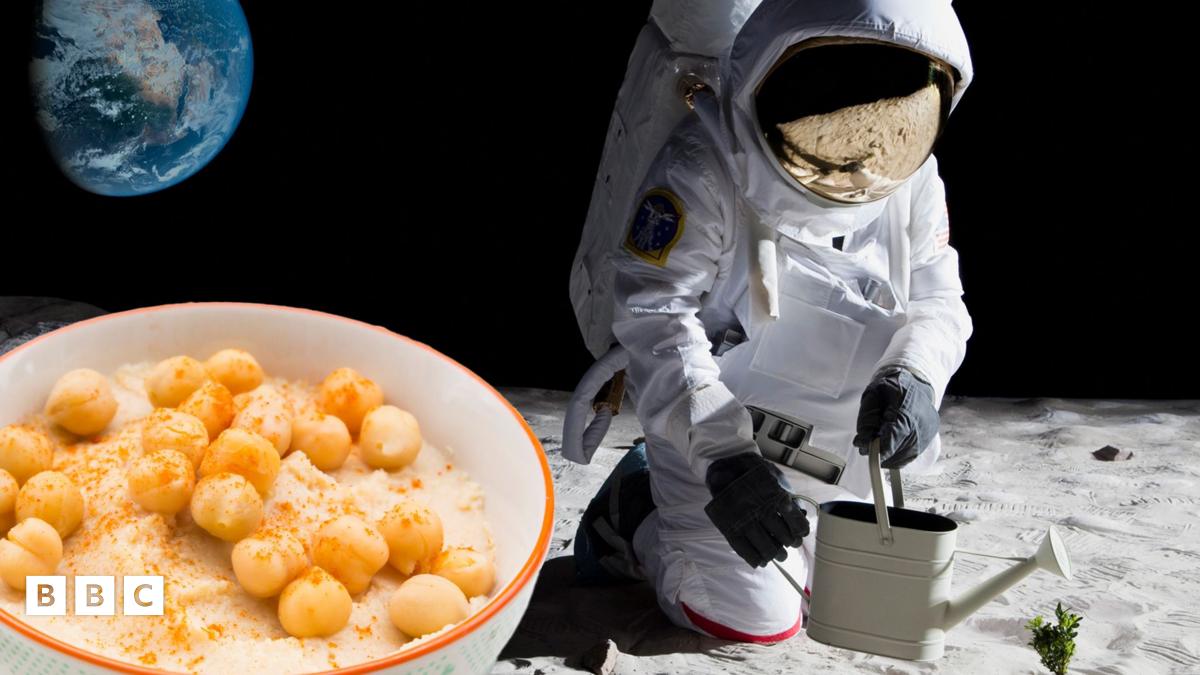
After Elon Musk's announcement to postpone his Mars mission and focus his efforts on the Moon, there's no doubt that the reconquest of our satellite is drawing ever closer. This involves not only returning to its surface but also establishing permanent colonies that can become increasingly self-sufficient. One of the many challenges to overcome will be feeding the colonists; transporting food from Earth would be prohibitively expensive, so a way to cultivate it on-site will have to be found, and it seems that the first crop to be grown on lunar soil will be chickpeas.
Después del anuncio de Elon Musk de aplazar su viaje a Marte y centrar sus esfuerzos en la Luna, no cabe duda de que la reconquista de nuestro satélite está cada vez más cerca. No solo volver a pisar su superficie sino además construir colonias permanentes que puedan ser cada vez más autosuficientes. Uno de los múltiples problemas a superar será el de la alimentación de los colonos, llevar alimentos desde la Tierra sería demasiado costoso por lo que habrá que buscar la manera de cultivarlos in situ y parece que lo primero en cultivar en suelo lunar serán garbanzos.
First, we need to understand the "soil" of the Moon; it's not like the soil in our gardens. The lunar surface is covered in regolith, a layer of dust and crushed rock, creating sharp, glass-like particles formed by billions of years of meteorite impacts. This material is inorganic, lacks the nutrients and microorganisms that make soil fertile on Earth, and contains metals like aluminum and iron that can be toxic to plants in high concentrations. "Simulated lunar soil" is precisely a material created in a laboratory to mimic the physical and chemical properties of this lunar regolith.
Primero hay que entender el "suelo" de la Luna, no es como la tierra de nuestro jardín. La superficie lunar está cubierta de regolito, una capa de polvo y roca triturada, creando partículas afiladas como vidrio formadas por miles de millones de años de impactos de meteoritos . Este material es inorgánico, carece de los nutrientes y microorganismos que hacen fértil la tierra en la Tierra, y contiene metales como aluminio y hierro que pueden ser tóxicos para las plantas en altas concentraciones. El "suelo lunar simulado" es, precisamente, un material creado en laboratorio para imitar las propiedades físicas y químicas de este regolito lunar.

Source
It's inspired by the real samples brought back by NASA's Apollo missions. By using this simulant, scientists can experiment without relying on the valuable and scarce real samples. The big challenge was transforming that sterile and hostile substrate into something capable of supporting life. Researchers at Texas A&M University not only added nutrients but also applied a key concept: bioremediation. This basically involves using living organisms to make the soil habitable.
Está inspirado en las muestras reales traídas por las misiones Apolo de la NASA. Al usar este simulante, los científicos pueden experimentar sin depender de las valiosas y escasas muestras reales. El gran desafío era transformar ese sustrato estéril y hostil en algo capaz de sustentar vida. Los investigadores de la Universidad de Texas A&M, no solo añadieron nutrientes, sino que aplicaron un concepto clave, la biorremediación. Esto consiste básicamente en utilizar organismos vivos para hacer habitable el suelo.
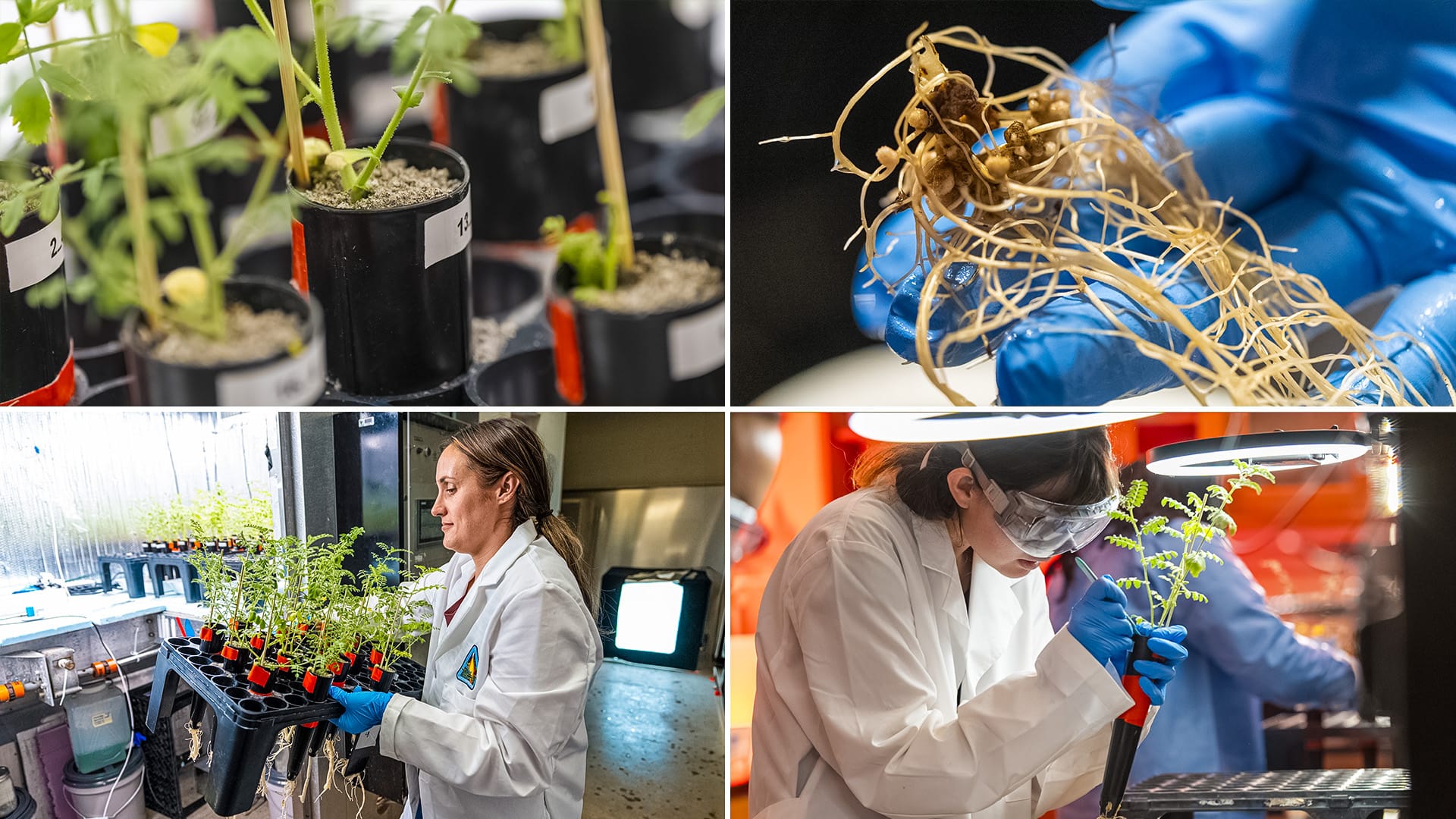
The "Myles" variety of chickpeas was selected for its unique characteristics, making it ideal for space agriculture. Chickpeas are legumes with high nutritional value (rich in protein and essential amino acids), making them ideal for the diet of future astronauts. Furthermore, as legumes, they have the natural ability to establish a symbiotic relationship with certain beneficial fungi. The chickpea seeds were coated with arbuscular mycorrhizal fungi before planting. On Earth, these fungi live in the roots of plants and create a mutually beneficial network: the fungus helps the plant absorb water and nutrients, and in return, receives sugars from the plant.
Se seleccionaron garbanzos tipo "Myles" por sus características particulares, que la hacen ideal para la agricultura espacial. Los garbanzos son legumbres con un alto valor nutricional (ricos en proteínas y aminoácidos esenciales), lo que los hace ideales para la dieta de futuros astronautas. Además, como leguminosas, tienen la capacidad natural de establecer una relación simbiótica con ciertos hongos beneficiosos. Las semillas de garbanzo se recubrieron con hongos micorrízicos arbusculares antes de ser plantadas . En la Tierra, estos hongos viven en las raíces de las plantas y crean una red de beneficio mutuo, el hongo ayuda a la planta a absorber agua y nutrientes, y a cambio, recibe azúcares de la planta.
Source
In this experiment, fungi played a crucial role in helping to reduce the plant's absorption of potentially harmful metals. They helped bind the loose, sharp particles of the regolith, making it behave more like terrestrial soil and allowing for better root development. Scientists added vermicompost in varying proportions. This is a high-quality organic fertilizer produced by earthworms as they decompose organic waste. The vermicompost provided essential nutrients that the lunar regolith completely lacked.
En este experimento, los hongos jugaron un papel crucial ayudando a reducir la absorción de metales potencialmente dañinos por parte de la planta. Contribuyeron a unir las partículas sueltas y afiladas del regolito, haciendo que se comportara más como un suelo terrestre y permitiendo un mejor desarrollo de las raíces. Los científicos añadieron vermicompost en diferentes proporciones. Este es un abono orgánico de alta calidad producido por lombrices al descomponer residuos orgánicos . El vermicompost aportó los nutrientes esenciales de los que carece por completo el regolito lunar.
Despite the enthusiasm, the researchers themselves are urging caution for several reasons. The harvested chickpeas are being analyzed to detect if they have accumulated toxic heavy metals from the lunar simulator, such as aluminum. So far, no one has eaten them. The experiment was conducted on Earth, with Earth's gravity, atmosphere, and radiation. Conditions on the Moon are much more extreme, so the next step is to test this technique in the real environment. In any case, there is no doubt that this is an interesting development in our quest to conquer the Moon.
A pesar del entusiasmo, los propios investigadores piden cautela por varias razones, los garbanzos cosechados están siendo analizados para detectar si han acumulado metales pesados tóxicos del simulante lunar, como el aluminio. Por ahora, nadie se los ha comido. El experimento se realizó en la Tierra, con gravedad, atmósfera y radiación terrestres, las condiciones en la Luna son mucho más extremas, por lo que el siguiente paso es probar esta técnica en el entorno real. De cualquier forma no cabe duda de que este es un desarrollo interesante para nuestro propósito de conquistar la Luna.
More information/Más información
https://www.sciencedaily.com/releases/2026/03/260312020101.htm