Photoelectric Switch or Relay: What's the Difference?
In automation control and electronic equipment, photoelectric switches and photoelectric relays both play important roles, but their functions and applications are fundamentally different. In the field of electronic components, these two devices are common and often easily confused. Although both involve photoelectric conversion technology, they have significant differences in working principles and application scenarios. If you are selecting components, maintaining equipment, or designing automation systems, this article will help you quickly and accurately understand the essential differences between them.
I. Photoelectric Switch
A photoelectric switch is a sensor that detects the presence or passage of objects by monitoring changes in a light beam. It is a non-contact detection device and holds an important place in the field of automation.
II. Photoelectric Relay
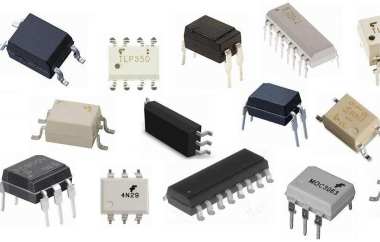
A photoelectric relay is a solid-state relay that uses photoelectric coupling technology to control circuits. It achieves electrical isolation between input and output through light signals, offering advantages that traditional electromagnetic relays cannot match.
Get more details: Photoelectric Switch or Relay: What's the Difference?