What's the Difference Between SCR and IGBT?
In the field of power electronics, both SCRs (Silicon Controlled Rectifiers) and IGBTs (Insulated Gate Bipolar Transistors) are essential power semiconductor devices, playing a crucial role in energy conversion and control. They can be found in everyday household appliances as well as large industrial machinery. However, these two types of devices differ fundamentally in terms of structure, operating principle, and performance characteristics, making them suitable for different applications. This article will explore the differences between SCRs and IGBTs in terms of structure, working principle, performance features, and applications.
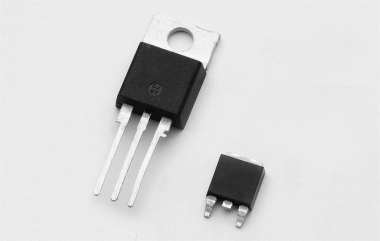
I. What is an SCR?
An SCR, or Silicon Controlled Rectifier, is internationally recognized as a thyristor. It is a four-layer, three-terminal power semiconductor device composed of P-N-P-N layers, forming three PN junctions. Developed in the 1950s, the SCR marked a significant transition of semiconductor technology from low-power applications to high-power systems, revolutionizing industrial control and power conversion. SCRs are capable of rectifying alternating current and can also function as electronic switches, allowing precise control of circuit conduction and shutdown through control signals.
II. What is an IGBT?
IGBT, which stands for Insulated Gate Bipolar Transistor, is a three-terminal power semiconductor device that combines a MOSFET and a bipolar transistor (BJT). Introduced in the 1980s, it integrates the high input impedance of a MOSFET with the low conduction voltage drop of a BJT. The IGBT fills the gap between MOSFETs and traditional power transistors, and it has become a core component in medium- to high-power electronic devices. It is widely used in inverters, motor drives, and uninterruptible power supplies (UPS).
Get more details: What's the Difference Between SCR and IGBT?