Local SEO for a Garment Factory: A Practical Growth Guide for Canadian Manufacturers
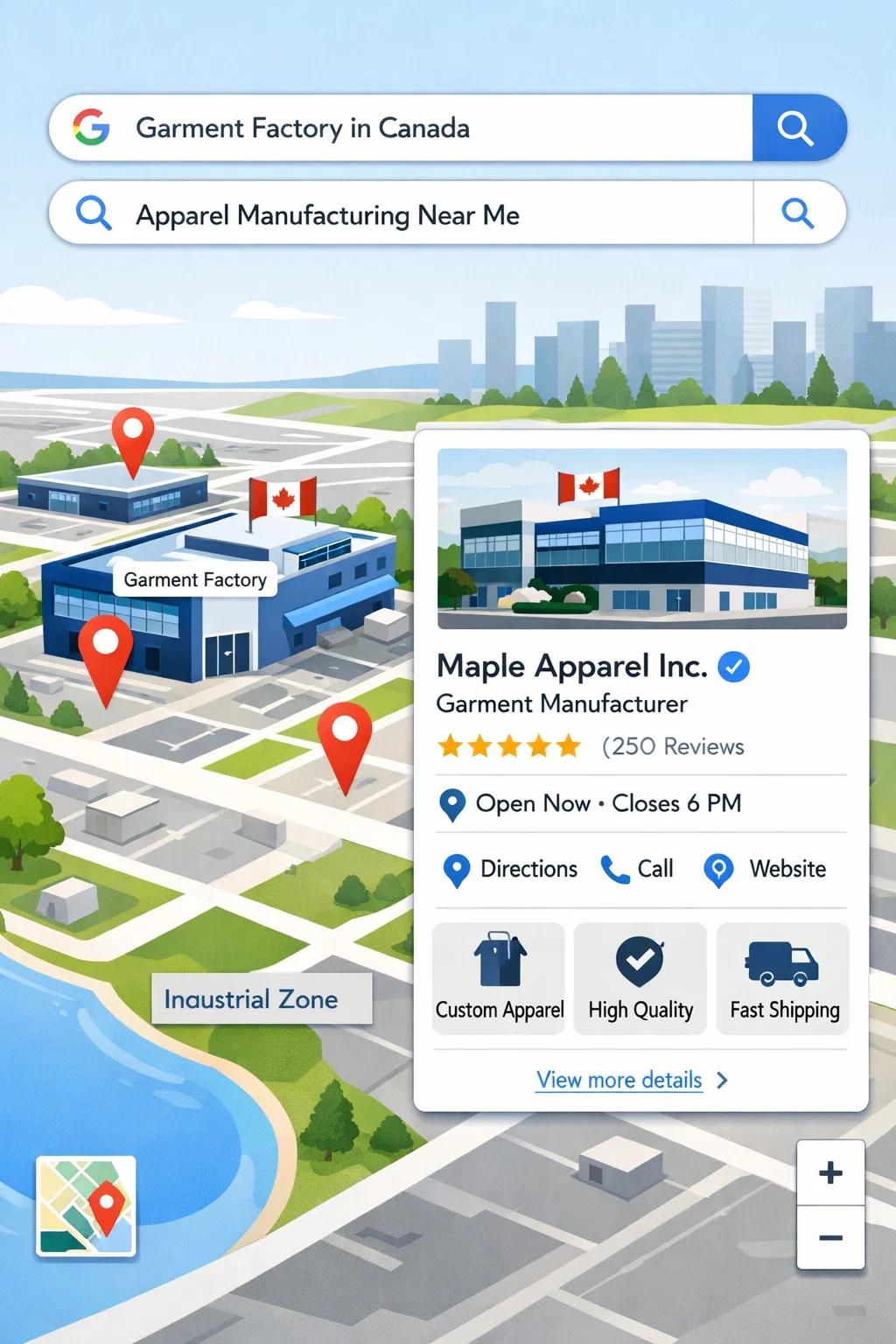
In today’s apparel supply chain, quality production alone isn’t enough to win contracts. Buyers, sourcing agents, and international brands now search online first—often with location-based queries like “garment factory in Canada” or “ethical apparel manufacturer near me.”
That’s where Local SEO for a garment factory becomes a serious competitive advantage.
As a senior SEO consultant working with manufacturing and factory-based businesses, I’ve seen how the right local visibility strategy can turn a low-profile factory into a trusted, inquiry-generating brand—without relying solely on agents or trade shows.
This guide explains how garment factory local SEO works, how it differs from generic SEO, and how Canadian apparel and textile manufacturers can use it to attract both local and export-focused buyers.
Why Local SEO Matters for Garment & Textile Factories
Many factory owners assume Local SEO is only for restaurants or clinics. In reality, local intent is deeply embedded in B2B sourcing behavior, especially in apparel manufacturing.
How buyers search today
“Apparel manufacturing company in Canada”
“Textile factory Toronto compliance certified.”
“Ethical garment factory near Vancouver”
“Private label clothing manufacturer Canada”
Even international buyers searching from the US or Europe often include geographic qualifiers because location signals:
Compliance standards
Trade agreements (e.g., USMCA)
Logistics efficiency
Ethical and environmental oversight
Local SEO ensures your factory appears when and where those searches happen.
Understanding Search Intent: Commercial + Informational
Your potential clients aren’t just looking for a factory—they’re evaluating risk.
That’s why effective apparel manufacturing SEO must answer:
Can this factory handle my order volume?
Are they compliant and certified?
Are they experienced with export markets?
Are they easy to contact and verify?
Local SEO bridges the gap between visibility and trust, especially when combined with clear compliance and operational signals.
Core Components of Local SEO for a Garment Factory
Google Business Profile for Garment Factories (Non-Negotiable)
Your Garment Factory Google Business Profile (GBP) is often the first thing buyers see—even before your website.
Best practices for factories in Canada:
Business name: Use your registered factory name (no keyword stuffing)
Primary category:
Garment Manufacturer or Clothing Manufacturer
Secondary categories:
Textile Manufacturer
Apparel Exporter
Address: Real, verifiable factory or office location
Phone number: Local Canadian number (NAP consistency matters)
Optimize the description with intent
Instead of generic text, include:
Production capabilities (knitwear, woven, denim, outerwear)
Compliance standards (WRAP, ISO, OEKO-TEX, SEDEX)
Export markets served (USA, EU, UK)
This naturally supports garment factory local SEO without over-optimization.
NAP Consistency Across the Web
NAP = Name, Address, Phone Number
For factories, inconsistency often happens due to:
Different export offices vs production sites
Old trade directory listings
Variations in unit numbers or industrial park names
Google treats NAP as a trust signal, especially for local SEO for textile factories.
Action steps:
Audit all listings (website, directories, trade portals)
Standardize formatting (e.g., “Ltd.” vs “Limited”)
Use the same phone number everywhere
On-Page Local SEO for Apparel Manufacturing Websites
Your website should clearly answer:
“Who are you, what do you manufacture, and where do you operate?”
Location-Optimized Service Pages
Instead of one generic “Manufacturing” page, consider:
Apparel Manufacturing in Ontario
Garment Factory in Toronto for Export Brands
Textile Manufacturing Services in Canada
These pages help Google associate your factory with regional manufacturing capability.
Schema Markup for Factories
Use structured data such as:
LocalBusiness schema
Manufacturer schema
Organization schema
This reinforces:
Physical location
Industry relevance
Contact credibility
Schema won’t rank you alone—but it strengthens your E-E-A-T signals.
Factory Compliance and Certification SEO
For garment manufacturers, compliance content is SEO gold.
Buyers actively search for:
“WRAP certified garment factory Canada”
“Ethical apparel manufacturer Toronto”
“ISO certified textile factory”
Dedicated Compliance Pages
Create separate, crawlable pages for:
Social compliance
Environmental standards
Quality certifications
Audit processes
Each page should include:
Certification body name
Audit frequency
Applicable product categories
Downloadable certificates (PDF)
This supports factory compliance and certification SEO while reducing buyer friction.
Local Citations That Actually Matter for Factories
Forget random business directories. Factories need industry-relevant local citations.
High-value citation sources:
Canadian manufacturing associations
Apparel and textile trade organizations
Export development directories
Local chambers of commerce
Ethical sourcing platforms
Each citation strengthens:
Geographic authority
Industry relevance
Trustworthiness
This is where local SEO for textile factory businesses differs from retail SEO.
Content That Builds Authority (Not Just Traffic)
Google’s Helpful Content system rewards experience-backed insights.
Content ideas that work for garment factories
“How Canadian Garment Factories Support Small MOQ Brands”
“Compliance Checklist for Apparel Manufacturing in Canada”
“Choosing Between Domestic vs Overseas Apparel Production”
“Lead Time Expectations from Canadian Textile Factories”
These articles:
Educate buyers
Qualify leads
Build topical authority in apparel manufacturing SEO
Reviews, Trust Signals, and Buyer Confidence
Even B2B buyers read reviews—especially sourcing managers under pressure.
Where reviews matter:
Google Business Profile
B2B sourcing platforms
LinkedIn company pages
Encourage reviews from:
Long-term buyers
Brand partners
Logistics or sourcing collaborators
A few authentic reviews can dramatically improve local pack visibility.
Measuring Local SEO Success for Garment Factories
Forget vanity metrics. Focus on commercial indicators.
Track:
Google Business Profile calls & direction requests
Location-based keyword rankings
Contact form submissions by region
RFQ and inquiry quality
Local SEO success isn’t traffic—it’s qualified factory leads.
FAQ: Local SEO for Garment Factories
What is Local SEO for a garment factory?
Local SEO for a garment factory is the process of optimizing online presence so the factory appears in location-based searches, Google Maps, and local results when buyers search for apparel or textile manufacturers in specific regions.
Does Local SEO help export-oriented garment factories?
Yes. Even international buyers use location modifiers to assess compliance, logistics, and trade advantages, making garment factory local SEO essential for export visibility.
How long does Local SEO take to work for manufacturers?
Most factories see early improvements within 2–3 months, with strong inbound inquiries typically appearing within 4–6 months when compliance and content are optimized.
Is Google Business Profile necessary for a factory?
Absolutely. A properly optimized garment factory Google Business Profile is one of the strongest local ranking signals and a major trust factor for buyers.
What role do certifications play in SEO?
Compliance certifications directly influence search behavior and trust, making factory compliance and certification SEO a critical component of apparel manufacturing visibility.
Conclusion: Turning Local Visibility Into Global Opportunity
Local SEO is no longer optional for garment and textile manufacturers—it’s a strategic growth channel that connects real production capability with real buyer demand.
When Canadian garment factories align their Google Business Profile, compliance content, local citations, and on-page SEO, they don’t just rank higher—they attract better clients, shorten sales cycles, and build long-term brand equity in a competitive global market, so the real question is, are you ready to turn your factory’s local presence into a consistent source of qualified inbound leads?