Multi-channel High-precision Power Analyzer Enables Efficient Testing of IT Cabinets
With the rapid development of data centers, cloud computing, and artificial intelligence industries, the power density of IT cabinets is constantly increasing, placing higher demands on power quality and energy efficiency testing for servers, power modules, UPS, and cooling systems. In product development, production verification, and operation and maintenance, quickly and accurately completing power testing has become a crucial aspect of improving equipment reliability and reducing energy consumption. Multi-channel high-precision power analyzers are gradually becoming a core measurement tool in IT cabinet testing.
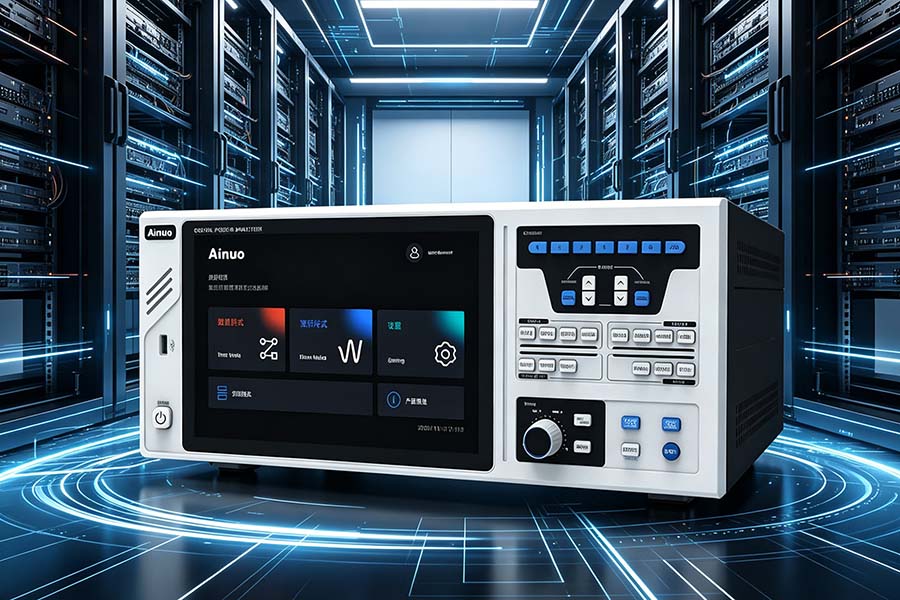
New Challenges Facing IT Cabinet Testing
Modern IT cabinets typically integrate multiple servers, switches, storage devices, and complex power supply and distribution systems, exhibiting the following characteristics in their operation:
- High power consumption with significant dynamic changes
- Multiple power supplies operating simultaneously
- Frequent harmonic and current fluctuations
- Extremely high requirements for energy efficiency and stability
- Long-term continuous operation testing is necessary
Traditional single-channel power-testing equipment is no longer sufficient to meet the synchronous measurement requirements of complex systems. For example, when testing server load changes, it is necessary not only to measure the total input power but also to simultaneously observe the output power, power conversion efficiency, and transient changes of each channel. If the measurement equipment lacks accuracy or the channels are not synchronized, it can easily lead to distorted test data.Therefore, an increasing number of enterprises are adopting multi-channel high-precision power analyzers for comprehensive testing.
Core Advantages of Multi-Channel High-Precision Power Analyzers
1. Multi-channel Synchronous Measurement, Improving Testing Efficiency
The multi-channel design enables the simultaneous acquisition of multiple voltage, current, and power signals, achieving:
- Synchronous input and output measurement
- Parallel analysis of multiple power supplies
- Collaborative testing of complete systems and modules
- Comprehensive evaluation of three-phase systems
In IT rack testing, it can simultaneously monitor:
- Mains input
- UPS output
- PDU distribution power
- Server load power consumption
- Cooling system energy consumption
Engineers can obtain complete data in one go without frequent equipment switching, significantly improving testing efficiency.
2. High-Precision Measurement Ensures Data Reliability
IT equipment is typically extremely sensitive to power variations, especially under low load, standby, or peak operating conditions; even small errors can affect energy efficiency assessment results. High-precision power analyzers typically feature:
- High-resolution sampling
- Wide dynamic range
- Accurate measurement of low power factor
- Micro-current capture capability
This is particularly critical for server power efficiency certification, 80 PLUS testing, and the construction of green data centers. Only high-precision synchronous measurement can ensure the accuracy and reliability of efficiency calculation results.
3. Support for Dynamic Load Analysis
Modern servers experience extremely rapid load changes. In AI training, cloud computing, and high-performance computing scenarios, transient high currents frequently occur. Multi-channel high-precision power analyzers can:
- Capture instantaneous power fluctuations
- Analyze startup inrush currents
- Record dynamic load changes
- Monitor power supply stability
Through high-speed sampling and waveform analysis, engineers can promptly identify:
- Power supply response hysteresis
- Voltage dips
- Harmonic anomalies
- Transient overload risks
This allows for proactive design optimization, preventing later operational failures.
4. Comprehensive Harmonic and Power Quality Analysis
IT server racks extensively use switching power supplies, which are prone to harmonic pollution. Poor harmonic control can not only reduce system efficiency but also lead to equipment overheating, malfunctions, or even shutdowns.High-end power analyzers typically support:
- Harmonic analysis
- Total Harmonic Distortion (THD) measurement
- Power factor analysis
- Spectrum analysis
Real-time harmonic monitoring effectively assesses the impact of IT equipment on the power grid and optimizes power supply design.
5. Long-Term Stability Testing Capability
Data center equipment often requires long-term aging tests and reliability verification. The multi-channel power analyzer supports:
- Long-term continuous recording
- Automatic data storage
- Trend analysis
- Anomaly alarms
It can continuously output stable data during 72-hour, 168-hour, or even longer testing periods, providing a basis for product reliability assessment.
Typical Applications of Multi-Channel Power Analyzers in IT Racks
Server Power Supply Testing
Testing server power supplies under different loads:
- Conversion efficiency
- Power factor
- Standby power consumption
- Peak response capability
UPS System Verification
Simultaneously analyzing UPS input, output, and battery-side parameters to verify:
- Conversion efficiency
- Switching time
- Output stability
- Harmonic index
Data Center Energy Efficiency Assessment
Through multi-point synchronous measurement, achieving:
- PUE energy efficiency analysis
- Power distribution loss statistics
- Cooling system power consumption analysis
- Rack-level energy management
AI Server Dynamic Power Consumption Testing
Analyzing high-power scenarios such as GPU servers and AI training platforms:
- Transient peak current
- Dynamic load changes
- Power supply redundancy capability
- Thermal design matching
Intelligent Testing as a Future Trend
With the development of intelligent manufacturing and digital testing, the new generation of multi-channel high-precision power analyzers is upgrading towards intelligence, including:
- Remote control
- Automated test scripts
- Data cloud management
- AI anomaly recognition
- Integration with MES/ATE systems
This not only reduces the complexity of manual operation but also significantly improves test consistency and production efficiency.
Conclusion
In the era of high-density, high-energy-efficiency data centers, IT rack testing has evolved from simple power consumption measurement to comprehensive system-level power analysis. Multi-channel high-precision power analyzers, with their advantages of synchronous measurement, high-precision sampling, dynamic analysis, and long-term stable testing, are becoming key equipment in server, power supply, UPS, and data center testing.
In the future, with the continued development of AI computing and green data centers, the requirements for power testing accuracy and efficiency will further increase. Only by leveraging advanced testing instruments can enterprises gain a stronger competitive edge in product performance, energy efficiency optimization, and reliability.