Shido Network: Accelerating DeFi Innovation at Multi-Chain Era
The Growing Challenges of Blockchain Infrastructure
As the blockchain industry evolves, many projects continue to struggle with limited scalability, inefficient cross-chain communication, and rising transaction costs. These issues often prevent decentralized applications from achieving mainstream adoption, especially when users expect fast, seamless, and low-cost digital experiences. Developers also face technical limitations when working within a single virtual machine ecosystem, reducing flexibility and slowing innovation across Web3 platforms.
How Shido Provides the Solution
Shido was developed to overcome these infrastructure limitations by creating a scalable and interoperable blockchain ecosystem designed for modern decentralized applications. With its Dual-VM architecture, Shido enables developers to build using both EVM and WASM environments, providing greater compatibility and flexibility across blockchain networks. By focusing on speed, security, and interoperability, Shido aims to simplify development processes while supporting a more connected and efficient decentralized future.
SHIDO is a scalable blockchain ecosystem focused on delivering fast, secure, and interoperable decentralized technology. Its Dual-VM compatibility allows developers to work with both EVM and WASM frameworks, creating greater flexibility across applications.
Inside the Shido Network: A Closer Look

To understand Shido, one must look beneath the surface at its technical foundation. Shido is a Layer 1 Proof-of-Stake (PoS) network built on the Cosmos SDK. However, calling it a "Cosmos chain" oversimplifies its utility. Shido utilizes a custom implementation of the CometBFT consensus engine (a high-performance fork of Tendermint Core) to achieve what most blockchains only dream of: near-instant finality and block times averaging just one second.
The Architecture of Flexibility
At the heart of Shido’s innovation is its Dual-VM compatibility. Most networks force developers to choose a side: the established, liquidity-rich world of the Ethereum Virtual Machine (EVM) or the high-performance, modular world of WebAssembly (WASM). Shido eliminates this binary choice.
- EVM Support: Developers can deploy Solidity-based smart contracts using familiar tools like Hardhat, Remix, and Truffle. This allows for the seamless porting of existing Ethereum dApps to Shido with minimal code changes.
- WASM (CosmWasm): For those seeking more advanced, secure, and performant logic, Shido supports CosmWasm. This enables developers to use languages like Rust or C++, which offer better memory management and security features than legacy smart contract languages.
- Cosmos SDK & IBC: By leveraging the Inter-Blockchain Communication (IBC) protocol, Shido acts as a hub. It allows assets and data to flow freely between Shido and the vast ecosystem of Cosmos chains, while simultaneously maintaining a bridge to EVM-compatible networks.
This architecture creates a multi-source asset ecosystem. Instead of liquidity being trapped in a single format, tokens from independent chains can coexist and interact within Shido’s environment, creating a highly flexible liquidity layer for users and developers alike.
What Makes Shido Unique?
In an industry where new Layer 1s launch monthly, Shido distinguishes itself by focusing on the "Day 2" problems of blockchain: cost, speed, and real-world integration.
1. Ultra-Fast Finality and Low Overhead
In the world of high-frequency DeFi and cross-border payments, waiting 10 minutes (or even 30 seconds) for a transaction to be truly "final" is unacceptable. Shido’s use of CometBFT ensures that once a transaction is included in a block (approximately every second), it is irreversible. This Superior Time-to-Finality (TTF) is a prerequisite for institutional adoption and real-world payment systems.
2. The Carbon-Neutral Mandate
Sustainability is no longer a "nice-to-have" feature; it is a requirement for enterprise-grade partnerships. Shido operates with a carbon-neutral footprint, utilizing energy-efficient PoS consensus. This makes the network an attractive destination for eco-conscious projects and institutional investors who must adhere to strict ESG (Environmental, Social, and Governance) standards.
3. Infinite Scalability for RWAs and AI
Shido isn't just designed for swapping meme coins. Its infrastructure is built to handle:
- Real-World Assets (RWAs): Tokenizing real estate, commodities, and private equity requires a stable, high-throughput environment.
- AI-Powered Systems: Shido is pioneering an agentic architecture via Shido Nova. This allows AI agents to operate on-chain at machine speed, executing complex data processing and automated trades without the bottlenecks found on legacy chains.
The Shido Ecosystem: A Unified Toolkit
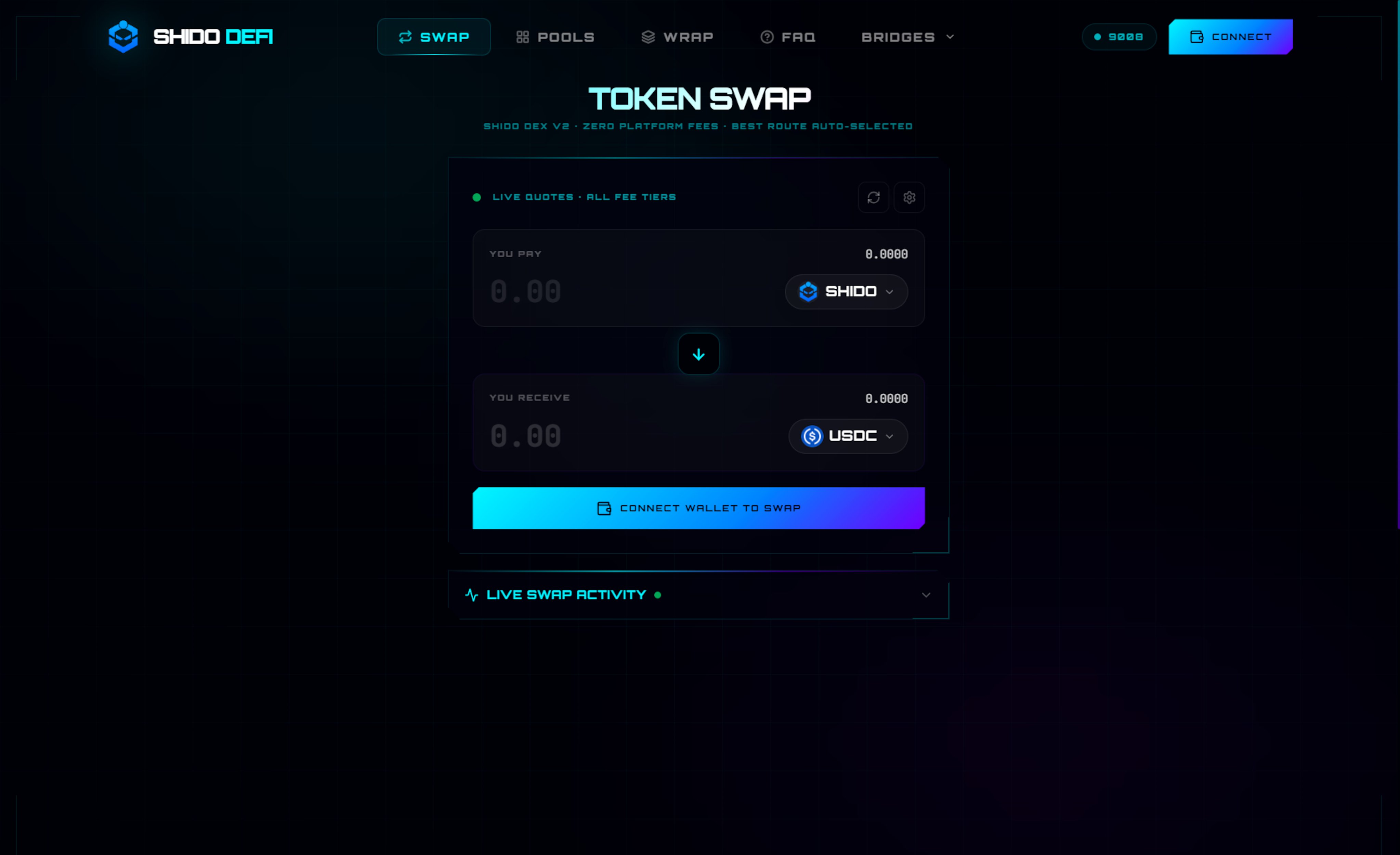
A blockchain is only as strong as the tools available to its users. Shido has developed a suite of native applications that provide a "centralized exchange" level of convenience within a fully decentralized framework.
The Shido App: Your Non-Custodial Hub
At the center of the user experience is the Shido App. It serves as a military-grade, non-custodial gateway where users can manage assets, trade, and interact with the network. Unlike many Web3 wallets that feel clunky, the Shido App is designed for the mainstream, offering a sleek interface without compromising on the core tenet of "not your keys, not your coins."
Shido DEX V4
The latest iteration of the Shido DEX represents a massive leap in decentralized trading. It offers:
- Faster Execution: Taking full advantage of the 1-second block times.
- Lower Slippage: Optimized liquidity routing.
- Advanced UI: A trading experience that rivals top-tier centralized platforms.
Simplifying Identity: Shido Name Service
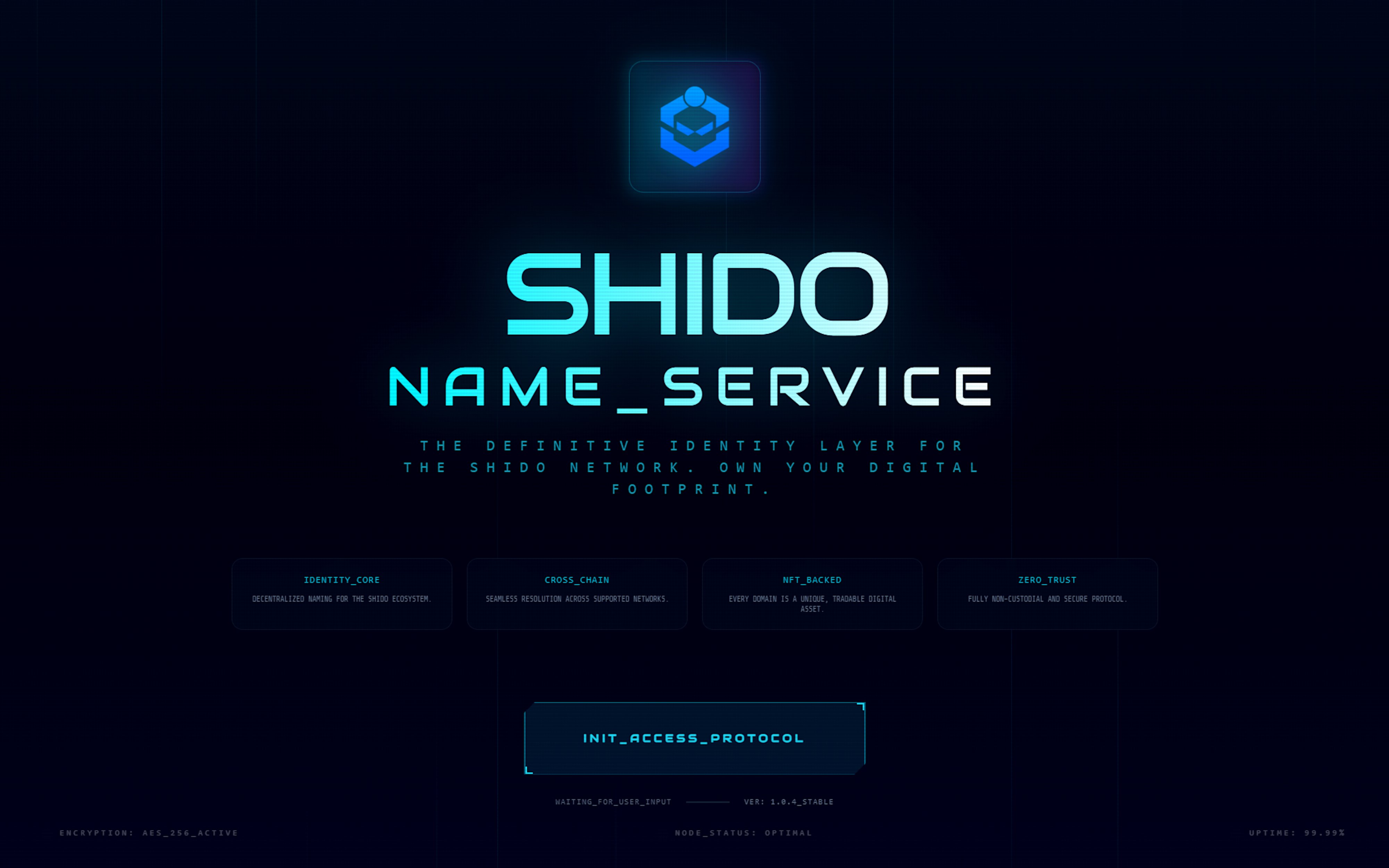
To achieve mass adoption, we must move away from 42-character hexadecimal addresses. The Shido Name Service allows users to claim human-readable identities (e.g., yourname.shido), simplifying the process of sending and receiving funds and making the blockchain feel like a modern social web.
WenMint: The No-Code Revolution
One of the biggest barriers to blockchain entry is the technical hurdle of deployment. WenMint is Shido’s answer to this. It provides an instant go-to-market capability, allowing creators and entrepreneurs to launch and deploy projects on Shido without writing a single line of code. This democratizes access to the network, inviting a new wave of builders who might lack deep programming knowledge but possess great business ideas.
Tokenomics and Staking Security
The SHIDO token is the lifeblood of the network, serving as the utility token for gas fees, governance, and securing the chain through staking.
A key indicator of community trust is the staking ratio. Currently, over 10 billion SHIDO tokens (roughly 41% of the circulating supply) are staked. This high staking percentage serves two purposes:
- Security: It makes the network significantly more resistant to 51% attacks.
- Economic Stability: It reduces the liquid supply, rewarding long-term holders with a share of the network's inflationary rewards and transaction fees.
Where to Acquire SHIDO
For those looking to join the ecosystem, SHIDO is widely available across both centralized and decentralized venues:
- Centralized (CEX): MEXC is currently the most active hub for SHIDO/USDT pairs.
- Decentralized (DEX): Liquidity is robust on Uniswap V3 (Ethereum), Osmosis (via IBC), and the native Shido DEX.
- Cross-Chain Bridges: Platforms like Skip Go and Bubble Swap provide easy entry points for users moving capital from other ecosystems.
The Road Ahead of SHIDO: AI and Institutional Integration
The future of Shido is defined by its pivot toward the convergence of AI and Blockchain. Through Shido Nova, the network is building the rails for autonomous AI agents. Imagine an AI that can monitor global market fluctuations, analyze RWA yields, and execute rebalancing trades across multiple chains—all within seconds and all on-chain.
Furthermore, Shido’s focus on cross-border payments and financial markets suggests a trajectory that moves beyond the "crypto bubble." By providing a high-speed, low-cost, and interoperable environment, Shido is ready-made for traditional financial institutions looking to experiment with tokenization and instant settlement.
Strategic Partnerships and Audits
Security is the bedrock of Shido’s growth. The network is audited and supported by Zokyo, a leading Web3 security firm, ensuring that the enterprise-grade aspirations of the network are backed by rigorous code review and reliability.
Conclusion:
The Shido Network represents a sophisticated evolution in the Layer 1 space. It successfully balances the power of the Cosmos SDK with the widespread adoption of the EVM, all while pushing the boundaries of what is possible with WASM and AI integration.
Whether you are a developer looking for a flexible deployment environment, an institutional player seeking a carbon-neutral financial layer, or a retail user looking for a fast and affordable DeFi experience, Shido offers a comprehensive solution. In the crowded race for blockchain dominance, Shido isn't just running; it’s building the very tracks that the future of finance will run upon.
Stay Connected with Shido:
- Official Website: shido.io
- Twitter/X: @ShidoNetwork
- Community: Join the conversation on Telegram and Discord to participate in the governance and growth of the ecosystem.
Author:
- Btt Username: Helen Barton
- Profile Link: https://bitcointalk.org/index.php?action=profile;u=3425754
- Bsc wallet: 0x7dBD01B141c00D6E39135dce32689C1E8302Da1b