Shido: Redefining Scalability Through Dual-VM Layer 1 Blockchain Innovation
Introduction
The current state of decentralized technology is defined by a persistent trade-off between the established liquidity of the Ethereum Virtual Machine (EVM) and the high-performance execution capabilities of WebAssembly (WASM). Shido addresses this fundamental divide by introducing a next-generation Layer 1 Proof-of-Stake (PoS) network that integrates both execution environments into a single, cohesive architecture.
Shido was created with this vision in mind — delivering a modern blockchain infrastructure designed to support fast, secure, and environmentally responsible digital ecosystems.
About the Shido Ecosystem and Network
Shido is a decentralized Layer 1 blockchain built on the Cosmos SDK, utilizing the CometBFT (formerly Tendermint) consensus engine to achieve high-performance results. The network is specifically engineered to be carbon-neutral and highly cost-effective, offering some of the lowest transaction fees available in the industry today. By leveraging the modularity of the Cosmos framework, the network maintains its own sovereign governance and validator set while remaining deeply connected to the broader blockchain universe.
The primary innovation of this architecture lies in its Dual-VM support, which allows the network to process smart contracts from both EVM and WASM sources simultaneously. This design choice effectively eliminates the "silo" effect that often plagues new networks, as it allows for the seamless migration of decentralized applications (dApps) from Ethereum or Binance Smart Chain while also attracting developers who prefer the performance-oriented nature of WASM. The result is a highly adaptable environment that prioritizes developer freedom and cross-chain functionality.
The Strategic Importance and Problem-Solving Utility of Shido
In an era where network congestion and high gas fees frequently hinder user participation, the utility of a protocol is measured by its efficiency and reliability. Shido solves the problem of "ecosystem fragmentation" by serving as a unified execution layer. Many developers find themselves locked into a specific blockchain because their code is not compatible with other environments. By supporting both major virtual machine standards, this network acts as a universal adapter, allowing various protocols to interact without the need for complex rewrites or risky middleware.
Shido currently delivers sub-second finality with a throughput of 13,000 transactions per second. This speed, combined with a 100% uptime record over 20 million blocks, provides the stability required for enterprise-grade applications and large-scale DeFi operations.
The Dual-VM Advantage: Bridging the Gap for Developers
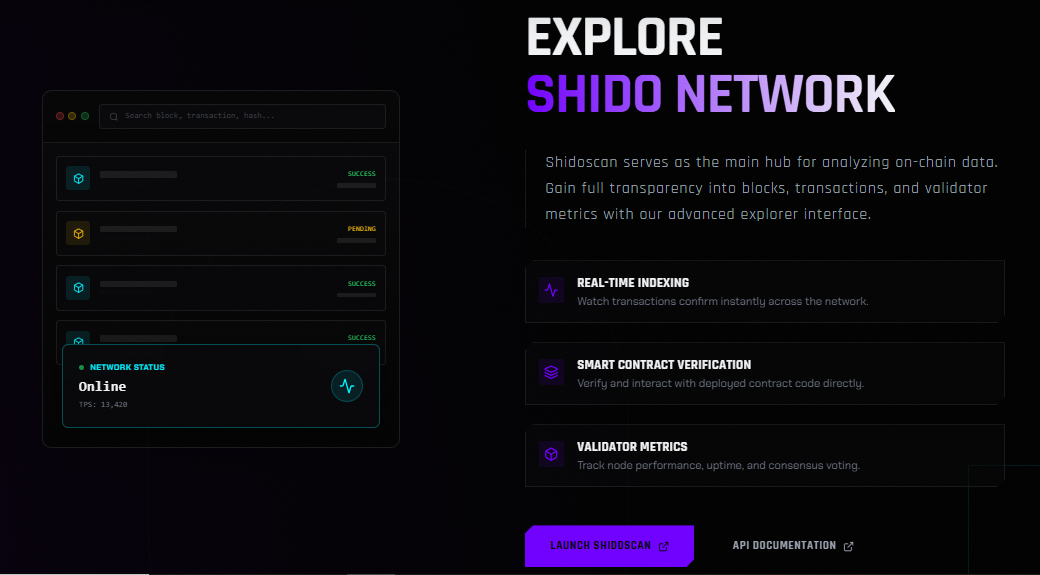
The technical core of the network revolves around its ability to satisfy two distinct developer communities simultaneously. This section explores how the integration of the EVM and WASM environments creates a more robust development pipeline.
The Dual-VM architecture is designed to optimize the strengths of different programming languages and execution styles. The following list outlines the primary benefits of this dual-execution approach for the developer community:
- Universal Compatibility: Developers can deploy Solidity-based smart contracts with zero modifications, allowing existing Ethereum dApps to scale immediately on a faster network.
- Performance Optimization: By utilizing WASM, developers can write high-performance code in languages like Rust, which is ideal for complex mathematical computations required by AI and sophisticated DeFi models.
- Interoperability by Design: The architecture ensures that contracts living in the EVM space can communicate seamlessly with contracts in the WASM space, fostering a truly integrated internal ecosystem.
- Security Standards: Both environments are shielded by the network’s underlying consensus, ensuring that high-performance WASM applications do not sacrifice the decentralization and security typically associated with the EVM.
High-Performance Infrastructure and Security Audits
Performance is nothing without security, and the network has undergone rigorous testing to ensure that it can handle the demands of a global user base. The infrastructure is supported by more than 30 active validators who secure the network via a Proof-of-Stake mechanism. This decentralized validator set ensures that no single entity has control over the ledger, maintaining the censorship resistance that is vital to the ethos of blockchain technology.
To validate the integrity of the network and its associated decentralized exchange, the team engaged Zokyo, a leading security auditing firm. The Shido DEX achieved a perfect security score, which is a rare milestone in the DeFi sector.
The Shido Decentralized Exchange: A Hub for Liquidity
The native Decentralized Exchange (DEX) within the ecosystem is far more than a simple swap interface; it is a sophisticated liquidity aggregator. Many blockchains suffer from "vampire attacks" or fragmented pools that result in high slippage for traders. The Shido DEX mitigates this by pulling liquidity from hundreds of different sources.
The DEX architecture provides a streamlined trading experience that rivals centralized exchanges in terms of features while remaining entirely non-custodial. The following points describe the key functionalities offered by the native trading platform:
- Deep Liquidity Aggregation: The platform monitors and aggregates liquidity from over 200 sources across six major blockchains, ensuring that users always receive the most competitive price for their trades.
- Advanced Trading Tools: Users have access to perpetual trading with up to 200x leverage, as well as limit orders and gas-efficient execution, which are typically difficult to find on-chain.
- Yield Generation Opportunities: Through permissionless yield farming and flexible liquidity provision, users can earn rewards for supporting the ecosystem's liquidity requirements.
- Cross-Chain Capability: The integrated nature of the DEX allows for smooth asset transfers across multiple networks, reducing the friction usually associated with bridging.
Interoperability through the Native Bridge and IBC
Connecting a Layer 1 network to the rest of the world is a complex task that requires both speed and safety. Shido employs a two-pronged approach to interoperability, utilizing a native bridge for direct connections to major chains and the Inter-Blockchain Communication (IBC) protocol for the Cosmos ecosystem. This dual approach ensures that the network is never an island.
The Native Bridge was developed in collaboration with Wanchain, a pioneer in cross-chain technology. This bridge focuses on the secure movement of native stablecoins like USDC and USDT, which are essential for maintaining value when moving between Ethereum, BNB Chain, Arbitrum, and Avalanche. By focusing on native assets rather than wrapped versions, the bridge reduces the risks associated with de-pegging or smart contract vulnerabilities. Additionally, the integration of IBC allows Shido to participate in the "Internet of Blockchains," enabling trustless data and asset transfers with every other IBC-enabled chain in the Cosmos network.
A Suite of Specialized Ecosystem Utilities
To provide a comprehensive experience for both users and developers, the ecosystem includes several native tools designed to simplify complex processes. These utilities cover everything from AI-driven market analysis to no-code token deployment.
Each tool in the ecosystem serves a specific purpose, helping to lower the barrier to entry for new participants. The following list explains the primary utilities currently available or in development:
- Kuzino AI: This platform provides institutional-grade data analysis, utilizing machine learning to offer real-time market summaries and risk assessment for traders.
- WenMint: A user-friendly tool that allows creators to launch audited tokens with a single click, removing the need for deep coding knowledge during the initial launch phase.
- Shidokid Utilities: A collection of smart contract "factories," NFT marketplaces, and token vaults that allow for the rapid deployment of community-driven projects.
- Dexhub: A comprehensive data terminal that provides transparency on the ecosystem, including trending tokens, real-time portfolio tracking, and network statistics.
Tokenomics: Staking, Scarcity, and the Burn Mechanism
The economic model of the SHIDO token is designed to encourage long-term participation while managing the total supply through deflationary pressures. Unlike many inflationary tokens that lose value over time due to constant emissions, this network focuses on a sustainable balance between rewards and scarcity.
A significant portion of the circulating supply—currently 43%—is locked in staking. This high staking ratio indicates strong community confidence and significantly reduces the liquid supply available on the open market. To further enhance scarcity, the network implements a transaction fee burning mechanism. As the network gains more users and processes more transactions, a portion of the fees is permanently removed from circulation. This creates a direct correlation between network usage and token scarcity, rewarding those who participate in the ecosystem's growth over the long term.
The Shido Wallet: Your Decentralized Command Center
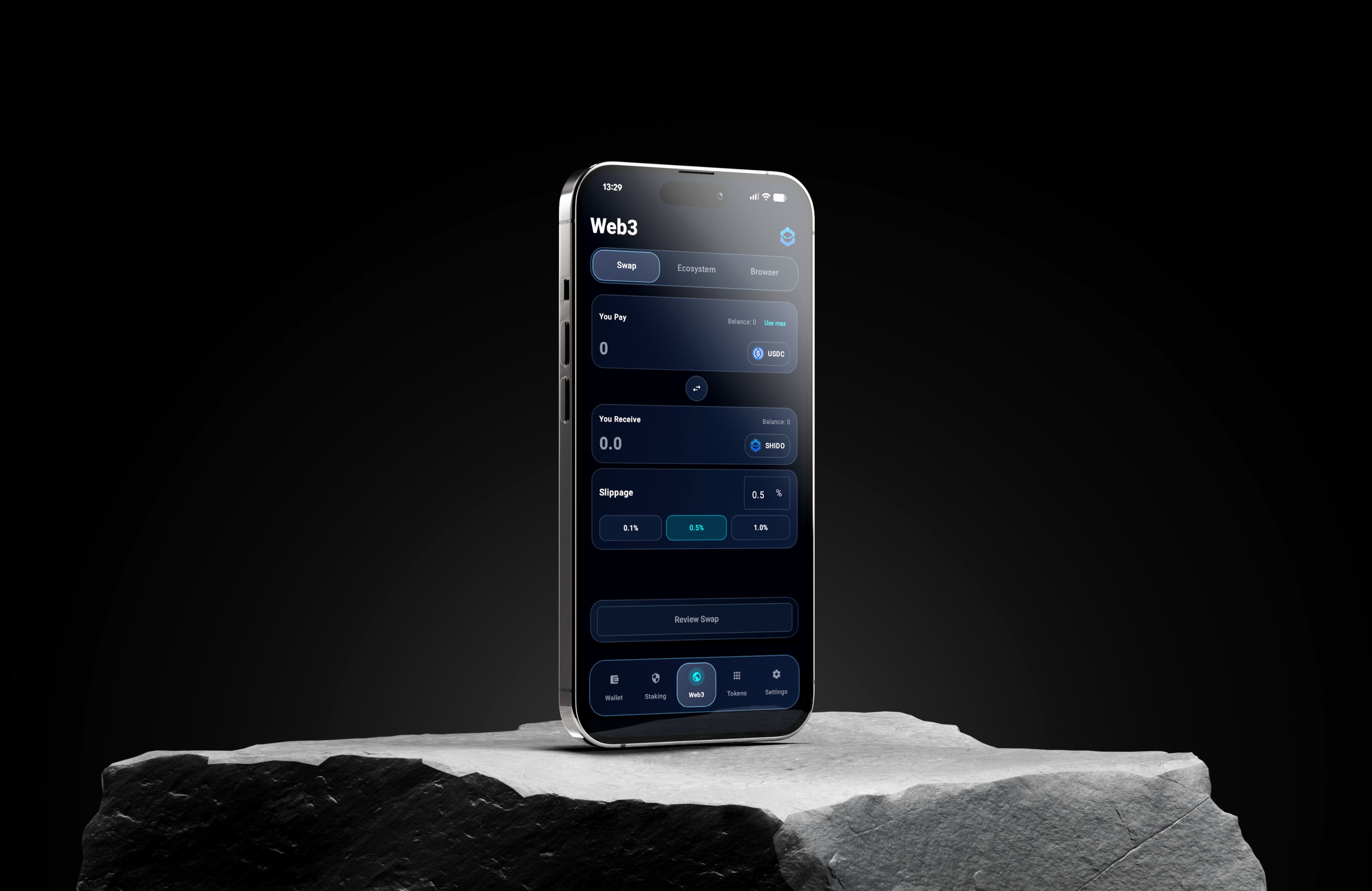
The primary gateway for interacting with the network is the Shido Wallet, a military-grade, non-custodial application available for both mobile and desktop users. The wallet is designed to act as a "command center," integrating all the features of the ecosystem into a single, intuitive interface.
The wallet goes beyond basic storage by incorporating a Web3 browser, a direct interface for the DEX, and advanced NFT management tools. Users can manage multiple accounts, vote on governance proposals, and delegate their tokens to validators directly from the app. This focus on a seamless "mobile-first" experience ensures that users can manage their digital assets and interact with DeFi protocols without needing to sit at a traditional computer, making decentralized finance more accessible to a global audience.
Where and How to Participate in the Shido Network
For those looking to join the ecosystem, the SHIDO token is accessible through several different avenues. Participation can range from simple asset holding and trading to active network securing through staking and governance.
The following list provides an overview of where the token can be found and how to begin interacting with the infrastructure:
- Centralized Exchanges: For users who prefer traditional trading environments, the token is primarily traded on the MEXC exchange, where it is paired with USDT. https://www.mexc.com/exchange/SHIDO_USDT
- Decentralized Trading: On-chain liquidity is available through Uniswap V3 for those on the Ethereum network, as well as Osmosis for those within the Cosmos ecosystem. https://dex.coinmarketcap.com/token/ethereum/0x0e173bfd28ef21bc460718bcd9b610b7fcd7f041
- Market Data Tracking: Real-time price action, market capitalization, and historical data can be monitored on major platforms like CoinMarketCap and Coingecko.
- Mobile Management: To start using the network directly, users can download the Shido Wallet from the iOS App Store or Google Play and bridge their existing assets via the Native Bridge.
Conclusion: Final Thought on Shido
The blockchain industry is moving away from the era of hype and toward an era of tangible infrastructure and utility. Shido represents a significant step in this evolution by providing a Layer 1 solution that does not force developers to choose between compatibility and performance. By supporting both EVM and WASM, the network creates a versatile environment where innovation can flourish without the constraints of legacy architecture.
As the network continues to expand its suite of AI tools, RWA integrations, and cross-chain capabilities, it stands as a testament to what can be achieved through disciplined development and a focus on security. With a deflationary economic model and a high-performance consensus engine, Shido is well-positioned to serve as a cornerstone of the decentralized future, empowering developers and users alike to explore the full potential of blockchain technology.
Explore more about SHIDO and update:
Website: https://shido.io/
X (Twitter): https://x.com/ShidoNetwork
Telegram: https://t.me/ShidoGlobal
Author
- Username: Valerio Candreva
- Profile Link: https://bitcointalk.org/index.php?action=profile;u=3425028
- Wallet: 0x517Cb14829bCa427783299ae2806992c302f0072