The calendar scam
!
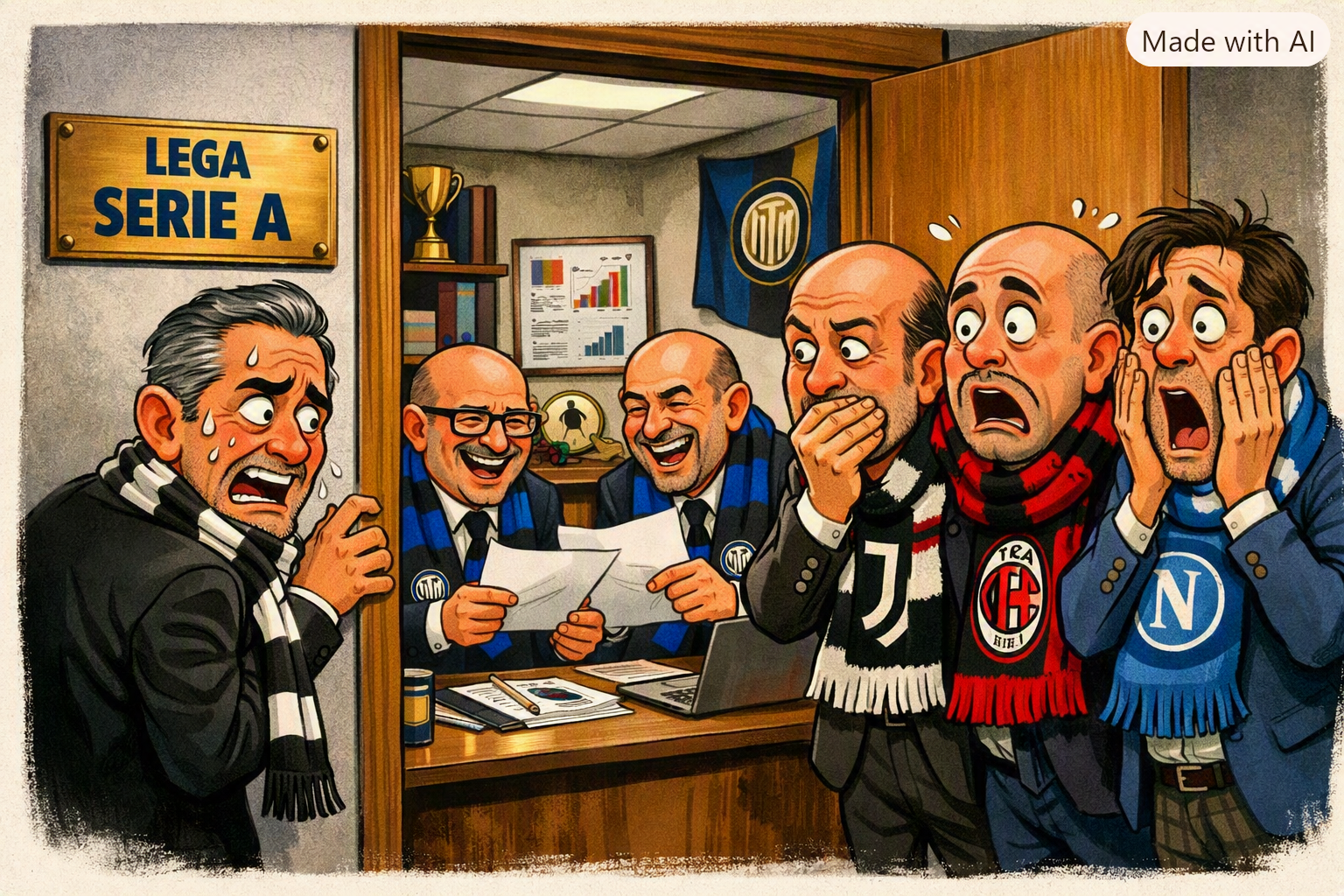
Image by Microsoft Copilot
This is the English version of the post La truffa dei calendari, originally published in Italian in the ITALY community.
But what difference does it make? Sooner or later you have to face them all…
This is the most common objection raised when talking about league schedules. Over a season, every team must play twice against each of its rivals; therefore, according to this theory, doing so earlier or later wouldn’t change anything in substance.
A reasoning that, in principle, in a schedule generated by a computer with neutral and objective criteria would be so self‑evident that it wouldn’t even be worth discussing. But in the “Marotta League,” the now‑official nickname for the Italian championship managed entirely by people close to Inter, none of the old certainties seem to hold up.
Beyond the statistics on yellow cards, red cards, penalties for and against, or VAR interventions — whether correcting or confirming a referee’s decision — in which Inter has topped every chart for five years now, someone has also taken the trouble to analyze the schedules in depth, discovering something interesting.
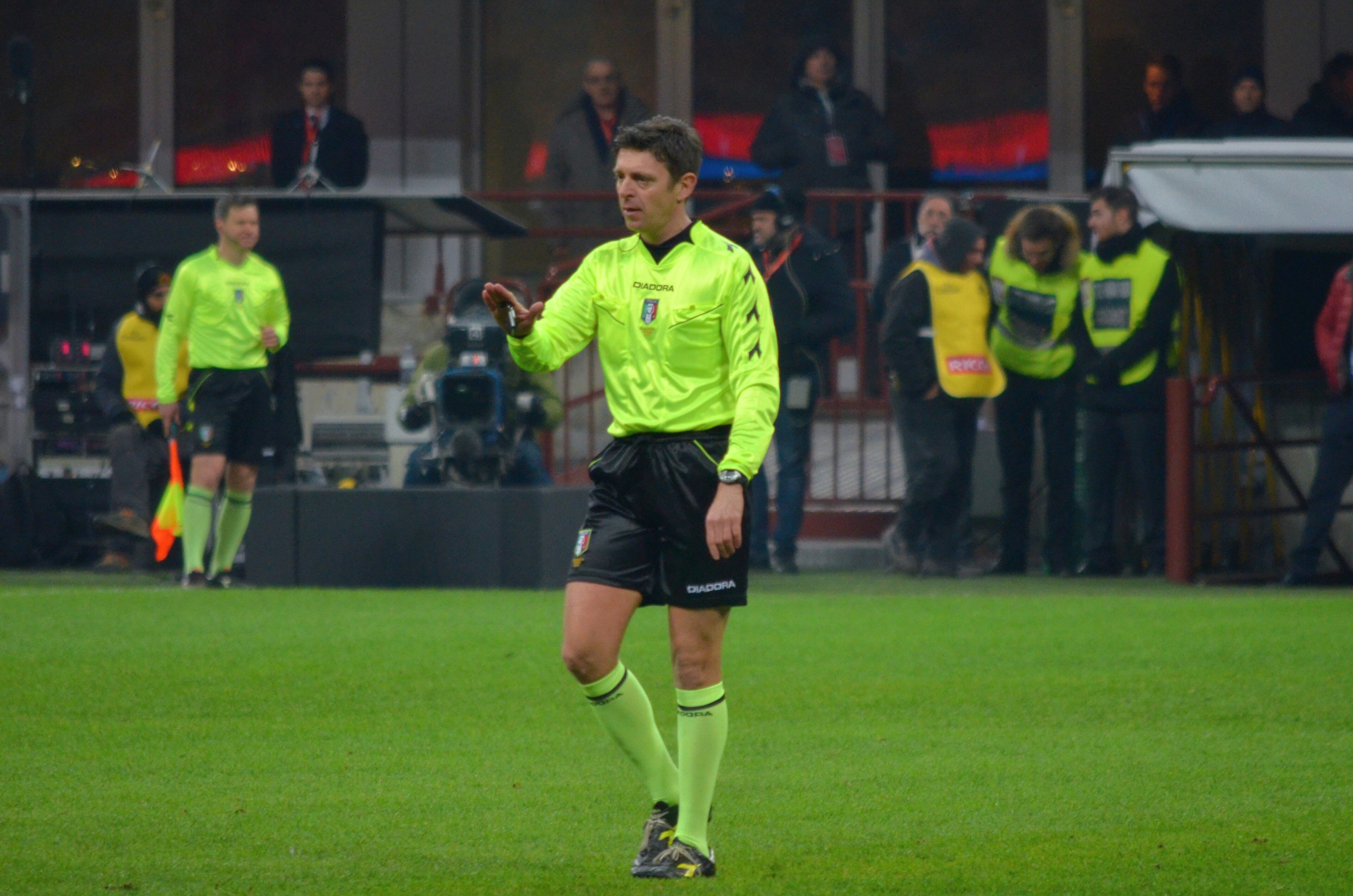
Former refereeing chief Gianluca Rocchi, under investigation by the Milan Prosecutor’s Office for alleged favors granted to Inter.Tommaso Fornoni, CC BY 3.0, from Wikimedia Commons
In the 2025/26 season — the “fabulous” Inter march toward the title (which essentially began with the Bastoni‑Kalulu incident) — the Nerazzurri faced a newly promoted team in the fixtures around their European matches five times (home and away against Pisa and Cremonese, the two weakest sides in Serie A).
The others? At most once.
A rather glaring statistical anomaly, one that already raised eyebrows when people began wondering whether the schedule was truly generated by an algorithm or whether a human hand had influenced the draw. We’ll get to that shortly, because that’s not all: for four years now, Inter have benefited from another curious stroke of luck, playing two of their first three league matches at home, often consecutively.
Moving to the current season, what has made many people frown are the hours of rest granted before and after Serie A fixtures to Italian teams involved in European competitions. During the initial phase of the so‑called “League Phase,” meaning the first four continental games, Juventus are the team with the fewest total hours of rest: 667.5.
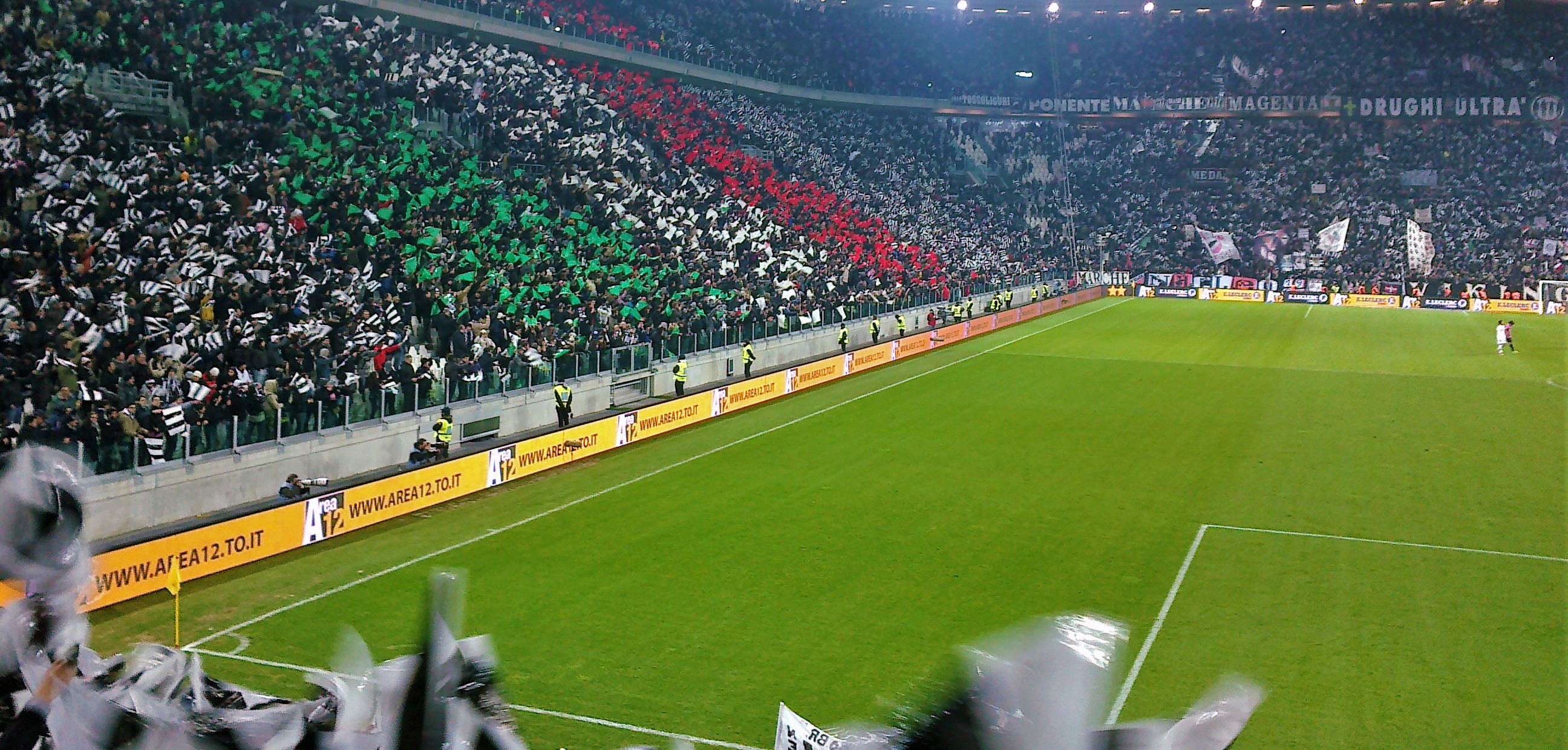
The Allianz Stadium in Turin. Gabriele Barberis, CC BY-SA 3.0 IT, via Wikimedia Commons
Above Juventus sit Napoli, with just a handful more hours, followed by Roma and Milan, with 702 and 720 hours of rest respectively. In the place of honor comes Como, second with 725 total hours but — surprise of surprises — the “luckiest” team is once again Inter: the Nerazzurri are granted a full 763 hours of recovery time between European and domestic fixtures.
Almost one hundred hours more — practically a full day per match — between first and last place, allowing for better workload management and a reduced risk of injuries. But that’s still not all, because beyond rest time, scheduling also took travel into account: Inter will play six times at San Siro (five home matches plus the derby as the “away” team), needing to travel only once, to nearby Bologna.
And the rivals? Home and away fixtures are balanced for everyone else, and none have enjoyed the same luck with travel: Juventus will visit Lecce and Cagliari, Milan will travel to Lazio and Udinese, Roma to Como, Torino FC and Udinese, while Napoli will play away at Juventus and Venezia.
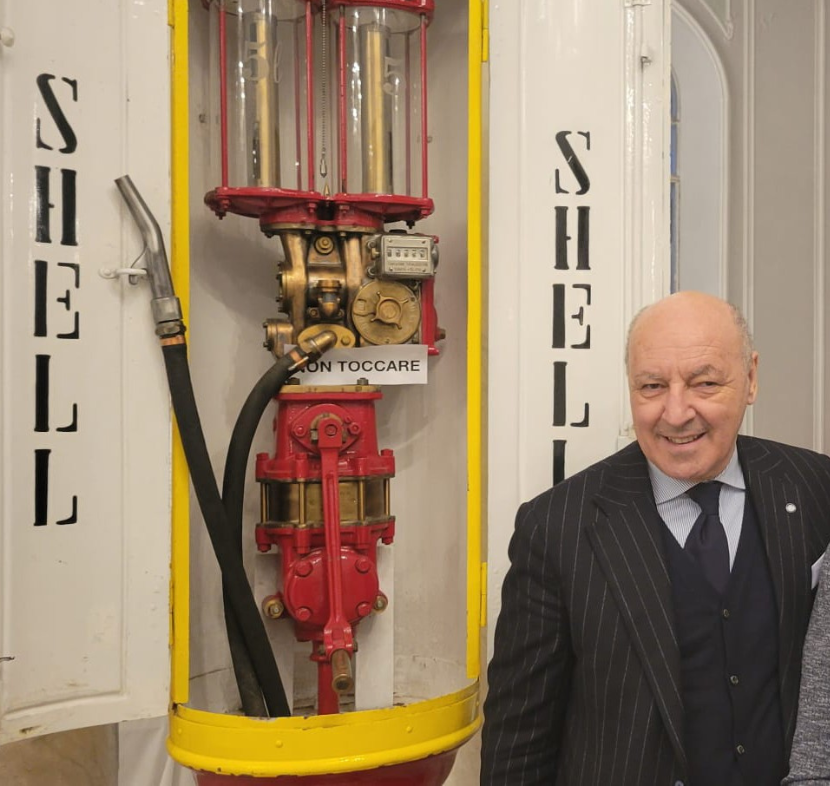
Beppe Marotta, current Inter president, from whom the nickname given to Serie A — the “Marotta League” — originates. Moxmarco, CC BY-SA 4.0, from Wikimedia Commons
Well, one might say, these are just the whims of the algorithm. Some teams get luckier, others less so — it’s always been like that…
Wrong, because for the past couple of seasons the schedules have not been generated by a computer at all, but directly by Andrea Butti, a long‑time former Inter executive. The most common objection in these cases is:
Okay, but what does that have to do with anything? Having worked for Inter doesn’t mean that now, in a different role, Butti wants to favor them…
Judging by the wiretaps from the Arbitropoli case — in which Butti spoke as a fan, not as someone holding an institutional position — that seems wrong once again.
Just don’t send Doveri to referee Inter anymore, he brings world‑class bad luck, with him we never win a f…”
or:
You’re a killer — no, come on, then you really are one of them! It’s your fault, you know that, right? With him we have a super negative record.”
The real question is: in what league in the world would someone like this be entrusted with the scheduling?
Perhaps not even in the days of Ceausescu’s Steaua did things go this far.
I'm part of ITALYGAME Team
together with:
@girolamomarotta, @sardrt, @mikitaly, @mad-runner, @famigliacurione
 👉 VOTA PER NOI COME WITNESS👈
.jpg)
This post has been upvoted by @italygame witness curation trail
If you like our work and want to support us, please consider to approve our witness
Come and visit Italy Community
Kóre, re a mano le armaron el fixture al Inter jugando cinco veces contra Pisa y Cremonese justo cuando tenían partidos de Champions. Y después te quieren vender que el sorteo lo hace un algoritmo neutral, te juro que es de la puta madre la tramoya en Italia.