AI Could Change Steemit Forever: What If Every Post Could Prove It Was Original?
Have you ever spent a lot of time writing something, only to see almost the same content somewhere else later?
It can be annoying.
You may have spent an hour researching a topic, thinking about what to say, fixing your mistakes, and finally publishing it. Then somebody comes along, copies the main idea, changes a few words, and posts it somewhere else.
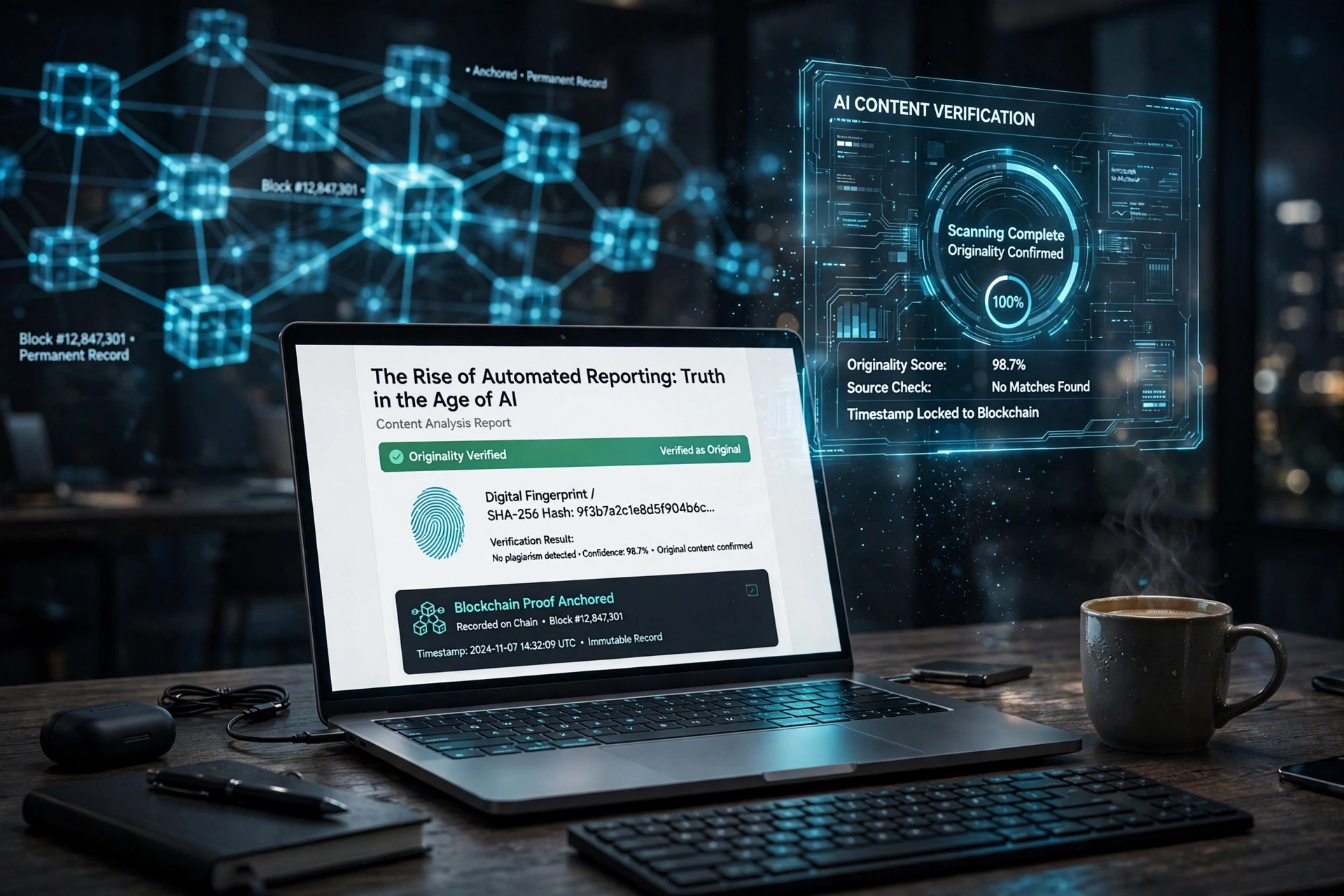
Now imagine if there was a way to make it easier to show when your content was originally published.
That is the idea I have been thinking about lately.
What if Steemit could combine AI with blockchain to give creators a better way to prove the history of their content?
Not tomorrow necessarily. Maybe not even soon.
But I think it is an interesting idea for the future.
AI Is Changing the Way People Write
AI writing tools have changed the internet very quickly.
A person can now ask an AI tool to write an article, create an introduction, suggest a title, or rewrite a paragraph in seconds.
There is nothing automatically wrong with using AI.
The problem comes when everybody starts publishing similar-looking content without adding anything personal.
Think about it.
If 100 people ask AI to write about the same crypto topic, how different will those 100 articles really be?
This is where originality becomes important.
What If Steemit Had an AI Originality Tool?
Here is where things get interesting.
Imagine you are about to publish a post on Steemit.
Before you click publish, an AI tool checks your article and gives you a simple report.
It could tell you that some parts of your article are very similar to content that has already been published.
It could also point out sections that may need more explanation or sources.
The purpose would not be to punish the writer.
It would simply be a warning.
Something like:
"Some sections of this post appear similar to existing content. You may want to review them before publishing."
That sounds much more useful to me than an AI system simply saying, "This is copied."
Because AI can make mistakes too.
And Then Blockchain Could Help
This is the part that makes the idea even more interesting.
Blockchain is good at keeping records that can be verified.
So imagine publishing your article and having a record associated with it showing when that version was published.
Later, if somebody claims they created the same article first, there could at least be a verifiable publishing history to look at.
It would not prove that you invented every idea in the article.
For example, nobody can own the general idea of writing about Bitcoin.
But it could help establish something important:
When did this particular piece of content appear?
That information could become useful for creators.
What About People Who Use AI?
This is another question that I think Steemit users would have different opinions about.
Should AI-assisted content be allowed?
Personally, I think the more important question is whether the creator is actually adding value.
Someone might use AI to help organize their thoughts, then research the topic themselves, check the information, rewrite everything and add their own experience.
Another person might generate an article and publish it without even reading it.
Those are very different situations.
So instead of trying to completely separate humans from AI, platforms could encourage transparency.
For example:
Human-written
AI-assisted
AI-generated and edited
Would you be comfortable seeing a small label like that under a Steemit post?
Or would you prefer not to have AI involvement displayed at all?
Could This Reduce Content Copying?
It might help.
Suppose you publish an article today.
The platform creates a record connected to your publication.
A month later, someone publishes something extremely similar.
Instead of arguing about who wrote it first, there could be a record that helps moderators and the community investigate the situation.
That would not completely solve plagiarism.
But even having better evidence could make a difference.
And for creators who spend serious time making content, that matters.
There Is a Catch, Though
I don't think AI should ever become the final judge of originality.
Why?
Because two people can write about the same subject without copying each other.
Imagine two people writing about Bitcoin's price after a major market event.
They might both use words like "Bitcoin," "market," "investors," "price," and "volatility."
An AI system could see similarities.
But that does not mean one person copied the other.
So any future system would need human review.
AI should be a tool that helps moderators and creators, not a machine that automatically punishes people.
The Bigger Possibility
This idea could go beyond plagiarism.
What if creators eventually had something like a content history?
You publish your first article.
Then another.
Then another.
Over time, your blockchain-based publishing history shows the work you have contributed.
Your reputation would not only be about followers or votes.
People could potentially look at what you have actually created.
That could be an interesting direction for Web3.
Imagine This Five Years From Now
You open a Web3 publishing platform.
You write an article.
AI checks your writing for possible duplication and helps you improve unclear sections.
You publish.
Blockchain records the publication history.
Your profile slowly builds a record of your work.
Then another platform recognizes your creator history.
Suddenly, your reputation is not trapped inside one website.
Your work becomes part of your digital identity.
Would that change the way people think about online creators?
I think it could.
But Would You Trust It?
This is probably the biggest question.
Would you trust an AI system to decide whether your article is original?
Would you want blockchain to record the history of everything you publish?
And if a system incorrectly marked your article as copied, should a human moderator always have the final say?
These are not small questions.
They would need to be answered carefully before something like this could become a real product.
My Take
I don't think the future of Web3 publishing should be about replacing writers with AI.
That would take away one of the most interesting parts of a community like Steemit: real people sharing ideas with other real people.
AI can help with research, editing and checking.
Blockchain can help with verification and records.
But the creator should still be the person behind the content.
As AI-generated content becomes more common, originality and trust may become much more valuable.
Maybe the next big step for Web3 publishing isn't simply helping people publish faster.
Maybe it is helping them prove what they created, when they created it, and how their work developed over time.
And honestly, I would like to know what other Steemit users think about this.
Would you use an AI + blockchain originality system if Steemit introduced one?
Or do you think it would create more problems than it solves?