Basic Knowledge in Agriculture #79
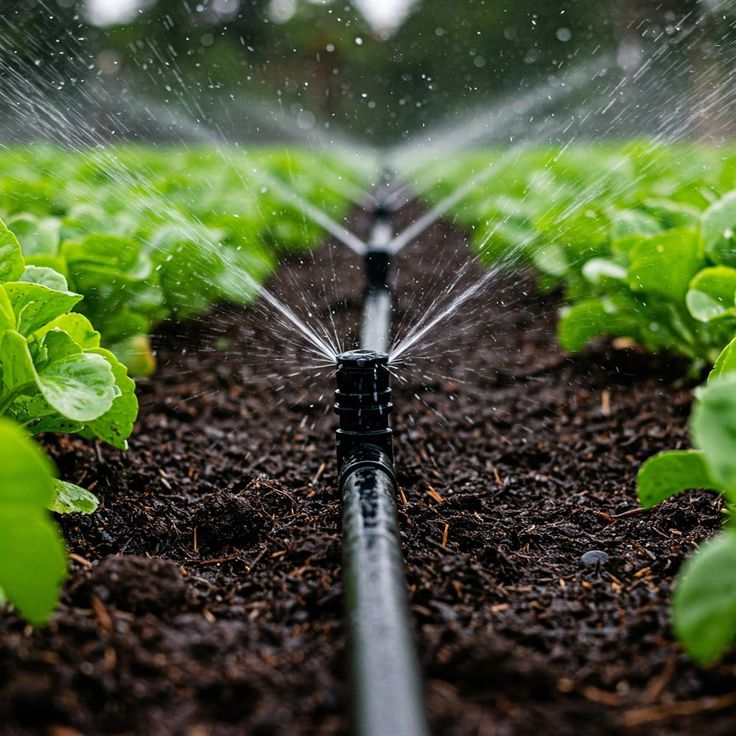
An irrigation system can be referred as a mechanism or structure that helps to supply water artificiality to the soil, crops or a landscape in case natural precipitation is insufficient and unpredictable. In this process of water delivery it is controlled by the help of channels, pipes, pumps, sprinkler or drip systems that make sure that plant can be able to receive sufficient water in their growth processes. This technique is extensively used in the agriculture, gardening and landscaping industries, that it keeps the soil at an adequate moisture level at all the times thus helping in a maximum crop production.
There are various type of irrigation system which is being used on the bases of different climatic conditions or farming conditions. Surface irrigation that is the oldest method, in this water is flown on surface of land and it moves through a network of furrows or canals, where water is flown under gravity. Sprinkler irrigation works as a sprinkler which spray the water in form of fine drops on top of land, as same as the rain from above and uses rotary sprinkler as equipment for distribution of water. In the drip irrigation the water is being passed through a system of pipe and drip tubes that passes water on the level of roots of the plants so considered as one of the best methods for irrigation. Other methods include subsurface irrigation where water is supplied below the land level, center pivot which is generally seen on the large farming areas.
The significance of irrigation systems is extremely valuable especially in areas that have unpredictable weather patterns. One major importance of irrigation systems is that it ensures a continuous flow of water to crops which ultimately helps in maintaining a constant growth and thus increased crop yields. If this is not in practice agriculture production can only depend on the amount of rain received, leading to low crop production during the dry spells and droughts.
Irrigation systems play a significant role in ensuring food security within the population, the possibility to produce crops throughout the year due to artificial water flow leads to an adequate amount of food supply to the people and therefore reduces incidences of food shortages, this is particularly relevant in regions with ever-increasing human population.
Another great importance of irrigation system is the effective management of water, modern systems like drip irrigation allows water to be delivered directly to the roots of plants hence reducing loss of water due to evaporation or running off the surface. This is a great concern in dry and water-stressed regions.
Furthermore irrigation ensures a healthy soil structure, the water prevents the soil from drying to hard and limiting plant growth. Irrigation also helps to supply other nutrient like fertilizer through a system called fertigation.
Lastly irrigation systems enable economic development within regions where agriculture is a main source of livelihood due to the increased farm output, thus enhancing farmers income and creating a more stable economy.