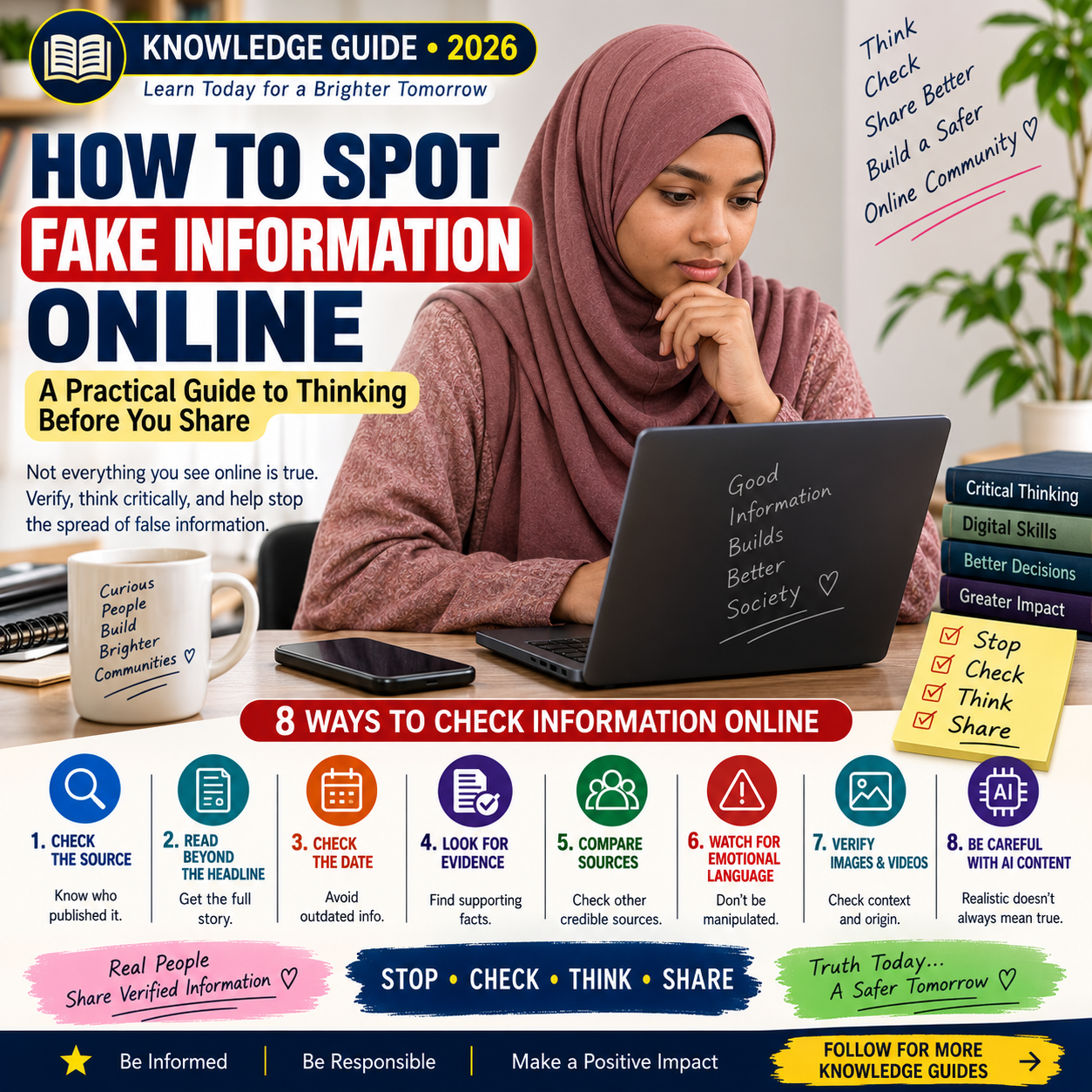
🌟 KNOWLEDGE GUIDE · 2026 🌟 HOW TO RECOGNIZE MISLEADING INFORMATION ONLINE A Practical Guide to Mindful Sharing
━━━━━━━━━━━━━━━━━━━━━━
Recognizing Misinformation Online: A 2026 Toolkit
📝
Master the skills to detect false content, verify claims, spot deceptive headlines, assess sources, avoid online scams, and apply critical thinking before forwarding anything online.
Key Focus Areas:
🔑
• Identifying misinformation online
• Detecting fake news
• Verifying digital claims
• Confirming the accuracy of online content
• Spotting misleading narratives
• Practical fact-checking strategies
• Preventing the spread of falsehoods
• Strengthening digital critical thinking
• Essential digital literacy for 2026
━━━━━━━━━━━━━━━━━━━━━━
🌐 Introduction
The internet offers instant access to a vast amount of information.
With a single tap, we can read articles, watch videos, receive updates, browse social media, and engage with global perspectives.
Yet not everything we encounter is truthful.
Some content is deliberately fabricated to mislead. Other material may be outdated, distorted, taken out of context, or shared without proper evidence.
This makes one skill indispensable:
the ability to pause, evaluate, and think critically before accepting or spreading information.
━━━━━━━━━━━━━━━━━━━━━━
❓ Why Is Misinformation So Widespread?
False information spreads easily—often because people share content impulsively, drawn in by sensational headlines. Emotional reactions like outrage or fear increase the likelihood of sharing without verification.
People also tend to accept information that aligns with their beliefs, even if it’s unverified.
Often, the intent isn’t malicious—but the impact can still be harmful.
That’s why developing strong verification habits is essential in today’s digital landscape.
━━━━━━━━━━━━━━━━━━━━━━
🔍 8 Effective Ways to Verify Online Information
1️⃣ Evaluate the Source
Ask: Who published this? Is the website or account reputable? Is the author clearly identified? A polished design doesn’t guarantee credibility—always investigate the publisher’s background and reputation.
2️⃣ Go Beyond the Headline
Headlines are crafted to grab attention and can be misleading. Never assume the full story matches the headline. Read the entire piece before forming an opinion.
📌 A headline alone should never shape your understanding.
3️⃣ Confirm the Date
Information ages quickly. A report accurate years ago may now be obsolete. Always check publication dates—especially for topics like:
💻 technology,
💰 finance,
⚖️ legislation,
🏢 corporate policies,
and
📰 breaking news.
4️⃣ Demand Evidence
Claims should be backed by proof. Be cautious of vague references like “experts say” or “studies show” without clear citations. Ask: Where did this originate? Can I trace it to a reliable source?
5️⃣ Cross-Check with Multiple Sources
Relying on a single outlet can be risky. Seek out independent, credible sources reporting the same facts. Consistency across trustworthy platforms increases reliability.
But remember: repetition across websites doesn’t automatically confirm truth—especially if they all cite the same unverified origin.
6️⃣ Be Alert to Emotional Triggers
Content designed to provoke anger, fear, or urgency often aims to bypass rational thinking. If you feel emotionally charged, pause. Ask: Am I reacting emotionally? Have I verified this? Let reflection precede sharing.
7️⃣ Scrutinize Visuals
Photos and videos can be altered, deceptively edited, or taken from unrelated events. Always question: Is this media authentic? Can I locate its original context or source? Reverse image searches can help.
8️⃣ Treat AI-Generated Content with Caution
AI can produce realistic text, images, audio, and video. Realistic appearance doesn’t equal truth. For important claims, always seek verifiable evidence—even if the content appears convincing.
━━━━━━━━━━━━━━━━━━━━━━
🚨 Red Flags of Misleading Content
Watch for content that:
❌ Guarantees financial returns
❌ Pressures immediate action
❌ Urges mass sharing
❌ Overuses emotional language
❌ Lacks cited sources
❌ Makes extreme or unbelievable claims
❌ Uses fake or unattributed quotes
❌ Claims widespread expert deception
These signs don’t always mean the content is false—but they warrant deeper scrutiny.
━━━━━━━━━━━━━━━━━━━━━━
🛑 Pause Before You Post
Before sharing, follow this quick routine:
⏸️ STOP → 🔍 CHECK → 🧠 THINK → 📤 SHARE
⏸️ STOP: Resist the urge to share instantly
🔍 CHECK: Trace the claim to its original source
🧠 THINK: Assess whether evidence supports it
📤 SHARE: Only forward what you’ve verified
━━━━━━━━━━━━━━━━━━━━━━
⚠️ Common Pitfalls to Avoid
Frequent mistakes include:
• Trusting content just because a friend shared it
• Assuming professionalism equals accuracy
• Judging a story by its headline alone
• Ignoring publication dates
• Believing viral content must be true
• Sharing without verifying
• Accepting information solely because it matches your views
━━━━━━━━━━━━━━━━━━━━━━
🛠️ A Simple Verification Process
Use this step-by-step method when evaluating important information:
Identify the core claim
Locate the original source
Check the publication date
Look for supporting evidence
Compare with other independent reports
Consider missing context
Determine if the evidence holds up
This process takes effort—but it protects your credibility and helps stop misinformation.
━━━━━━━━━━━━━━━━━━━━━━
❓ Frequently Asked Questions
Q: Is all social media content unreliable?
A: No. Social media hosts both accurate and false information. The key is learning how to tell the difference.
Q: Do verified accounts always share truthful content?
A: Not necessarily. Verification confirms identity, not accuracy. Always assess the evidence behind any claim.
Q: Can a well-designed website still spread lies?
A: Absolutely. Appearance does not reflect truthfulness. Many deceptive sites look professional.
Q: Why does fact-checking matter?
A: False information can damage finances, relationships, and personal safety. Your diligence makes a difference.
━━━━━━━━━━━━━━━━━━━━━━
⭐ Key Takeaways
✅ Scrutinize the source
✅ Read past the headline
✅ Verify the date
✅ Demand solid evidence
✅ Consult multiple independent outlets
✅ Recognize emotional manipulation
✅ Question the authenticity of media
✅ Stay cautious with AI-generated content
✅ Reflect before sharing
━━━━━━━━━━━━━━━━━━━━━━
🤝 An Ethical Responsibility
Sharing information carries responsibility.
False claims can harm lives—impacting decisions, reputations, and safety.
We each play a role in shaping the digital environment. By thinking critically before sharing, we contribute to a more informed and responsible online world.
Visit us at: