The Hidden Psychology Behind Mathematics: How Our Minds Grasp Patterns and Logic
Mathematics may seem like a world of numbers and formulas, but it holds a captivating psychological aspect beneath the surface. Every math equation and calculation reflects more than just abstract principles; it shows how our minds handle information, identify patterns, and simplify complex ideas. Exploring the thinking behind seemingly simple math unveils the cognitive tools we use daily, tools that reach beyond the classroom.
Understanding Zero Exponents
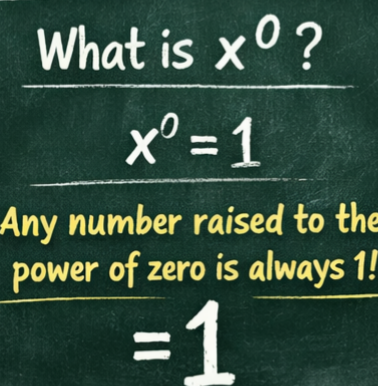
Consider the expression x^0 = 1. While it may seem like a basic rule, it reveals a profound cognitive principle. The zero exponent symbolizes absence, yet it always results in one. This highlights a key aspect of human reasoning: the ability to find stability within change. Our brains naturally seek constants amidst variations, a concept math formalizes. Recognizing that x^0 equals one helps students grasp that patterns and rules exist even when not immediately visible. This principle extends beyond math to problem-solving and decision-making in life.
Algebra and Sequential Reasoning
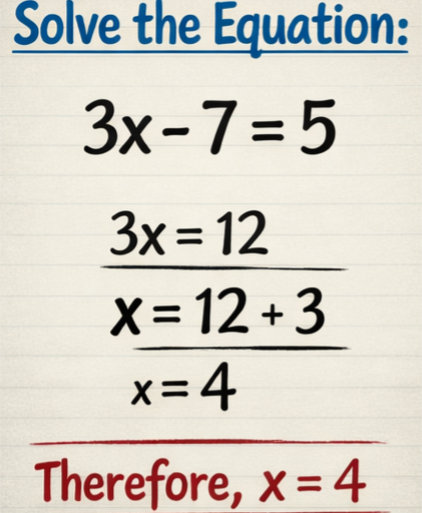
Moving on to basic algebra, solving an equation like 3x - 7 = 5 showcases another facet of mathematical cognition. Each step in solving the equation involves sequential reasoning: identifying the operation to isolate the variable, performing the arithmetic, and verifying correctness. This mirrors how our brains tackle real-life challenges by breaking them down into manageable steps through "chunking," a process in cognitive psychology. Algebra exercises enhance systematic thinking, training the brain to approach uncertainty with logic and patience.
Geometry and Spatial Reasoning
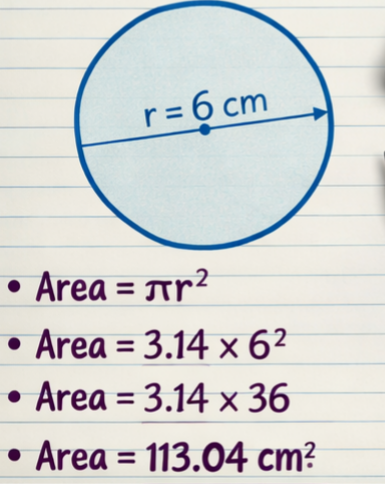
Calculating the area of a circle using A = πr² adds another layer to this cognitive exploration. Geometry engages spatial reasoning, pattern recognition, and abstraction. Understanding that a circle's area relates to the square of its radius requires learners to visualize relationships between dimensions mentally. By incorporating π as a constant, the brain learns to blend known quantities with unknown variables, fostering flexible thinking. This parallels real-world scenarios, such as engineering and architecture, where abstract principles must translate into practical solutions. Geometry teaches learners to anticipate outcomes, reason visually and analytically, and recognize relationships beyond numbers.
Mathematics transcends mere computation, reflecting cognitive habits like pattern recognition, logical sequencing, and abstract thinking. These habits form the foundation for academic success and problem-solving in daily life. Understanding the psychological principles behind mathematical rules encourages learners to approach problems with curiosity and confidence, rather than relying on memorization and anxiety.
Success in math boosts self-efficacy, reinforcing belief in one's ability to succeed. Connecting symbolic representations to cognitive processes helps learners grasp the logic behind rules. When math is taught as a journey of discovery, learners approach it with curiosity and confidence. Mathematics capitalizes on humans' innate pattern-seeking nature, turning abstract relations into solvable puzzles. Engaging learners in this way nurtures a growth mindset, emphasizing that intelligence grows through effort, reflection, and strategy.
Moreover, studying math sharpens executive functions like planning, inhibition, and cognitive flexibility. These mental skills are crucial for complex reasoning, decision-making, and creative problem-solving in daily life. Working through algebraic equations, visualizing geometric concepts, or exploring zero exponents strengthens these cognitive skills. Structured thinking in mathematics enhances analytical abilities, memory, and attention to detail in various life aspects.
In essence, math goes beyond rules and procedures; it unravels how humans recognize patterns, apply logic, and tackle uncertainty. Exploring the psychology behind concepts like zero exponents, algebra, and geometry reveals the elegance of math and the cognitive and emotional processes it nurtures. Understanding these principles turns learning from a mechanical task into a dynamic, empowering experience.
NOTE : The content you read is strictly original ! My images were created by myself supported by appropriate tools .