They create flexible artificial neurons
in #study7 hours ago

They create flexible artificial neurons


AI


Biological cells responded to the artificial impulses.


Modern technology has always tried to imitate the human brain using machines that ultimately continue to function completely differently from it, traditional computers rely on billions of rigid transistors organized in an extremely precise way and consuming increasing amounts of energy to handle increasingly complex artificial intelligence.


But the varus brain operates in a different way, it is flexible, three-dimensional, adaptable and made up of neurons that constantly change their connections and activity patterns and that is precisely why scientists around the world have been trying to create a new generation of hardware directly inspired by biology.


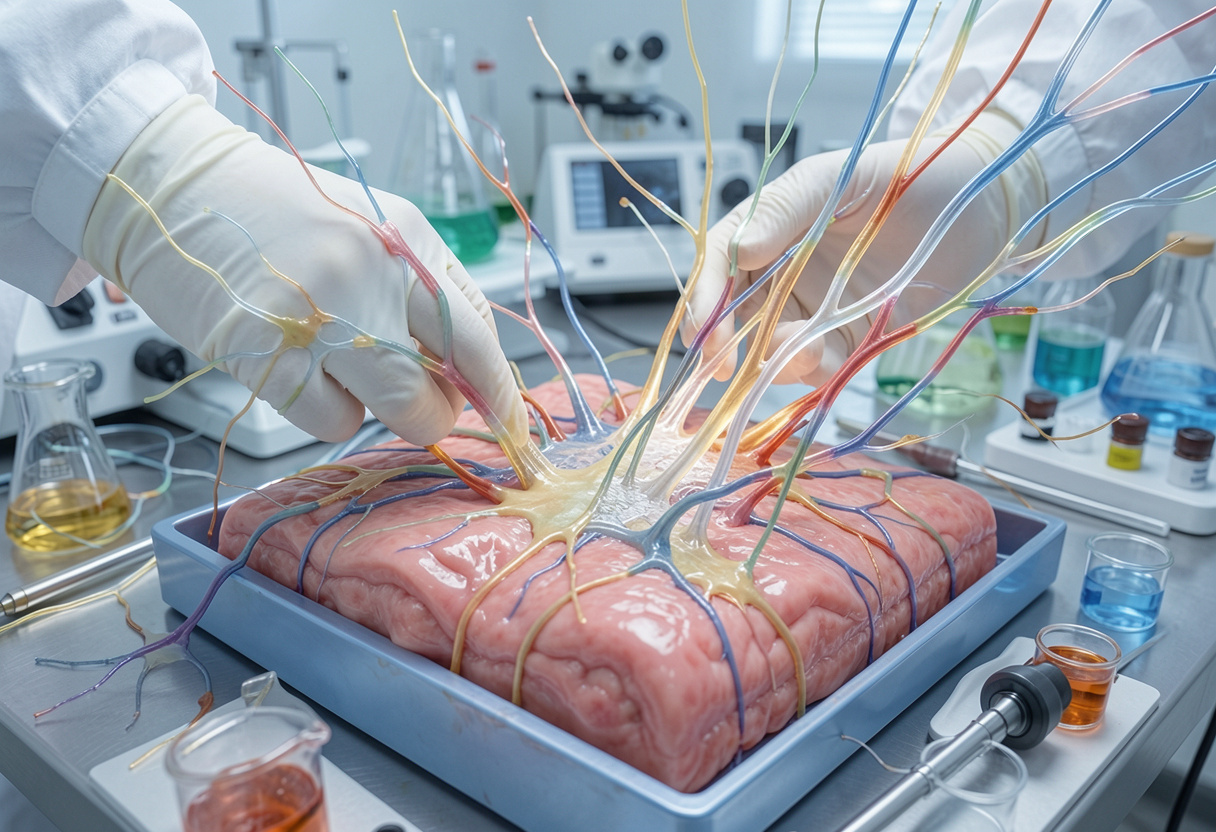
Researchers at Northwestern University took an important step in that direction. The team developed flexible artificial neurons capable of not only imitating brain signals, but also interacting directly with living neurons. Until today, many so-called neuromorphic systems only simulated neural behavior mathematically. What these researchers did was create physical devices capable of producing electrical impulses extremely similar to the real signals used by the human brain.


And the tests were even more impressive when scientists connected these artificial neurons to living brain tissue of mice, the artificially generated signals managed to activate real neural circuits, in practice, biological cells responded to the impulses created by the machine. Most interesting is the way this was built, instead of using traditional rigid silicon chips, the researchers developed electronic inks made from materials such as graphene and molypdenum disulfide, using aerosol printing they deposited those materials on flexible surfaces to create devices much closer to the organic architecture of the brain.


The result was something quite unusual, artificial neurons capable of producing different firing patterns, bursts and continuous signals similar to those observed in real biological systems. This not only brings electronics closer to the brain, but can also change the very way we think about computing, because today artificial intelligence faces a growing problem of energy consumption.


The more data the models process, the greater the need for power, servers, and gigantic computing infrastructure becomes. The human brain, on the other hand, operates by consuming something equivalent to a weak lamp. That is why there is a silent race to create computational systems more similar to real biological neural networks capable of learning and processing information much more efficiently, only intelligence alone no longer seems sufficient, the challenge now is to make machines exist naturally within our physical world.


References 1


Follow my publications with the latest in artificial intelligence, robotics and technology.

If you like to read about science, health and how to improve your life with science, I invite you to go to the previous publications.


Posted using SteemX