The Cage Has a Door — And It's Wide Open
What if the most radical thing you could do in 2026 isn't protest, isn't vote, isn't post on social media... but simply walk away from the system that was never designed to serve you?
There's a strange kind of madness that we've all agreed to call normal. We wake up to alarms we didn't want to set, commute to places we don't want to be, and spend eight, ten, twelve hours earning money that's already been allocated to bills before it even hits our accounts. We eat food we didn't grow, from places we've never seen, shipped in plastic from the other side of the world. We drink water that's been treated with chemicals because the rivers got too dirty — because of the very system we're working so hard to keep alive.
And then we come home exhausted and switch on a screen to watch someone else live a life that looks like freedom.
Let me ask you something honestly. When was the last time you felt truly free? Not entertained. Not distracted. Not comfortable. Free.
The Trap Nobody Talks About
Most people know something is off. You can feel it. The rising cost of living that never seems to match the rising wages. The sense that no matter how hard you work, you're somehow always just keeping your head above water. The nagging feeling that the food isn't quite right, the air isn't quite clean, the water isn't quite safe — but everyone just carries on, so you do too.
Here's the thing nobody wants to say out loud: the system isn't broken. It's working exactly as designed. It was never built to make you healthy, happy, or free. It was built to make you dependent. Dependent on the supermarket for food. Dependent on the grid for power. Dependent on the bank for shelter. Dependent on the pharmacy for wellness.
Every single basic human need has been turned into a product. And the price of that product is your time, your energy, and ultimately your life.
That's not a conspiracy theory. That's just the business model of modern civilisation.
The Quiet Revolution
But here's what's beautiful, and what gives me more hope than anything else right now — people are waking up. Not in some dramatic, Hollywood-style revolution. Something much quieter, much deeper, and far more powerful.
All over the world, ordinary people are doing extraordinary things. They're putting seeds in the ground and discovering that a single raised bed can produce more nutrition than a month of supermarket runs. They're installing solar panels, collecting rainwater, and watching their electricity bills drop to zero. They're building homes out of earth, tyres, bottles, and reclaimed wood — homes that heat and cool themselves, that don't need a mortgage, and that will still be standing in 500 years.
They're proving something that the system doesn't want you to know: you don't actually need most of what you've been told you need.
You don't need a million-dollar house. You need shelter that keeps you warm, dry, and safe — and that can be built for a fraction of the cost with natural materials and a bit of community support.
You don't need a giant salary. You need food, water, energy, and connection — and every single one of those can be sourced locally, naturally, and often for free.
You don't need the grid. The sun is right there. The rain is falling. The earth is beneath your feet.
It Starts With One Step — Not a Leap
Now, I know what some of you might be thinking. "That sounds nice, but I can't just quit my job and go live in the woods." And you're right — that's not what this is about. Going off-grid doesn't have to mean going off the deep end.
It starts small. It starts with a question: Where am I dependent, and where could I be free?
Maybe it's growing herbs on your windowsill. Maybe it's learning to compost. Maybe it's finding out where your water actually comes from. Maybe it's spending one weekend building a small solar setup that powers your phone and your lights. Maybe it's joining a local community garden and meeting the people who live on your street for the first time.
Every single step away from dependency is a step toward sovereignty. And those steps add up fast.
The person who grows 20% of their own food is 20% free from the supermarket. The person who generates their own electricity is free from the energy company. The person who builds real relationships with their neighbours has a safety net that no government or corporation can provide.
This isn't about perfection. It's about direction.
Why Now? Because the Window Won't Stay Open Forever
We are living in a moment of convergence. The climate is shifting. Economies are wobbling. Supply chains are fragile. Political trust is at an all-time low. The cost of energy, food, and housing is climbing while the quality of all three is falling.
This isn't meant to be doom and gloom — it's meant to be a wake-up call. Because within every crisis is an opportunity, and the opportunity right now is enormous.
The tools, the knowledge, and the technology to live sustainably, affordably, and freely are more accessible than at any point in human history. Open-source building designs. Permaculture courses online. Community seed banks. Solar panels cheaper than they've ever been. Rainwater harvesting systems you can build in a weekend.
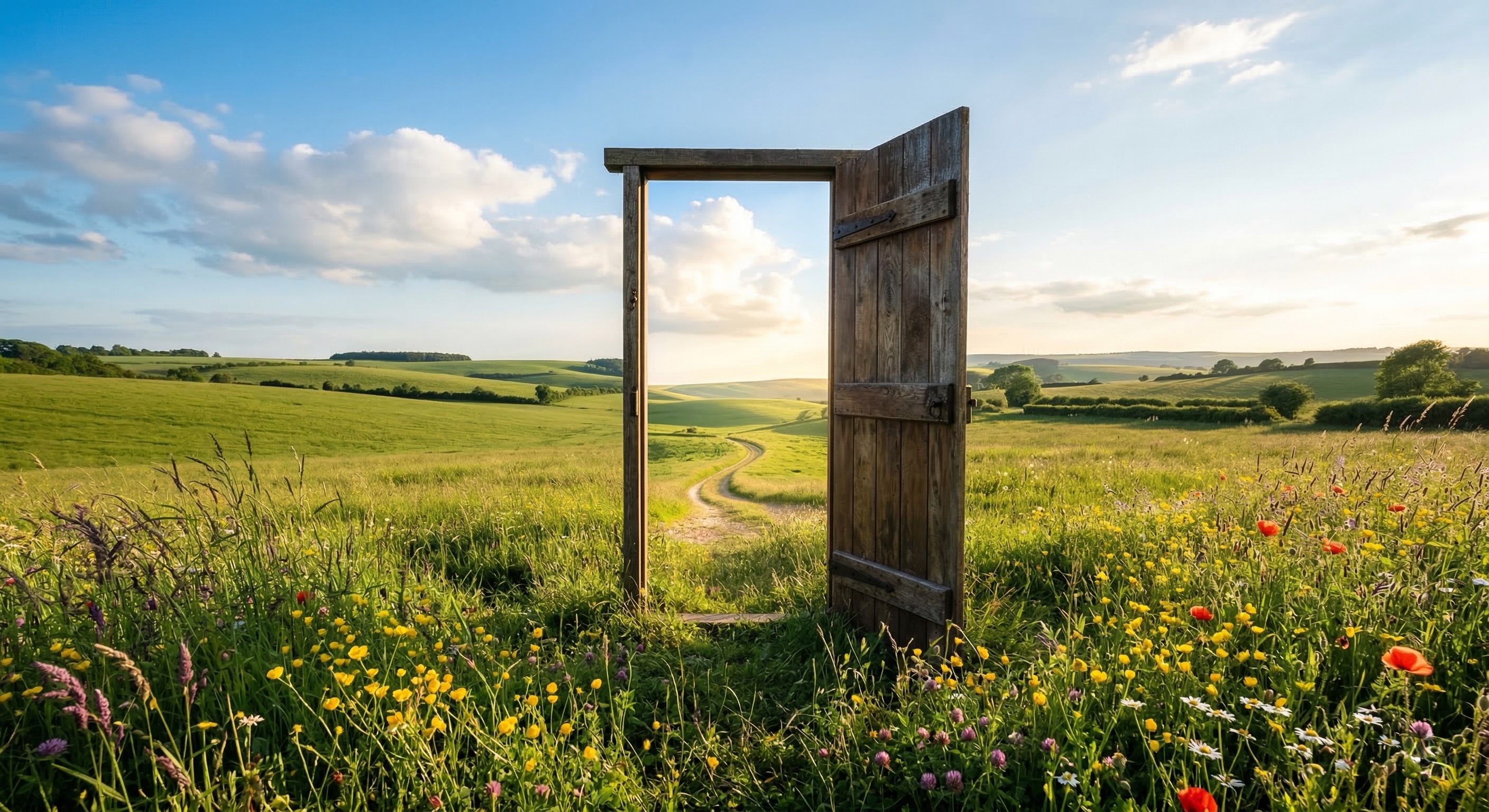
The door is open. The question is whether we'll walk through it — or wait until someone closes it.
The Real Currency
When you start stepping out of the system, even a little bit, something shifts inside you. It's hard to describe, but anyone who's done it knows the feeling. There's a confidence that comes from knowing you can feed yourself. A calm that comes from not being afraid of the next bill. A joy that comes from working with your hands in the soil, feeling the sun on your face, and knowing that what you're building is real — not just another number on a screen.
The real currency isn't money. It's capability. It's knowledge. It's resilience. It's community.
And unlike money, nobody can take those things from you.
A Question For You
I want to leave you with something to sit with. Not a lecture, not a list of things to do. Just a question.
If the systems we depend on — the supermarkets, the power grid, the banks, the supply chains — if they all took a serious hit tomorrow... how many days could you sustain yourself and the people you love?
Not to scare you. But to be honest with you. Because that number — whether it's two days, two weeks, or two months — tells you everything about where you stand on the spectrum between dependency and freedom.
And the beautiful thing is, you can change that number. Starting today. Starting with one small step.
I'd love to hear from you. What does freedom mean to you? What's one step you've taken — or want to take — toward being less dependent on the system? Let's have a real conversation about this in the comments. No judgement, no gatekeeping. Just people figuring it out together.
Hello Alex! We’re largely on the same wavelength here… I’ve written quite a bit on this subject over the last few years, but many ideas – on self-sufficiency, doing without state welfare systems, self-directed learning, moving away from representative democracy towards direct democracy, and so on – tend to be viewed as rather exotic and eccentric. Globally, the trend is towards a general desire for a patriarchal state that relieves the individual of all responsibility and all autonomy. Well, yes... It’s not quite how we imagined life in the future 50 years ago...
Thank you for this! You really nailed it.. these ideas only seem "eccentric" because we've been so thoroughly conditioned to see dependency as normal. Self-sufficiency used to just be called.. life!
That observation about the trend toward the patriarchal state is spot on. People are trading freedom for comfort without realising the comfort is temporary but the loss of autonomy isn't.
I'd love to check out some of your writing on this — especially the direct democracy stuff. Feel free to share a link! And let's keep having these conversations.. the "eccentric" ideas always end up being ahead of their time 🙏
Good morning! The link will take you to a rough selection – I’ll have another look later to see if I can offer you anything specific... There are some good people here who are working on the same topics. Not enough of them. But, like everything else, it’s a process... ;-))
https://moecki.online/search?tags=politics&author=weisser-rabe
https://moecki.online/search?tags=society&author=weisser-rabe
@blessedlife 🌷
It's good to see you writing. Long time my friend, how have you been doing.
I would any day like to be completely cut off from the systems, yet sometimes it's difficult. I can maintain a balance with my lifestyle if not completely cut off
nice to hear from you.. yes it is hard to get off grid isnt it :) hey your welcome to stay at Earthship Karuna, if you can get there! !
im hanging in there! having a few issue right now lets say.. hopefully things will get easier soon
much love
Alex