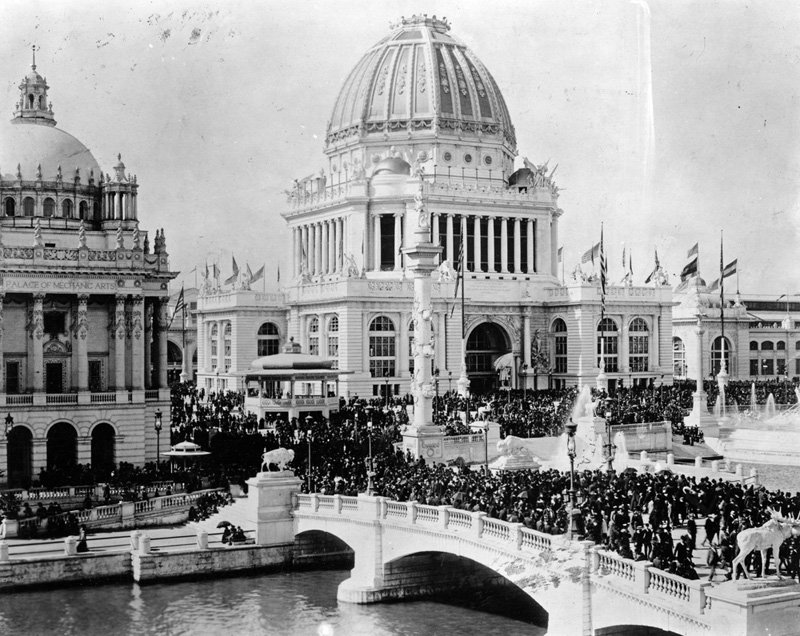
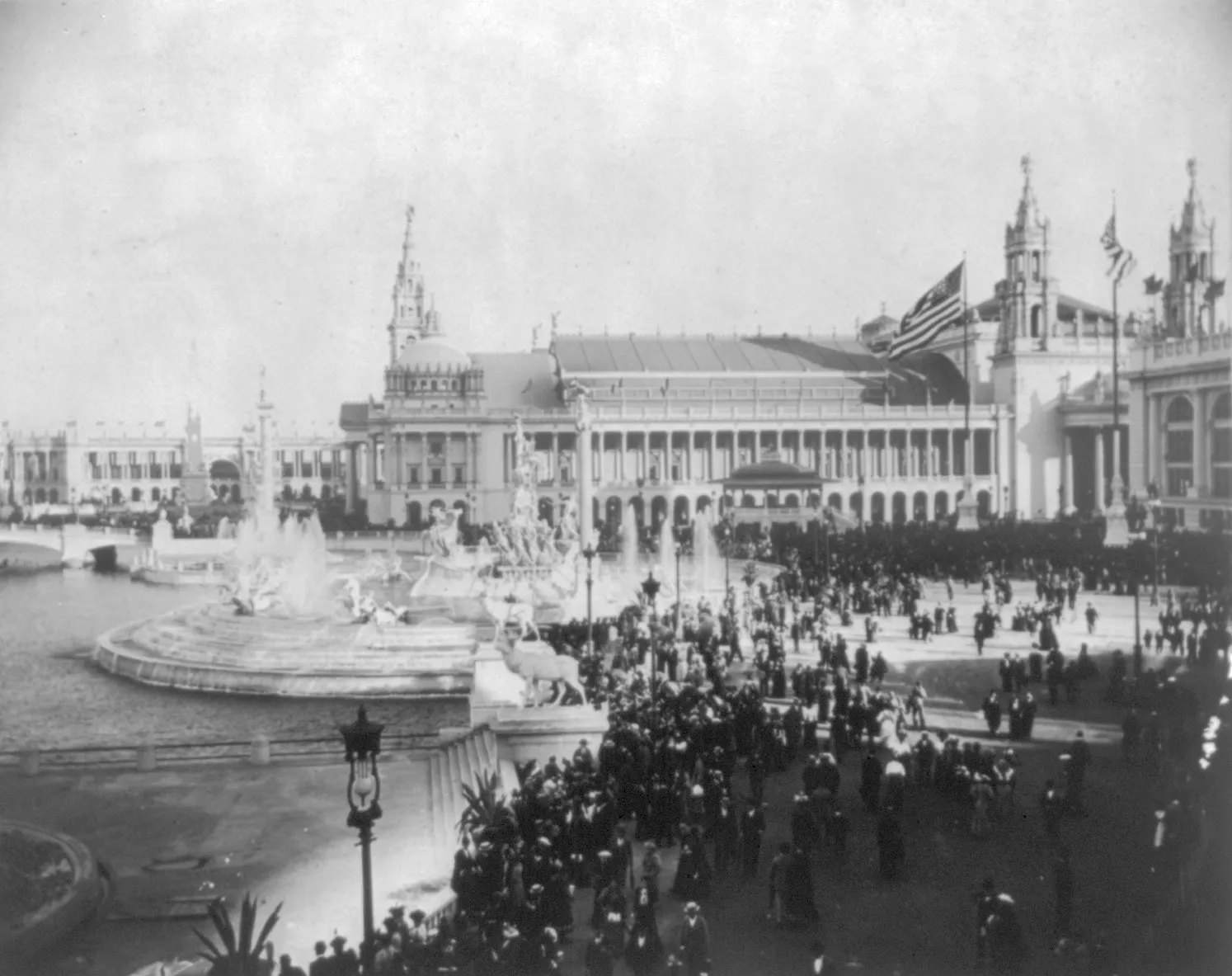
Tartarian Buildings and Architecture. 10
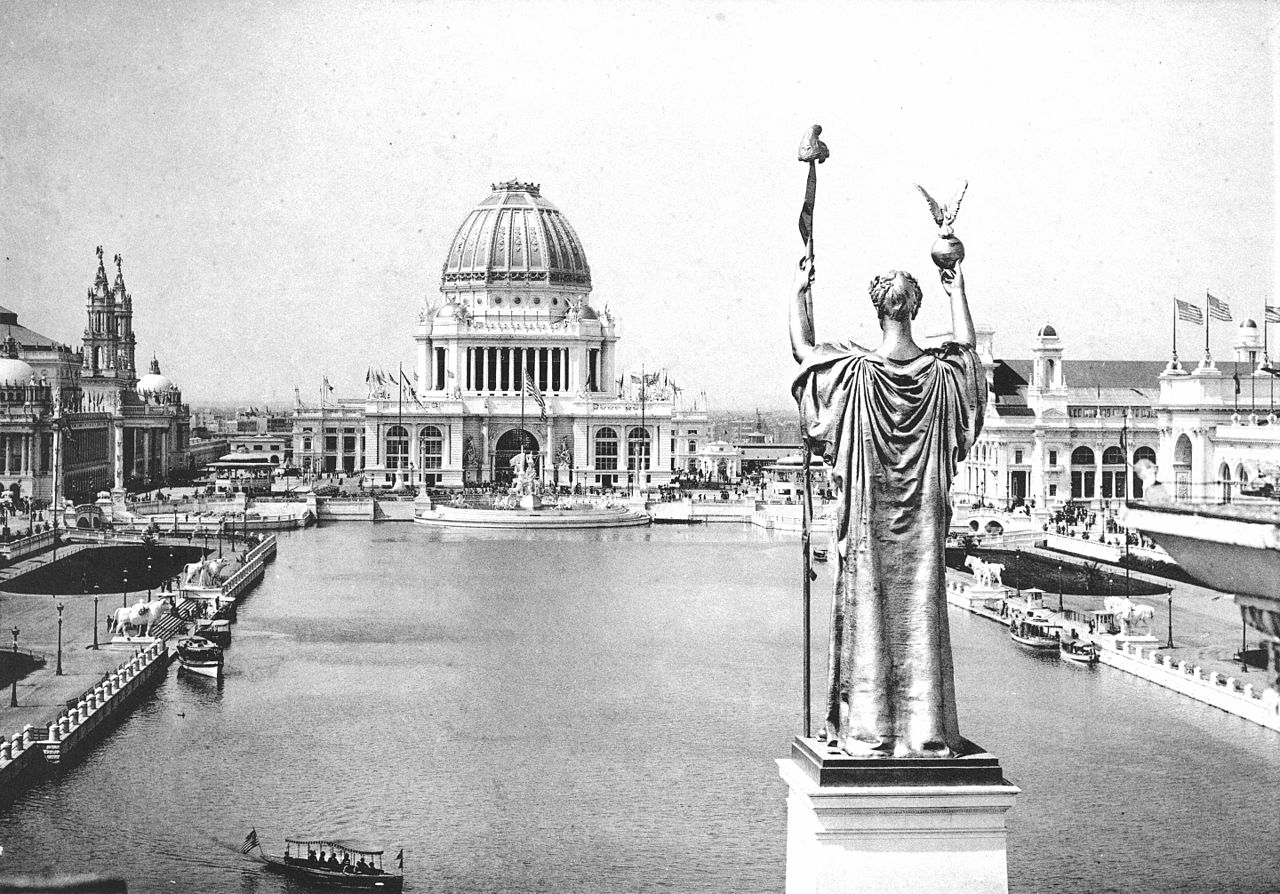
The image above depicts the World's Columbian Exposition, specifically the area known as the Court of Honor or the White City, which was located in Jackson Park, Chicago.
Held from May 1 to October 31, 1893, the fair was a massive event celebrating the 400th anniversary of Christopher Columbus's arrival in the New World.
Key Features in the Image
• Statue of the Republic: The large statue in the foreground is the original 65-foot-tall "Republic" sculpture by Daniel Chester French. A 24-foot replica, often called the "Golden Lady," now stands in Jackson Park to commemorate the fair.
• Administration Building: The grand building with the prominent gold dome in the background is the Administration Building.
• Grand Basin: The large central water pool represents the voyage of Columbus and was the centerpiece of the fairgrounds.
• Architecture: The buildings were designed following Beaux-Arts principles, characterized by neoclassical symmetry, balance, and splendor. Most were intended to be temporary structures.
The "White City" nickname came from the extensive use of white "staff" (a mixture of plaster of Paris and hemp fiber) for the building exteriors and the widespread use of electric streetlights, which was a novelty at the time.
Wikipedia
The grand structures of the 1893 World's Columbian Exposition were largely destroyed by a series of devastating fires in 1894, just months after the fair ended.
University of Illinois LibGuides +1
Because the fair was intended to be temporary, most buildings were constructed with "staff"—a mixture of plaster, cement, and jute fiber—which was highly flammable.
The End of the "
White City
"
• Post-Fair Decay: After closing in October 1893, many buildings were left abandoned and began to deteriorate.
• The 1894 Fires: Three major fires occurred throughout 1894. The most significant one in July destroyed much of the remaining "White City".
• Return to Parkland: The site was eventually cleared of debris and returned to its original status as public parkland, known today as
Jackson Park. What Still Survives Today.
While most of the fair was lost, a few notable remnants still exist:
• The Museum of Science and Industry
: Originally the Palace of Fine Arts
, this was the only major fair building constructed with a fireproof brick and steel substructure to protect the art inside. Its exterior was later replaced with permanent limestone.
• The Art Institute of Chicago
: Located downtown rather than in Jackson Park, it served as the World’s Congress Auxiliary Building during the fair.
• The Statue of the Republic Replica: A smaller, 24-foot bronze version of the original "Big Mary" statue stands in Jackson Park today.
• The Wooded Island
: A natural area designed by Frederick Law Olmsted, which still features the Japanese Garden
.
• Other Artifacts: A few smaller structures were moved, including a ticket booth (now in Oak Park, IL), a Viking ship (now in Geneva, IL), and the Maine State Building now in Poland Spring, ME).