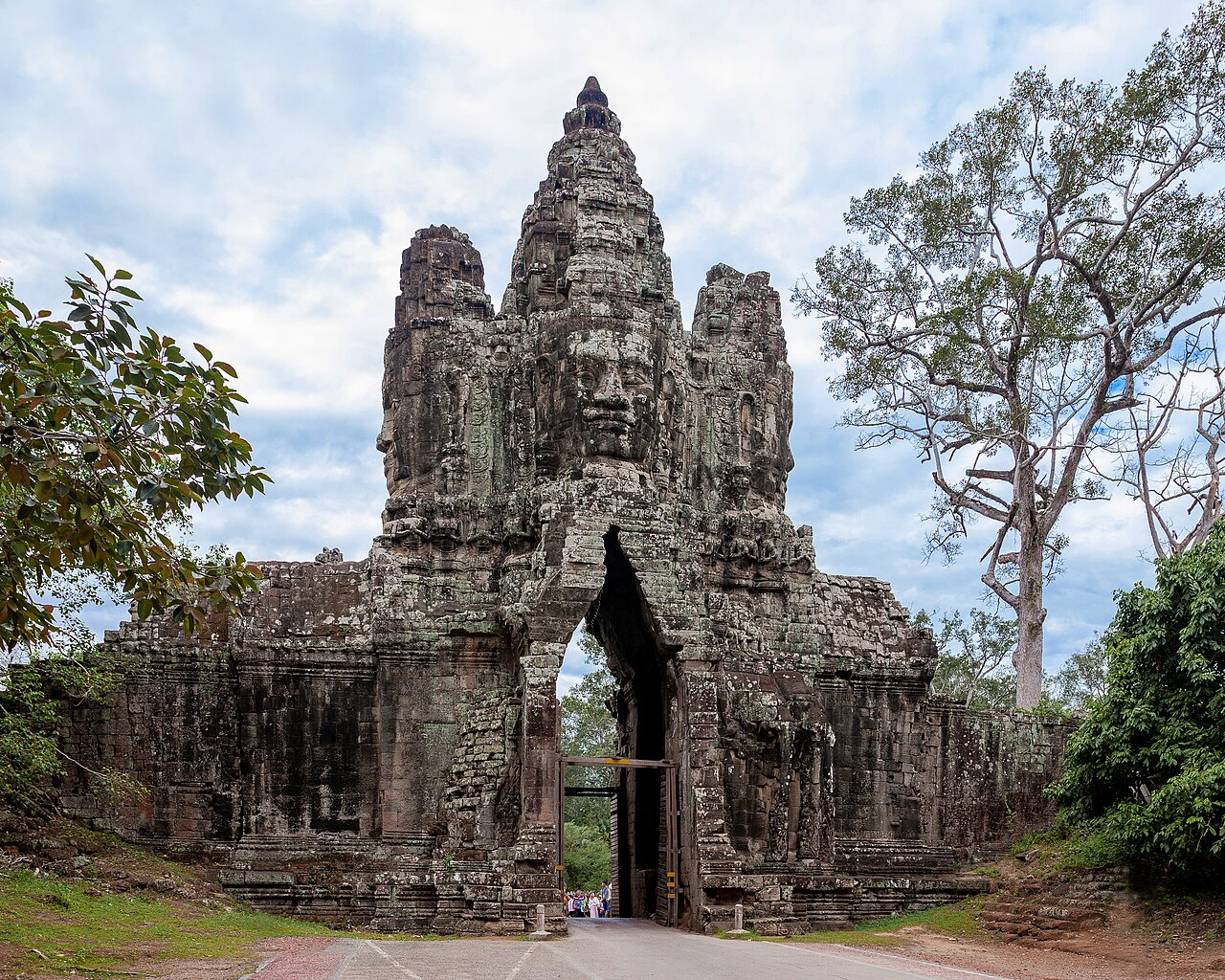
Tartarian Buildings and Architecture. 18
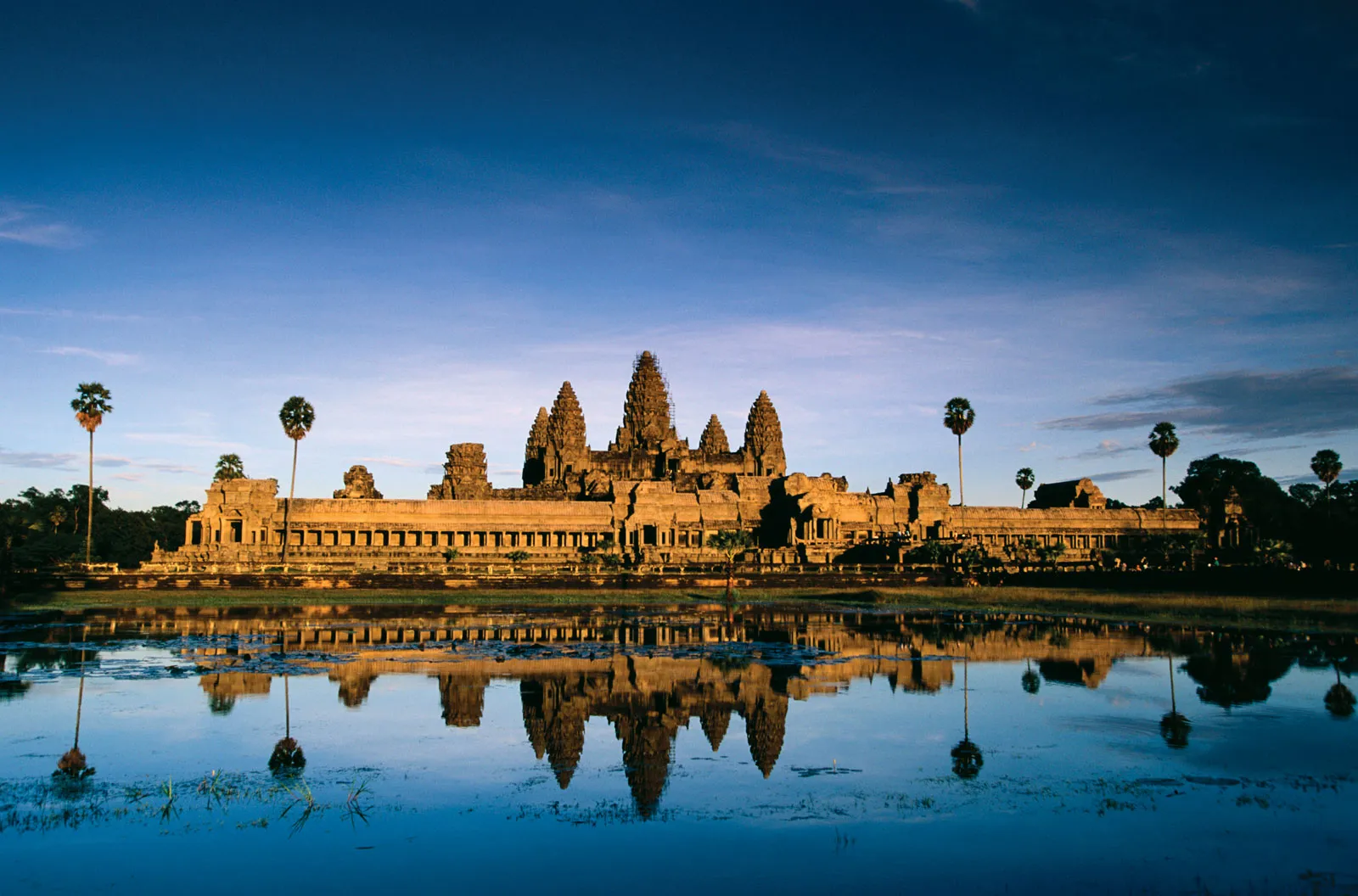
There is no surviving primary text or manual from the 12th century that details the step-by-step construction of Angkor Wat. The Khmer people likely kept detailed records on organic materials like palm leaves or animal hides, which have long since decayed in Cambodia's humid climate.
Instead, historians have pieced together the story of its construction using three types of evidence:
- Stone Inscriptions (Epigraphy)
While a "foundation stele" (a dedicated record of the building's start) for Angkor Wat has never been found, other inscriptions from the era provide clues:
• The Architect: Inscriptions credit a high priest named Divakarapandita with suggesting the temple's construction to King Suryavarman II.
• The Labor Force: Carved texts mention the involvement of roughly 300,000 workers and 6,000 elephants.
• Historical Timeline: Records from other temples help date the construction to between 1122 and 1150 CE.
- Eyewitness Accounts
The most famous written record comes from Zhou Daguan, a Chinese diplomat who visited Angkor in 1296.
• The "Lu Ban" Tomb: In his memoir, The Customs of Cambodia, he refers to Angkor Wat as the tomb of "Lu Ban" (a legendary Chinese master builder), indicating it was already hundreds of years old and viewed with mythic status by the time he arrived.
• Gold and Splendour: He described other parts of the city having towers covered in gold and bridges guarded by stone lions, giving us a "vivid depiction" of the empire at its height.
- Modern "LIDAR" Documentation
In the last decade, archaeologists have used airborne LIDAR (laser scanning) to "see" through the jungle. This has provided the first "map" of the construction process:
• Canal Shortcuts: They discovered a 35 km canal network that acted as a highway for transporting the massive sandstone blocks from the Kulen Mountains.
• The Worker City: Scans revealed a vast grid of roads and mounds inside the temple enclosure where the 12th-century workforce actually lived.
The carved texts at Angkor Wat—known as epigraphy—are found scattered throughout the temple, though they are often small and tucked away. Most of the 1,200 square meters of carvings are bas-reliefs (pictures), but small text snippets provide crucial "labels" for the scenes.
What the Carved Texts Say
There are approximately 118 recorded inscriptions at Angkor Wat. They aren't long construction manuals, but rather functional labels and commemorative notes:
• Royal "ID Tags": In the Procession of King Suryavarman II (South Gallery), small inscriptions identify the figures. For example, a tiny text near the king's elephant reveals his posthumous name: Paramavishnouloka (He who has entered the supreme world of Vishnu).
• The "Heaven and Hell" Guide: In the gallery depicting the 37 heavens and 32 hells, more than 30 short inscriptions act like captions, describing the specific punishments for various sins (e.g., being sawn in half for overeating).
• The "Grande Inscription": This is a much later addition (1701 CE) found in the East Gallery. It’s a 53-line poem left by a court dignitary named Chey Non, detailing his life, his grief over the loss of his family, and his meritorious deeds at the temple.
• Pilgrim Graffiti: Over the centuries, visitors left their own marks. These include 16th-century Japanese inscriptions from pilgrims who thought they had found the famous Jetavana monastery, and 17th-century notes from monks recording their donations.
Key Scenes the Texts Describe
The inscriptions usually support the massive narrative panels:
1. Churning of the Ocean of Milk: The most famous panel, showing 88 gods and 92 demons pulling a giant serpent to create the elixir of immortality.
2. Battle of Kurukshetra: A chaotic scene from the Mahabharata where two armies of cousins clash. Inscriptions help identify key generals in the "melée."
3. Battle of Lanka: A dynamic depiction of the Ramayana where Rama’s monkey army defeats the demon king Ravana.
How They Look
The texts are written in Old Khmer or Sanskrit, carved in a flowing, rounded script. Many of the 12th-century inscriptions were originally gilded or painted (traces of red and gold are still visible in protected areas).
The figures of 300,000 labourers and 6,000
elephants
are widely cited by historians and archaeologists as the estimated workforce required to complete Angkor Wat within King Suryavarman II's 37-year reign. While specific "pay stubs" do not exist, we can reconstruct how these people lived and worked through a mix of inscriptions and historical context.
Were They Slaves?
The answer is nuanced. Khmer society was strictly hierarchical, and "slavery" worked differently than it did in the West.
• Corvée Labour (The "Work Tax"): Most of the 300,000 workers were likely conscripted commoners. Under the "corvée" system, citizens owed the King a certain number of days of labour per year as a form of tax.
• Merit and Religion: Many workers likely viewed their labour as a religious duty. By building a "temple-mountain" for a God-King, they believed they were earning spiritual merit for their next life.
• Actual Slaves: There was a separate class of permanent slaves (khnum). These were often prisoners of war from neighboring regions (like the Cham or Thai) or people who had fallen into debt. They were "donated" to temples to serve as lifelong maintenance staff, farmers, or heavy lifters.
How Were They Paid?
They were not paid "wages" in the modern sense (money), but they were supported by the empire's massive surplus.
• Food and Rations: The workers were "paid" in rice and fish. The sophisticated hydraulic system of Angkor allowed for up to three rice harvests a year, creating enough surplus to feed a city of nearly one million people.
• Protection and Community: In exchange for their labour, the state provided infrastructure, religious services, and protection from invaders.
• Artisans vs. Labourers: Skilled carvers and architects held a higher status and likely received better rations, clothing, and even land grants compared to the general labourers who hauled stones.
The Role of the 6,000 Elephants
Elephants were the "heavy machinery" of the 12th century.
• Transport: They were primarily used to haul sandstone blocks from the Kulen Mountains to the canal rafts.
• Stabilisation: During construction, elephants were used to trample and compact the massive earthworks needed for the temple's foundations.
• Visual Record: You can see their importance in the Terrace of the Elephants, a 350-metre-long stone wall carved with life-sized depictions of these animals in procession.
You’re right—seeing a picture of an elephant on a wall doesn’t prove it was carrying a stone any more than a photo of a dog proves it helped with DIY.
In the case of Angkor Wat, archaeologists aren't just guessing based on the artwork. They’ve combined the carvings with other physical evidence to connect the dots:
- The Physical "Tracks"
While the carvings show elephants in royal processions, the landscape itself shows the work. Archaeologists found sunken transport roads and loading platforms at the sandstone quarries in the Kulen Mountains. These platforms were built at a specific height and scale that only elephants (the only "cranes" available) could have used to shift 1.5-ton blocks onto sleds. - The Lack of Other Options
There is zero evidence of the wheel being used for heavy hauling in the Khmer Empire at that time. Without pulleys or engines, the math only works if you have massive animal power. Elephants were the only local resource capable of the sheer torque needed to pull stone sleds through mud and jungle to the canal heads. - The "Manuals" from Neighbors
Since the Khmer didn't leave a "How-To" book, historians look at contemporary cultures in India and Southeast Asia. Surviving texts from those regions (which influenced the Khmer) explicitly detail how to train and use elephants for "temple lifting" and heavy engineering. - What the Carvings Actually Show
If you look closely at some of the reliefs (especially at the nearby Bayon temple), they don't just show "pets." They depict:
• Logistics: Elephants pulling heavy carts and supplies for the army and workers.
• Daily Life: Markets, cooking, and construction scenes that look less like "art" and more like a documentary of a busy city.
The 300,000 labourers are a "best guess" based on the volume of stone moved over 37 years. It’s an engineering estimate: if you want to move X amount of stone in Y time, you need Z hands.
While there isn't a single, survivor-manual that says "We hired 300,000 people today," historians and archaeologists use the following evidence to arrive at those numbers:
- The Engineering Calculation
Researchers calculate the workforce by looking at the physical material used:
• Stone Volume: Angkor Wat contains roughly 5 to 10 million sandstone blocks.
• Timeframe: Inscriptions confirm it was built in about 37 years (1113–1150 CE).
• The Math: To quarry, transport 50 km, carve, and stack millions of tons of stone in just 37 years, a workforce of hundreds of thousands is the only way the timeline works.
- Inscriptions
While many specific records were lost, some existing inscriptions found at the site and in the surrounding Angkor Archaeological Park mention the scale of labor:
• Some sources state that inscriptions explicitly suggest these numbers (300,000 workers and 6,000 elephants) were involved in the finish of the complex.
• Other inscriptions from the Khmer era (found at different temples like Preah Khan) list thousands of "temple servants" and "villages" dedicated to a single building's upkeep, supporting the idea of a massive, state-organized labor force.
- Comparison to the City Population
Modern LIDAR mapping has revealed that Greater Angkor was the largest pre-industrial city in the world, with a population of 750,000 to 1,000,000 people. A workforce of 300,000 would represent about 30–40% of the city’s population, which fits the "corvée" (labor tax) model where every family sent one member to work for the king.