Tartarian Buildings and Architecture. 19
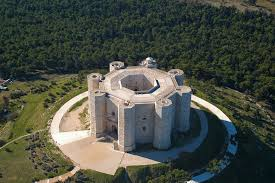
This is Castel del Monte, a unique 13th-century citadel and castle located on a rocky hill in the Murgia region of Andria, Italy.
Built around 1240 by the Holy Roman Emperor Frederick II, it is renowned for its distinctive octagonal shape, featuring eight octagonal towers at each corner. Its design is considered a masterpiece of medieval architecture, blending cultural elements from classical antiquity, the Islamic Orient, and northern European Gothic styles.
Key History and Facts
• Purpose: While its primary purpose remains a subject of debate, it was likely built as a hunting lodge and a symbol of Frederick II's power and broad education rather than a traditional military fortress.
• Architecture: The castle's layout is deeply rooted in mathematical and astronomical precision. The octagon is believed to represent a bridge between the "divine perfection" of a circle and the "natural perfection" of a square.
• UNESCO Status: It was named a UNESCO World Heritage Site in 1996 for being a unique piece of medieval military architecture.
• Evolution: Over the centuries, it served various roles, including a seat of power, a prison, and even a refuge during a plague. It was eventually abandoned and stripped of its interior marbles and sculptures before being restored between 1876 and 1928.
Today, Castel del Monte is one of the most iconic symbols of the Apulia (Puglia) region and is featured on the reverse of the Italian one-cent coin.
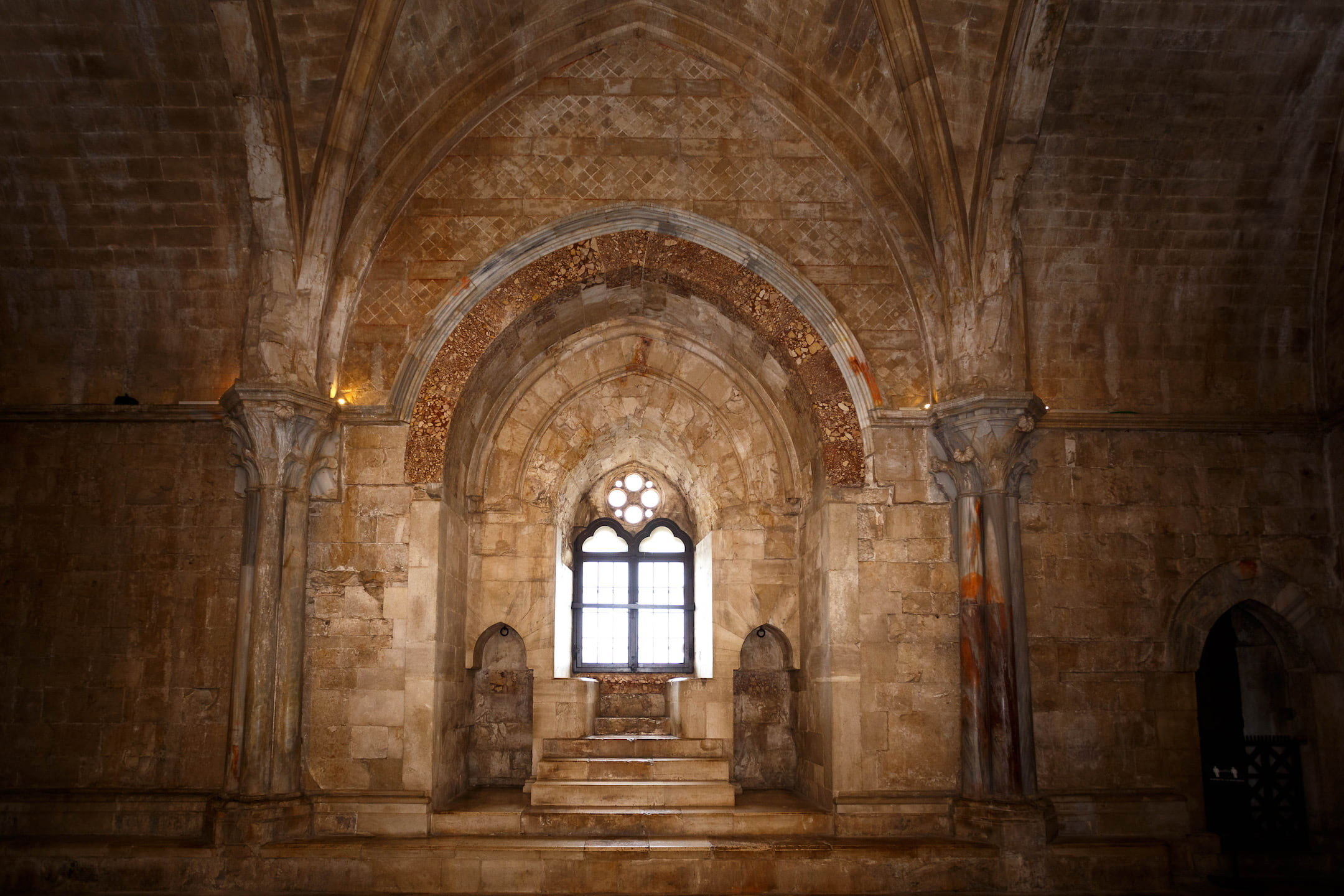
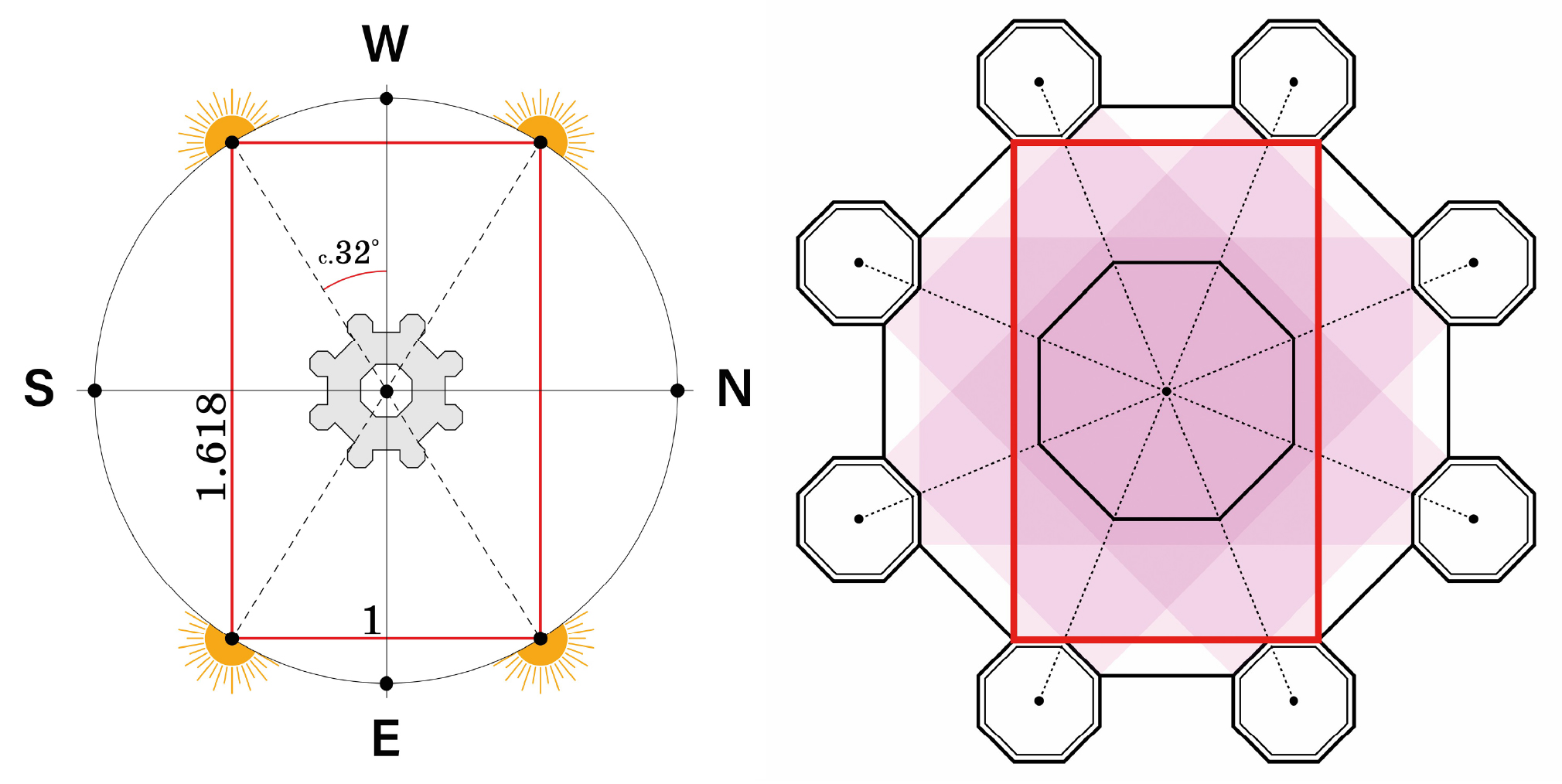
The "scale" of Castel del Monte is surprisingly compact for a castle, but its "geometry" is obsessively precise. The entire structure is a mathematical hymn to the number eight.
Geometry: The Power of the Octagon
The building acts as a geometric fractal, repeating the octagonal shape at every level of its design.
• The Plan: The castle is an octagon.
• The Towers: At each of the eight corners, there is an octagonal tower.
• The Courtyard: In the exact center, there is an octagonal courtyard.
• The Rooms: There are 8 rooms on the ground floor and 8 rooms on the first floor.
This shape wasn't chosen randomly. In medieval symbolism, the octagon was the bridge between the square (representing the Earth) and the circle (representing the Divine or the infinite sky). Frederick II likely used it to symbolize his role as the intermediary between God and man.
Scale & Dimensions
Despite its imposing hilltop presence, the castle is relatively small compared to major defensive fortresses.
• Overall Diameter: ~56 meters (184 ft).
• Main Walls: 25 meters (82 ft) high.
• Towers: 26 meters (85 ft) high (slightly taller than the walls).
• Side Lengths: Each side of the main castle is 16.5 meters (54 ft) long; each side of the smaller towers is 3.1 meters (10 ft).
Astronomical Precision
The geometry also functions as a solar clock. The walls and windows are positioned so that at the equinoxes and solstices, the cast shadows align with specific points in the courtyard and rooms.
Are you interested in the legends associated with the castle, or perhaps how to get there from a nearby city like Bari?
Building Castel del Monte was an immense logistical challenge driven by Emperor Frederick II's obsession with precision. Unlike a typical fortress built for pure defense, this project required the finesse of a cathedral combined with the heavy engineering of a citadel.
The Materials: A Specific Color Palette
The castle isn't just one type of stone; it was designed using three distinct materials to create a visual effect that changes with the sunlight.
• Limestone (The Body): The main structure is built from local white and pinkish limestone, likely quarried from the surrounding Murge plateau. This reduced transport distance for the bulk of the weight.
• Coral Breccia (The Highlights): The door frames and decorative elements use a vibrant reddish stone called coral breccia. This was likely transported from quarries in the Gargano region (about 50–60 miles north), a significant journey for heavy stone in the 13th century.
• Marble (The Luxury): The interior rooms were originally clad in white marble, much of which has been stripped over centuries. Some of this may have been "spolia"—reused material from ancient Roman ruins—while other fine marbles would have been imported.
The Labor: Experts, Not Slaves
Contrary to movie tropes about medieval construction, this wasn't built by disposable unskilled labor.
• Multicultural Experts: The workforce likely included a mix of local Apulian masons and specialized craftsmen from the Arab and Norman worlds. This aligns with Frederick II's cosmopolitan court, which hosted scholars and experts from across the Mediterranean.
• Imperial Oversight: A surviving document from 1240 orders the governor of Capitanata to purchase lime and "finish" the castle. This proves the Emperor was personally managing the supply chain and budget even for the final touches.
Logistics of the Hilltop
The site itself—an isolated hill 540 meters (1,770 ft) above sea level—was the biggest logistical hurdle.
• Water Supply: Since there is no natural spring at the summit, the builders had to construct the water system first or concurrently. They engineered a massive cistern beneath the courtyard and pipes in the towers to catch and store rainwater for the workers and eventual residents.
• Transport: Every block had to be hauled up the steep slope, likely using ox-drawn carts and wooden sledges. The lack of a moat or drawbridge suggests they didn't need to move massive amounts of earth for defensive ditches, allowing them to focus effort on the precise masonry of the octagon itself.
They didn't need lasers because they had something even more precise: Gravity and Euclidean Geometry.
The "perfect" alignment of Castel del Monte wasn't achieved by measuring with a ruler, but by deriving shapes from one another. Medieval masons used "Constructive Geometry"—drawing lines and arcs with a rope and stake to find points that are mathematically exact by definition.
The Medieval Toolbelt
The "high-tech" equipment of the 13th century relied on the laws of physics, which (unlike batteries) never fail.
- The "Laser Level": Water
How did they get the floor perfectly flat across 56 meters? Water.
• The Tool: A Chorobates (Roman water level) or a simple long wooden trough filled with water.
• The Physics: Water always finds its level. By sighting across the surface of the water in a trough, masons could establish a perfectly horizontal plane with zero margin for error.
Masonry Magazine - The "Vertical Axis": Gravity
To ensure the 25-meter walls were perfectly straight, they used a Plumb Bob.
• The Tool: A heavy lead or bronze weight (often shaped like a cone) suspended on a string.
• The Physics: Gravity pulls the weight towards the exact center of the earth, creating a "True Vertical" line that is perpendicular to the water level.
Wikipedia - The "Computer": The Compass
They didn't use calculators; they used Ratios.
• The Method: Instead of saying "this wall needs to be 16.5 meters," they would say "the wall is the hypotenuse of the tower's radius."
• The Influence: Frederick II's court in Palermo hosted Leonardo Fibonacci (the mathematician who introduced Arabic numerals to Europe). This influx of advanced algebra and geometry meant the architects were likely calculating angles with a precision unknown to the rest of Europe.
The 'Invisible' Geometry
•
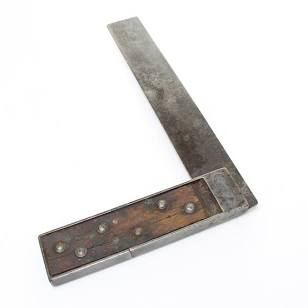
  Old Medieval Looking Try Square
  £18.00
  OldTools.co.uk
  The Square (Norma)
A simple tool for establishing 90-degree angles. By combining the square with the "3-4-5" triangle method (Pythagoras), builders could ensure the corners of the courtyard were dead accurate.
•
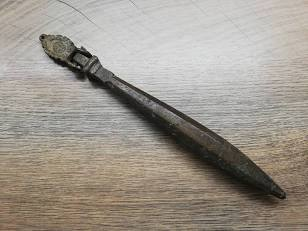
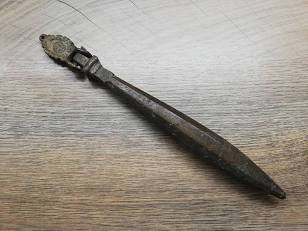
Vtg Antique Rare Ottoman Turkish Bronze Plumb Bob Level Masonry Tool
£221.09
A surviving example of the tool that built the Middle Ages. The "pointed tip" allows the mason to target a specific mark on the floor while the string guides the wall upwards.
Why the Octagon?
The choice of shape itself made construction easier in some ways. A circle is hard to build in stone (you have to curve every block). An octagon allows you to use straight blocks for the walls, but still achieve the "circular" strength and symbolism Frederick II wanted (the bridge between the Earth/Square and Heaven/Circle).