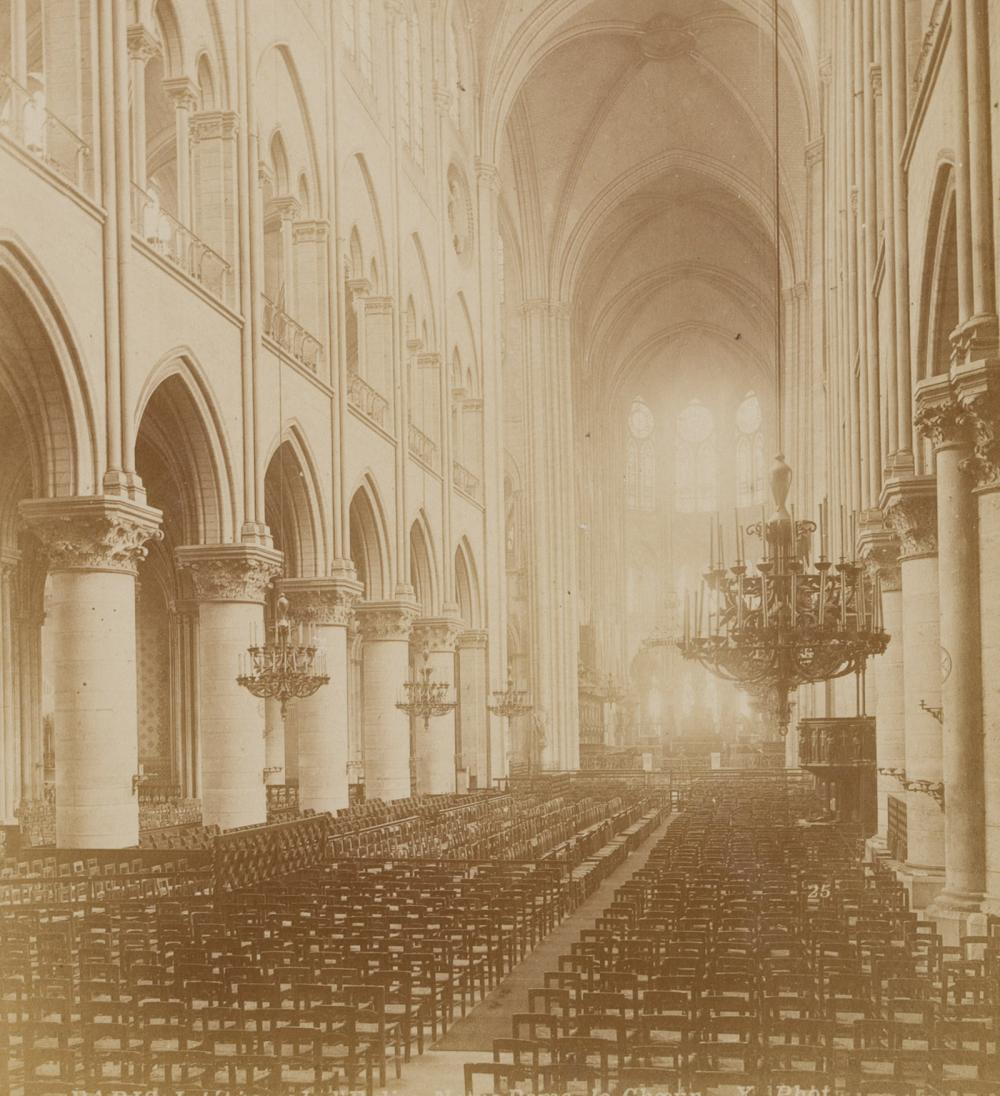
Tartarian Buildings and Architecture. 22
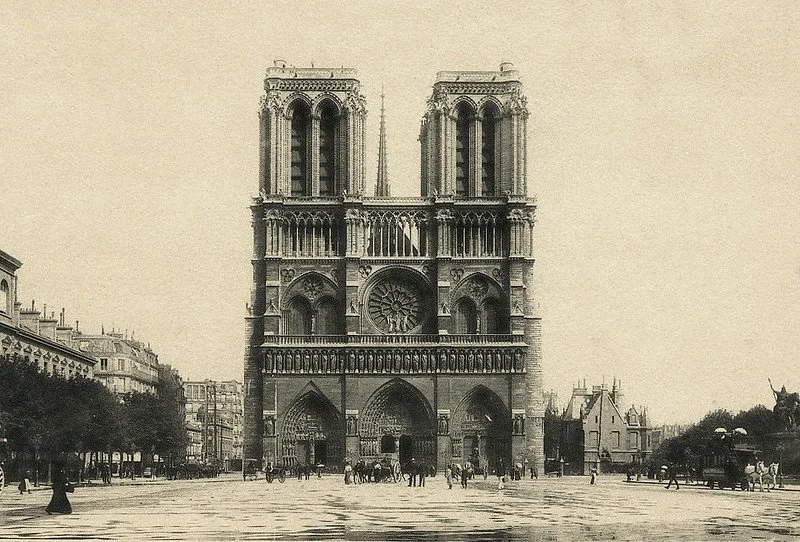
The building in your image is the Notre-Dame de Paris, a masterpiece of Gothic architecture and one of the most famous landmarks in the world.
Location
It is located in the 4th arrondissement of Paris, France. Specifically, it sits on the Île de la Cité, a natural island in the middle of the Seine River.
Construction History
The cathedral's construction was a massive undertaking that spanned nearly two centuries:
• Start: Construction began in 1163 under the direction of Bishop Maurice de Sully.
• Completion: The main structure was considered largely complete by 1345.
• Phases: The choir and eastern end were finished first (c. 1182), followed by the nave and western facade with its twin towers (c. 1250), and finally the rose windows and flying buttresses.
Notably, the cathedral has undergone several major restorations over the centuries, most famously in the mid-19th century by Eugène Viollet-le-Duc. Following a devastating fire in April 2019, it underwent another extensive restoration and officially reopened on December 7, 2024.
The construction and recent restoration of Notre-Dame de Paris represent massive engineering feats across different centuries, characterized by specialized labor and iconic materials.
Scale of Construction
Notre-Dame was the largest religious building in Europe during the 12th century. Its grand scale was designed to accommodate up to 9,000 worshippers.
• Dimensions: It measures roughly 128 meters (420 ft) long, 48 meters (157 ft) wide, and 69 meters (226 ft) at the height of its twin towers.
• Engineering: It was the first Gothic church to feature external flying buttresses, which allowed for higher walls and larger windows.
Labourers and Workforce
• Medieval Era: Contrary to the image of thousands on-site, the medieval workforce was often small and highly controlled, averaging about 10 to 30 workers per year depending on the specific phase. Skilled artisans included stonemasons, sculptors, carpenters, and glass painters.
• 2019–2024 Restoration: This modern project involved approximately 2,000 craftspeople and 250 companies. Specialized groups like the Compagnons du Devoir (an elite artisan guild) were essential for recreating traditional wooden and stone structures.
Primary Materials
• Limestone: Built primarily from Lutetian limestone sourced from local Parisian quarries. Modern researchers discovered medieval builders also used thousands of iron staples to bind the stones together, making it the first Gothic cathedral to use iron as a primary structural material.
• Wood ("The Forest"): The original roof framework, known as "The Forest," was made from over 1,300 oak trees. For the restoration, 1,200 oaks were specifically identified and felled across France.


• Lead: The roof and the 96-meter spire were historically covered in lead sheets (roughly 210–250 tons), which melted during the 2019 fire.
Major Incidents
• French Revolution (1790s): The cathedral was looted and vandalized; the original 13th-century spire was removed due to instability, and statues were destroyed.
• The 2019 Fire: On April 15, 2019, a fire broke out in the attic during renovations. It lasted 15 hours, destroying the spire and the wooden roof. While no one died in the fire, one firefighter was seriously injured.


• Restoration Challenges: Following the fire, workers had to remove 200 tons of melted metal scaffolding that had fused together in the heat, a high-risk operation that took months to complete safely.
The cathedral officially reopened to the public on December 7, 2024, though some minor facade work is scheduled to continue through 2026