Tartarian Buildings and Architecture. 23
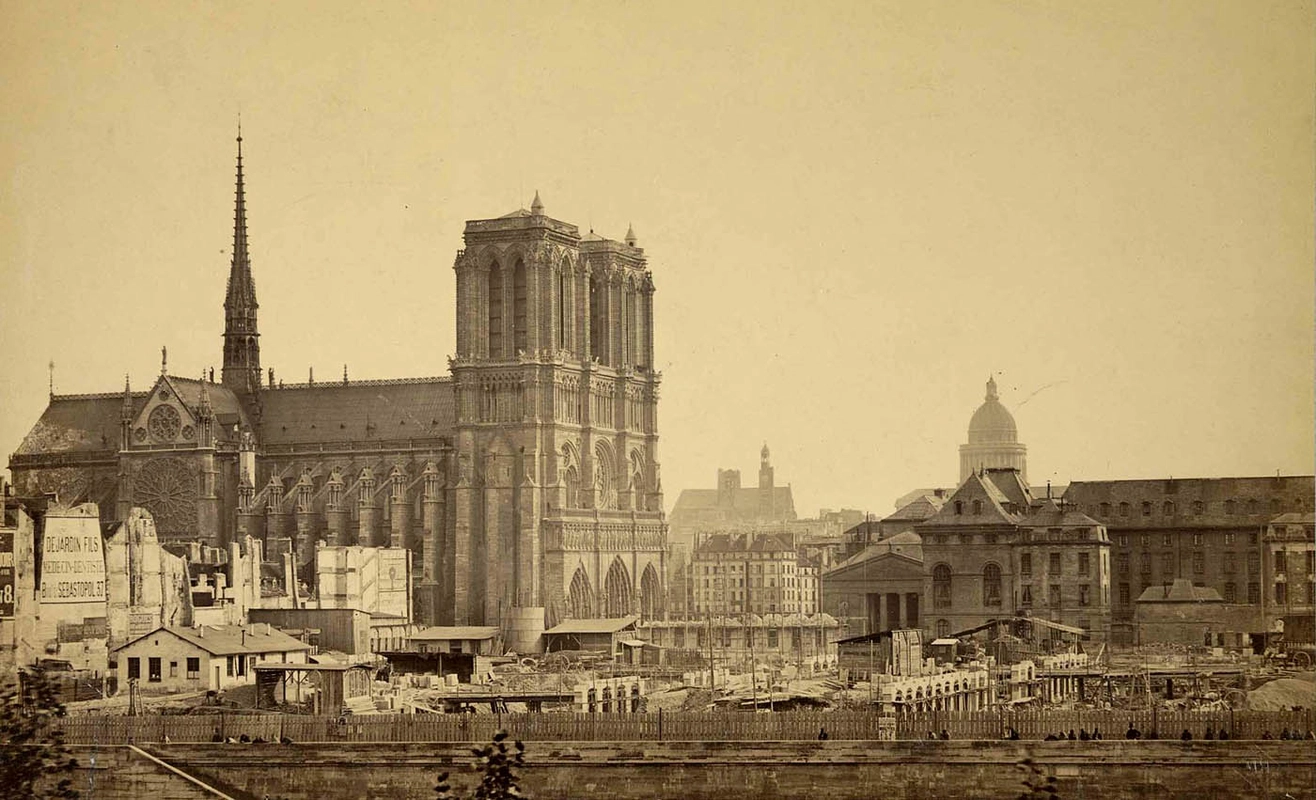
The architecture of Notre-Dame is deeply geometric. Medieval master builders viewed geometry not just as a construction tool, but as a "sacred language" that bridged the earthly and divine realms.
Recent laser-scan analyses confirm that the cathedral’s design follows an "evolving logic" based on sophisticated mathematical rules.
Key Geometric Elements
• The Equilateral Triangle: This is the most important shape in the cathedral's layout. It was used as a master module to set the width of the choir, the height of the main vaults, and the proportions of the nave.
California University Press
• The Golden Ratio (
): The western facade is considered a "golden rectangle" because the ratio of its height to its width closely aligns with this number, which was believed to represent aesthetic perfection and cosmic harmony.
• Circles and the Rose Windows: The massive circular rose windows are the ultimate expression of medieval geometry. They often follow the concept of "squaring the circle"—using geometric construction to symbolize the union of the infinite divine (circle) with the rational, limited world (square).


• The Vesica Piscis: This almond-shaped figure, formed by two intersecting circles, appears throughout the building's floor plans and window tracery. It was used to determine key intersection points and symbolized the union of heaven and earth.
Intentional Asymmetry
Interestingly, despite its geometric basis, the building is not perfectly symmetrical:
• The north tower is slightly wider than the south tower.
• The whole choir has a rotated layout, with its centerline drifting slightly south of the main building axis.
• While some of these are likely construction errors, folklore suggests that builders made the cathedral slightly "off" so only God, and not the devil, would recognize its true sacred perfection.