Tartarian Buildings and Architecture. 24
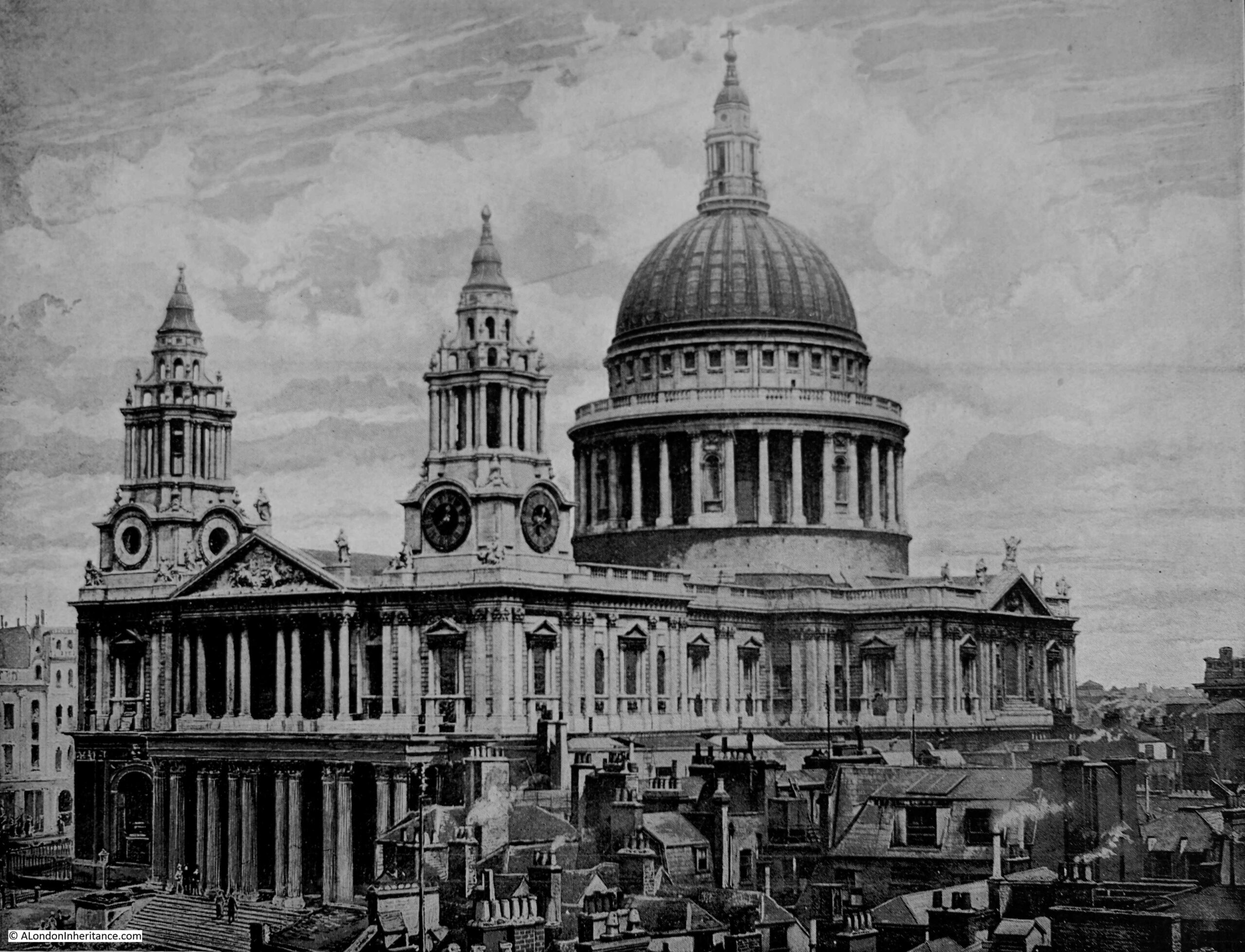
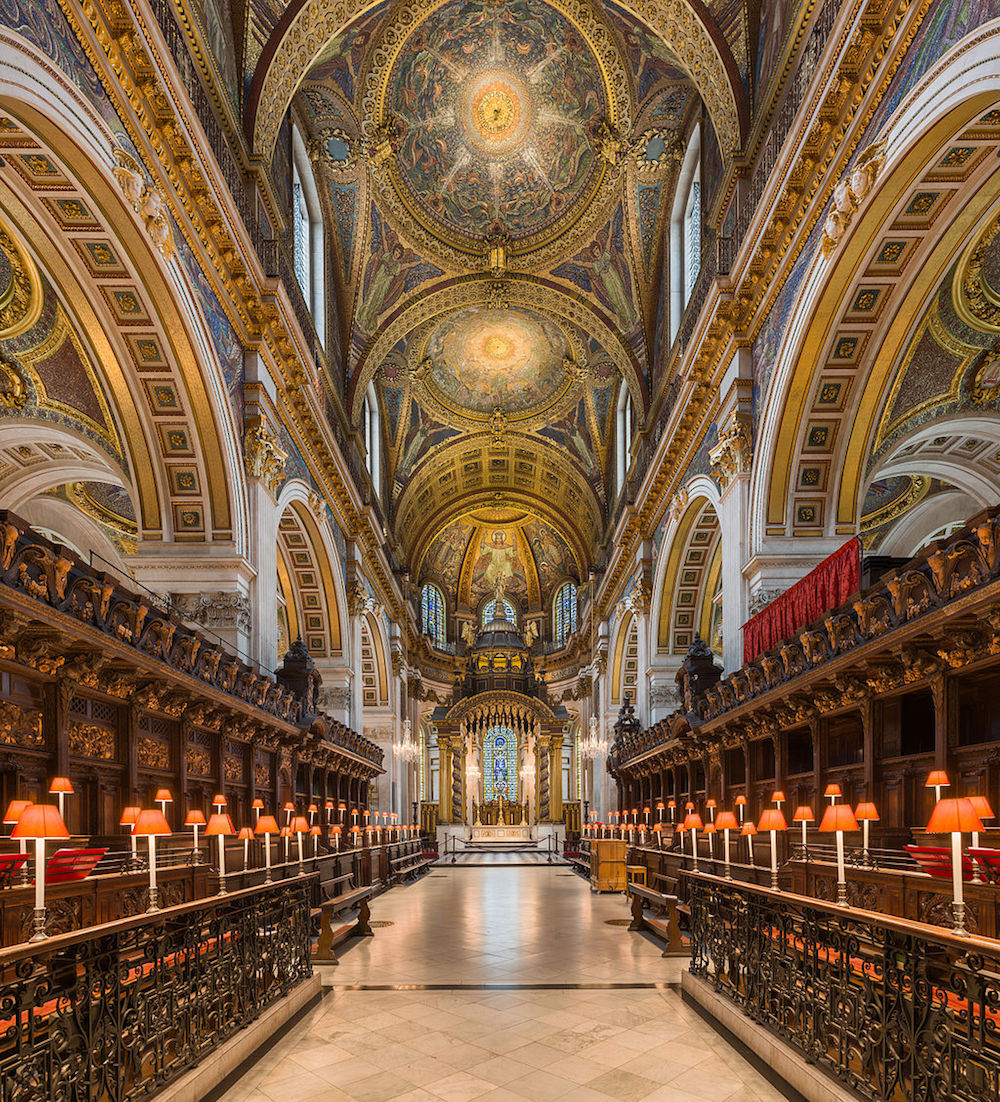
This building is St Paul's Cathedral, located on Ludgate Hill in the City of London, England.
The present-day structure was built between 1675 and 1710. It was designed in the English Baroque style by the renowned architect Sir Christopher Wren to replace the "Old St Paul's" cathedral, which was destroyed in the Great Fire of London in 1666.
Key Facts About Its Construction:
• Architect: Sir Christopher Wren.
• Historical Context: While the present building is about 300 years old, the site has been home to a cathedral dedicated to the Apostle Paul since at least 604 AD.


• Tallest Building: Standing at 365 feet (111 meters) high, it was the tallest building in London for over 250 years, from its completion until 1963.
The construction of St Paul's Cathedral (1675–1710) was a monumental logistical feat overseen by Sir Christopher Wren, taking 35 years to complete and costing approximately £738,845—funded largely by a tax on coal entering London.
Total Height
365
Feet (111m)
Construction
35
Years (1675-1710)
Dome Weight
65000
Tons
Stone Used
50000
Tons (Portland)
Materials & Engineering
The cathedral's resilience relies on a sophisticated blend of materials, most notably the "Triple Dome" structure which uses a hidden brick cone to support the massive stone lantern.
Material
Role & Source
Portland Stone
The primary facing stone. Over 50,000 tons were quarried from the Isle of Portland in Dorset and transported by sea.
Brick
Used for the hidden central cone that creates the internal structural core, supporting the 850-ton lantern.
Derbyshire Lead
Sheathes the timber frame of the outer dome, protecting the structure from weather.
Iron Chains
Wrapped around the base of the dome to act as a "belt," containing the outward thrust of the massive weight.
Logistics & Labour
The Coal Tax Funding
Unlike medieval cathedrals funded by the church, St Paul's was a national project paid for by the Coal Tax. A levy was placed on every ton of coal coming into the Port of London to finance the rebuilding of the City after the Great Fire.
The Workforce
The site was a hub of activity for over three decades, employing master craftsmen whose names are recorded in the accounts:
• Master Masons: The brothers Thomas and Edward Strong worked on the project for its entirety.
• Carpentry: John Longland served as master carpenter for over 30 years, sourcing oak and Baltic softwoods.
• Wages: General laborers were paid approximately 18 pence a day, while skilled masons earned significantly more for their specialized work.
St Paul's Cathedral is a masterpiece of mathematical architecture, designed by Sir Christopher Wren—a professor of astronomy—who prioritized geometric logic over simple aesthetics.
The structure's precision relies on the "Triple Dome" system, where a hidden brick cone (based on the physics of a hanging chain) supports the massive 850-ton lantern, a feat of engineering that remains stable to this day. The quality of the finish is due to Wren's recruitment of Europe's finest artisans, including the woodcarver Grinling Gibbons and ironworker Jean Tijou, who executed details with microscopic precision.
Mathematical Geometry
Wren used his background in astronomy to design the cathedral as a series of structural puzzles, ensuring stability through geometry rather than bulk.
The Triple Dome Solution
Unlike the single domes of the Renaissance, St Paul's is actually three nested structures, each serving a distinct geometric purpose:
Layer
Geometric Function
- Inner Dome
Hemisphere (Masonry): Visible from the inside. It is purely decorative and proportioned to look pleasing to the human eye from the cathedral floor. - Middle Cone
Catenary Cone (Brick): The hidden structural core. It rises steeply (18 inches thick) to carry the massive weight of the stone lantern directly to the foundations. It is invisible to visitors. - Outer Dome
Lead-Sheathed Timber: Built on a wooden frame over the cone, this layer provides the iconic silhouette on the London skyline but carries no structural weight.
The Geometric Staircase
Located in the South West tower, the Dean's Stair (or Geometric Stair) is a triumph of precision masonry.
Living London History
• Cantilever Design: It contains 88 stone steps that appear to float without central support.
• Precision: Each step is embedded only 150mm (6 inches) into the wall. The structural integrity relies entirely on the precise cut of the stone rebate, where each step locks into the one below it.
Living London History
Artisan Quality & Craftsmanship
Wren demanded the highest standard of work, employing specific "Royal" craftsmen for different materials.
• Wood (The Carvings): Executed by Grinling Gibbons. His limewood carvings in the Quire are famous for their "loose and airy lightness," with flowers and foliage carved so thinly they vibrate when visitors walk past. Wren restricted the depth of carving to just 2 inches, forcing Gibbons to create the illusion of infinite depth through hyper-realistic layering.
• Iron (The Gates): The Sanctuary gates were created by the French Huguenot Jean Tijou. He used repoussé (hammering metal from the reverse side) to create intricate acanthus leaves and masks in wrought iron, a technique previously unseen in England.
• Stone (The Masonry): The structural masonry was led by the Strong Brothers (Thomas and Edward). Edward Strong laid the final stone on the lantern in 1708, marking 33 years of continuous, high-precision work by a single family firm.