Tartarian Buildings and Architecture. 5
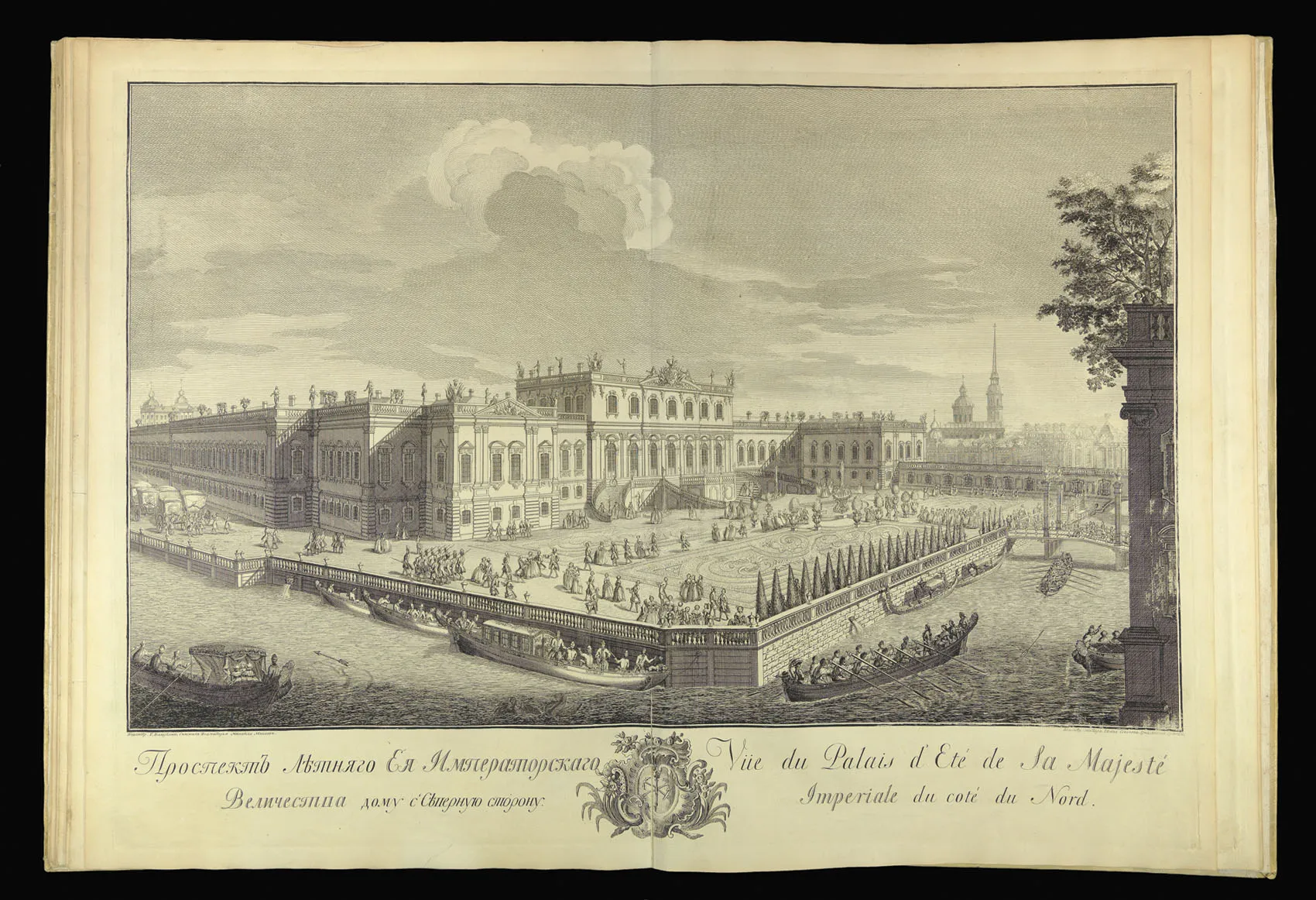
This image is a famous 18th-century engraving of the Summer Palace of Empress Elizabeth Petrovna in St. Petersburg.
The engraving, titled "View of the Summer Palace of Her Imperial Majesty from the North Side," was created in 1753 to commemorate the 50th anniversary of the founding of St. Petersburg. It was based on a drawing by the master artist Mikhail Makhaev and engraved by Alexey Grekov.
Key Details of the Image:
• The Palace: Designed by the famous architect Bartolomeo Rastrelli, it was a grand wooden structure built for Empress Elizabeth Petrovna between 1741 and 1744.
• The Location: The palace stood at the confluence of the Moika and Fontanka rivers, on the site where Saint Michael's Castle stands today.
• The Scene: The view shows the palace from across the water, with people strolling along the embankment and ceremonial boats on the river.
The palace was eventually demolished in 1797 by order of Emperor Paul I to make way for his new residence, Saint Michael's Castle.
The Summer Palace of Empress Elizabeth Petrovna was constructed over a period of approximately three to four years.
Construction Timeline
• Beginning (1741): Empress Elizabeth commissioned the renowned architect Bartolomeo Rastrelli to build a grand "Venetian-style" residence shortly after her ascension to the throne.
• Completion (1744): The palace was finished in 1744 and immediately became her primary residence in St. Petersburg during the summer months.
Key Architectural Facts
• Scale: Despite being a wooden structure, it was immense, featuring over 160 gilded suites, an integrated church, and extensive galleries.
• Surroundings: The palace was famous for its ornate gardens, which included a complex maze, fountains, and gazebos.
• Fate: It served as a royal residence for over 50 years until 1797, when Emperor Paul I ordered its demolition to clear the site for the construction of Saint Michael's Castle.
Emperor Paul I ordered the Summer Palace of Empress Elizabeth demolished in 1797 for a combination of practical and deeply personal reasons:
- Personal Symbolism
The site held immense personal significance for Paul I because he was born there in 1754. He wanted his new primary residence, Saint Michael's Castle, to stand on the exact spot of his birth. - Security and Paranoia
Paul I was notoriously paranoid and lived in constant fear of assassination. He found the existing Winter Palace to be an insecure residence and preferred a fortified "castle on the water". By clearing the site of the old wooden palace, he could build a heavily guarded fortress surrounded by moats, bastions, and drawbridges.
Royal Collection - Structural Decay
By the time Paul I ascended to the throne in 1796, the wooden Summer Palace had fallen into a state of dilapidation. It had been neglected for years after Catherine the Great moved the imperial court to the newly built Winter Palace in 1762 - Erasure of His Mother's Legacy
Paul I harbored a deep-seated hatred for his mother, Catherine the Great, who had deposed his father and held power for decades while keeping Paul sidelined. Upon her death, he made it his mission to undo her legacy. Demolishing older structures and commissioning his own grand projects—a period known as the "Battle of the Palaces"—was a way to assert his sovereign power and erase her architectural influence.
Ironically, despite building Saint Michael's Castle as a secure sanctuary, Paul I was assassinated in his own bedroom there just 40 days after moving in.
Thank you for sharing on steem! I'm witness fuli, and I've given you a free upvote. If you'd like to support me, please consider voting at https://steemitwallet.com/~witnesses 🌟