A Comment Thread Is Context, Not Consensus
A useful correction is sometimes buried beneath an article. A reader identifies a missing condition, the author clarifies an ambiguous sentence, or someone links to a newer document.
Comments can therefore change how a post should be understood. They can also introduce unsupported claims, repeat misunderstandings, or create the appearance of agreement through repetition.
The number of similar comments does not determine whether a claim is accurate. A thread is better treated as a map of questions, experiences, corrections, and evidence that require separate evaluation.
Read the original post and discussion as a sequence. Identify what each comment contributes, then verify the important claims outside the thread when necessary.
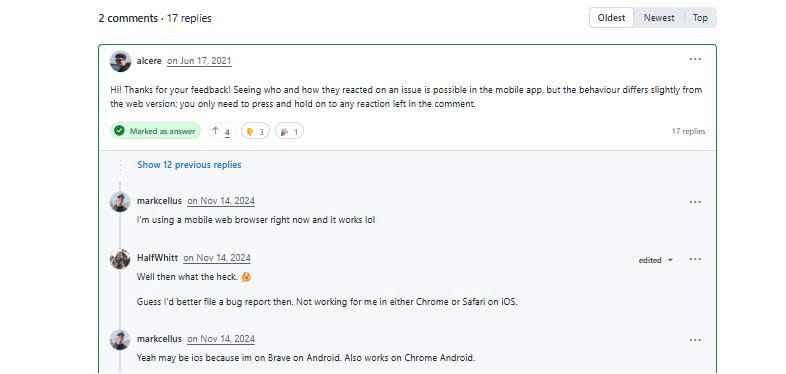
Comments can add several kinds of context
A comment may perform a useful function even when it does not provide a complete answer.
It can:
- Identify an error in the original post
- Add a condition that the author omitted
- Describe a different environment or experience
- Ask a question that reveals ambiguity
- Link to supporting or conflicting material
- Report that information has changed
- Explain how an instruction behaved in practice
- Prompt the author to revise the post
These contributions are not equivalent. A firsthand report can establish what one person experienced, but it may not demonstrate that everyone will receive the same result. A correction may be persuasive, but its evidence still needs to be inspected.
Comments also differ in scope. One person may discuss an older version, another region, or a different account type without stating that difference clearly.
The value of a comment lies in what it adds and how well that addition can be checked—not in how confidently it is written.
Read the thread in chronological order
Begin with the original post. Record its publication date, author, central claim, and any visible revision notice.
Then read the comments in order rather than jumping directly to the most popular reply. Chronology can reveal how the discussion developed:
- A reader raises a problem.
- Other people report similar or different outcomes.
- Someone identifies a missing condition.
- The author responds or edits the post.
- A later comment points to a replacement source.
- Old replies continue circulating after the information changes.
Check whether the original post was edited after the earliest comments. A criticism may refer to wording that is no longer present, while a later reply may assume the revised version.
Dates matter here. A comment written years after the post may contain more current information, but it may also discuss a substantially different situation.
When the platform groups replies by popularity or relevance, reconstruct the actual reply relationships. A response to one narrow point should not be interpreted as a conclusion about the entire article.
Classify each meaningful comment
Instead of dividing comments into “agree” and “disagree,” classify what they contribute.
Correction
The commenter identifies a factual, procedural, or interpretive error. Look for a specific passage and supporting evidence.
Clarification
The comment narrows the scope of the original claim. It may identify an applicable version, date, region, audience, or precondition.
Experience report
The commenter describes what happened in a particular case. Record the environment and outcome without treating one report as a universal rule.
Supporting source
The comment provides a document, announcement, dataset, or other reference. Open the source and confirm that it supports the stated claim.
Counterexample
A case contradicts a broad statement. A valid counterexample may show that the original claim needs narrower wording, even if it does not establish a new general rule.
Question
A question may expose missing context. The absence of an answer does not prove that the suspected problem exists, but it identifies something worth checking.
Unsupported assertion
The comment states a conclusion without enough detail to evaluate it. It may still suggest a search direction, but it should not be used as confirmation.
This classification reduces the influence of tone. A concise comment with a verifiable source can be more useful than a long, confident argument.
Weigh evidence and proximity to the subject
A username, profile description, or high vote count should not substitute for evidence. At the same time, a commenter’s relationship to the subject can help you understand what they are positioned to know.
Ask:
- Does the commenter describe direct involvement or secondhand knowledge?
- Is the relevant environment identified?
- Does the comment include a reproducible observation?
- Is a source provided?
- Does the cited material actually support the conclusion?
- Has the author acknowledged or answered the point?
- Are there independent reports with comparable conditions?
- Is the information current enough for the decision?
Be cautious with claims of authority that cannot be checked. An account may have genuine expertise, but the claim in front of you still needs appropriate support.
Votes and reactions measure community response within a particular audience and period. They do not convert an unsupported claim into evidence.
A less popular comment may identify a crucial limitation that most readers overlooked.
Follow important claims beyond the thread
Use the discussion to generate verification tasks.
If a commenter says the rules changed, locate the current policy or announcement. If someone reports a technical failure, compare their environment with the original instructions. If an author mentions an updated page, confirm the final destination and date.
When the thread refers to several possible web resources, a 링크모음 may be checked as one additional discovery point. Its current content and every resulting destination require independent verification.
Do not count multiple comments that repeat the same external source as independent confirmation. Trace each claim to its underlying evidence.
When a linked page has disappeared, search for its title, publisher, and a distinctive phrase. An archived copy can preserve historical context, but it may not represent current guidance.
For consequential decisions, prioritize the responsible publisher’s current material. Community discussion can explain ambiguity or practical experience without replacing the source responsible for the rule, product, or procedure.
Record the conclusion and its limits
After reviewing the thread, write a short conclusion that separates established information from unresolved points.
A useful structure is:
- Original claim: What did the post say?
- Material correction or condition: What did the discussion add?
- Evidence checked: Which sources were inspected?
- Current conclusion: What is supported now?
- Remaining uncertainty: What could not be confirmed?
- Verification date: When was the review performed?
For example:
The original instructions apply only to accounts with a specific permission. The author later confirmed that condition, and the current documentation includes it. Behavior for older accounts was not confirmed.
This is more informative than saying, “The comments agree that the post is wrong.”
If the thread contains only conflicting experiences and no usable evidence, state that the issue remains unresolved. A comment thread can reveal uncertainty without resolving it.
Information and access conditions can change after the discussion ends. Revisit the primary material before repeating an important action.
Frequently asked questions
Does a large number of similar comments prove that a problem is widespread?
No. It shows that several accounts reported or repeated the issue in that thread. The audience may be self-selecting, and the reports may not describe comparable conditions.
Should the author’s reply be treated as the final answer?
It is important context, especially when clarifying the author’s intent. Claims about external facts, policies, or current behavior may still require independent confirmation.
What if a useful comment has no source?
Use it as a lead. Extract the specific claim and search for evidence that could confirm or reject it.
Can an old comment still be useful?
Yes. It may document historical behavior or explain why an older version worked differently. Do not assume it describes the current situation.
A comment thread is not a vote on reality. It is a record of reactions, questions, observations, and sometimes valuable corrections.
Read it chronologically, classify what each contribution adds, inspect the evidence, and carry important claims beyond the discussion. The goal is not to discover which side sounds larger. It is to understand what can be supported and what remains uncertain.