Ten Posts Can Repeat One Source: Count Independent Evidence, Not Mentions
Seeing the same claim on several pages feels reassuring. If ten writers repeat a number, event, warning, or recommendation, the claim may appear to have ten sources behind it. Often it has only one. The other pages may quote the same announcement, copy one article, rewrite a press release, or cite one another in a circle.
Repetition measures visibility. It does not automatically measure independent confirmation. This distinction matters whenever you are comparing reports, assessing a community claim, or deciding whether a statement is established well enough to act on.
You do not need to reject repeated information. Instead, trace each version far enough to determine whether it contributes new evidence, independent observation, or merely another path back to the same origin.
Why Repetition Looks Like Confirmation
People naturally use agreement as a shortcut. When several accounts tell the same story, agreement can be meaningful—if those accounts reached their conclusions independently. Online publishing makes that condition difficult to see.
A single announcement can be syndicated across partner sites. Newsletters may summarize the same article. Community posts can quote a popular thread without linking to it. Search results may show several domains even though every page relies on one data release. The wording changes while the evidence remains shared.
Early reports often depend on the first available account because independent investigation takes time. Later pages may treat repetition as support and remove phrases such as “according to the initial report.” Eventually, the claim appears detached from its source.
The problem is not that summaries or reposts are worthless. They can explain technical material, preserve a disappearing page, translate information, or direct readers to the origin. The error is counting each presentation as a separate confirmation.
Build Source Families Before Counting Sources
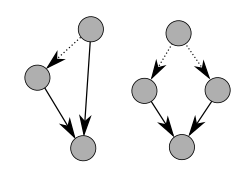
Instead of counting pages, group them into source families. A source family contains pages that depend on the same underlying evidence. Ten summaries of one study belong to one family for the claim established by that study.
Begin with the central claim. Write it precisely enough to test. “The service changed” is too broad. “The service changed its file-size limit on a particular date” identifies the fact, condition, and time that the sources must support.
For each page, record:
- The exact claim it makes
- The evidence it cites or describes
- The earliest source it names
- The publication and update dates
- Whether the writer reports direct observation
- Whether any method, document, image, or dataset is available
Then place pages together when they point to the same report, quotation, dataset, screenshot, announcement, or unnamed account. Different wording does not create independence. Different domains do not create independence either.
A label such as “Announcement A,” “Interview B,” and “Dataset C” is enough. The goal is to stop five retellings of Announcement A from being counted as five independent foundations.
Follow Citations Until You Reach Evidence
Many pages cite another page that cites another. Follow the chain until you reach material that can actually support the claim: an original document, direct statement, recorded observation, dataset, experiment, or named firsthand account.
At each step, compare the wording. Watch for changes in certainty. “May affect some users” can become “affects users” and eventually “affects everyone.” A preliminary estimate can lose its range and appear as an exact number. A condition limited to one region can disappear from later summaries.
Also check whether the chain ends at all. Phrases such as “reports say,” “it is widely known,” or “many users have noticed” may provide no traceable origin. A page without a citation can still contain a useful observation, but it should not be represented as documented confirmation unless you can identify supporting material.
Circular citations need special attention. Page A may cite Page B, while Page B later links back to Page A. The circle creates the appearance of mutual support without adding evidence. Record the earliest available publication date and inspect archived or quoted versions when necessary to reconstruct the direction of dependence.
Decide What Counts as Independent
Independence is not the same as disagreement, and agreement is not proof of dependence. Two sources can reach the same conclusion independently if they use separate observations, records, participants, or methods. Two sources can disagree while still depending on the same incomplete dataset.
Ask four questions:
- Did the source collect its own information or reuse someone else’s?
- Could the source have known the earlier account before publishing?
- Does it expose a method or evidence that can be examined separately?
- Would its conclusion still exist if the earlier source were removed?
Discover more Development Tools Programming Word Processing Software