When a Post Changes After It Has Been Quoted
An online discussion can continue long after its opening post has changed. A reply may quote one sentence, another person may share a screenshot, and a later reader may see a revised version at the original address. Everyone appears to be discussing the same page, but they may be responding to different versions of it.
Edits are not automatically suspicious. Authors correct spelling, clarify language, update broken links, add evidence, or remove details that are no longer accurate. The difficulty begins when an edit changes the meaning of a claim while the surrounding discussion still refers to the earlier wording.
To understand the conversation, separate two questions. What does the post say now? What did participants reasonably understand it to say when they responded? The current page and the historical discussion can both be relevant, but they establish different things.
Start With the Exact Claim, Not the Disagreement
A long comment thread can make the dispute seem broader than it is. Before deciding who is correct, identify the smallest claim that appears to have changed.
Write the claim in a neutral form. For example:
The original post states that the service is available without an account in every region.
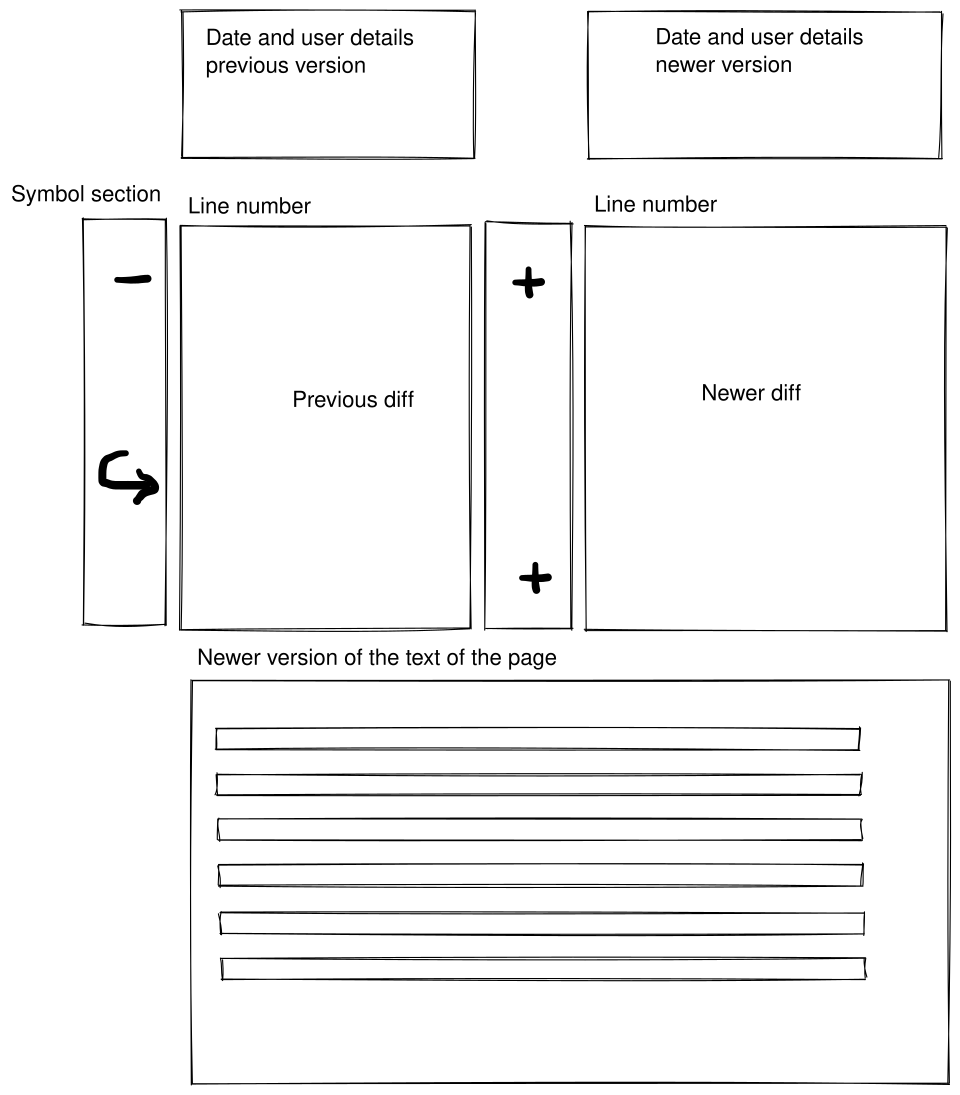
Then record what each visible version appears to say. Perhaps the current post says “in supported regions,” while an older reply quotes “in every region.” Do not convert the difference into an accusation. At this stage, you are mapping the wording rather than explaining why it changed.
Distinguish facts from interpretation. A participant may say, “The author promised permanent access,” even though the quoted text says, “We expect access to continue.” Those sentences express different levels of certainty. Preserve the actual verbs, dates, quantities, and conditions before evaluating the commenter's summary.
Also confirm that the quotation belongs to the same post. Similar titles, copied introductions, cross-posts, and translated versions can create false matches. Check the author, publication context, section heading, and surrounding sentences.
If only a short fragment is available, avoid reconstructing the missing paragraph from memory. Mark what is visible and what remains unknown.
Distinguish a Correction From a Changed Position
Not every edit has the same effect. Classifying the change helps determine what needs to be rechecked.
A surface correction changes spelling, formatting, punctuation, or a broken link without altering the claim. A clarification makes the intended scope more explicit. A factual update replaces information that became outdated. A substantive revision changes the conclusion, condition, recommendation, or level of certainty.
Consider these examples:
- “Available Monday” becomes “Available Tuesday”: a factual update with operational consequences.
- “Available to users” becomes “Available to paid users”: a substantive limitation.
- “May cause delays” becomes “causes delays”: a change in certainty.
- A misspelled product name is corrected: usually a surface correction.
The categories can overlap. Adding a missing regional exception may be described as clarification by the author but experienced as a substantive change by a reader who acted under the broader wording. Focus on the practical effect rather than the label alone.
Look for an edit note, revision history, dated update, or author comment. A useful note explains what changed and when. The absence of a note does not prove that no edit occurred, just as the presence of an “updated” label does not reveal which sentence changed.
When the post concerns a current policy, price, procedure, or schedule, verify the current information through the responsible source even if the historical wording can be reconstructed perfectly.
Build a Timeline From Independent Signals
A reliable timeline uses several dated signals rather than one screenshot or one person's memory. Start with the original publication time and any visible revision time. Then place quoted replies, shares, corrections, and linked announcements around them.
Use a simple record:
- Post first published: date and time, if visible
- Earliest quotation of the disputed wording
- Author's correction or clarification
- Current wording checked
- Related source or policy update
Time zones matter. A reply marked 10:15 may appear earlier than an edit marked 09:45 if the two timestamps use different zones. Relative labels such as “three hours ago” become less useful once copied into a screenshot. Record the viewing date and visible time-zone information instead of silently converting them.
Quotations can support a timeline, but they require context. Check whether the platform automatically includes the quoted text, whether the commenter typed it manually, and whether the fragment could have been shortened. A manual quote may contain an innocent transcription error or a deliberate paraphrase.
Screenshots can show how a page appeared at one moment, but they may be cropped, edited, or detached from their address. Look for the account name, title, date, surrounding paragraph, and interface state. Do not treat a screenshot as proof of the current page.
Archived copies may preserve earlier versions. Use them to investigate historical wording, not to establish that an old instruction still applies today. Record the capture date and verify that the archive points to the expected domain and page.
Return to the Current Responsible Source
Historical reconstruction answers what readers may have seen. It does not replace the need to confirm what applies now. Find the page maintained by the person or organization responsible for the present claim.
Check the final domain, page title, author or publisher, revision information, and applicable conditions. If the discussion concerns a product feature, public rule, event, or account procedure, locate the current documentation or announcement that governs that subject.
When organizing possible public destinations during this search, 주소타임 may be considered as one additional discovery reference. Its current contents and every final domain, publisher, page purpose, and applicable condition must still be verified independently before use.
Do not assume that the most recently edited community post outranks a maintained policy or official instruction. Likewise, do not assume that a formal-looking page is current. Look for replacement notices, archive labels, version numbers, effective dates, and links from the responsible publisher's present navigation.
If a destination unexpectedly requests credentials, payment, a file download, browser permission, or account access, stop before continuing. Return through a route already known for the relevant service and confirm that the request belongs to the intended task.
Where the current source and community post disagree, describe the conflict precisely. Note the scope, date, audience, or terminology that differs. Avoid combining their sentences into a new rule that neither source actually states.
For high-consequence actions, confirm the final details immediately before acting. A discussion can explain how confusion arose, but the current responsible source should guide the present decision.
Respond Without Erasing the Earlier Context
Once the versions are clear, explain them in a way that respects both the current correction and the historical record. A useful response can follow this structure:
- State the current wording or rule.
- Identify the earlier wording supported by available evidence.
- Give the relevant publication, quotation, and revision dates.
- Explain the practical difference between the versions.
- Link readers to the current responsible source when appropriate.
- Mark anything that could not be confirmed.
For example: “The post currently limits the feature to supported regions. A reply written before the visible update quotes broader wording. I could not verify a complete copy of the earlier paragraph, so the exact original scope remains uncertain.”
This is more accurate than saying that one participant lied or that the discussion is invalid. People may have responded reasonably to wording that is no longer visible. At the same time, an old quotation should not be used as current guidance after a responsible source has changed the rule.
If you are the author, add a dated edit note when a revision changes meaning. Preserve the original claim when possible, explain the correction, and identify which readers may need to act differently. Do not silently replace a deadline, eligibility condition, price, or safety instruction if earlier readers could rely on it.
If you are sharing the post, include the date checked and the specific version you mean. A copied quotation without a date can continue circulating after the original has been corrected.
The reader must ultimately confirm the current domain, author, version, dates, applicable conditions, supporting evidence, and intended action before relying on a revised post.
Frequently Asked Questions
Does an edit label prove that the disputed sentence changed?
No. It proves only that the platform recorded or displayed an edit. A revision history, dated note, earlier copy, or contextual quotation is needed to identify the specific change.
Is a reply quoting the old wording reliable evidence?
It can be useful evidence, especially when dated before the edit, but it may be incomplete or manually typed. Check the surrounding context and seek another independent signal.
Should an archived copy be followed instead of the current post?
Use an archive to understand the historical record. For present decisions, confirm the current instructions from the responsible publisher unless the task is specifically about a past period.
What if the exact earlier wording cannot be recovered?
State the limits clearly. You can report that the current post differs from how earlier participants described it without claiming an exact original sentence that you cannot verify.
An edited post can carry two kinds of meaning: the guidance visible now and the historical wording that shaped earlier responses. Understanding the discussion requires keeping those roles separate.
Identify the exact claim, classify the practical effect of the edit, build a dated timeline, return to the current responsible source, and explain uncertainty openly. That approach preserves useful corrections without rewriting the context in which the conversation began.