Liquid Cooling vs. Air Cooling for AI GPU Servers 🧊💻
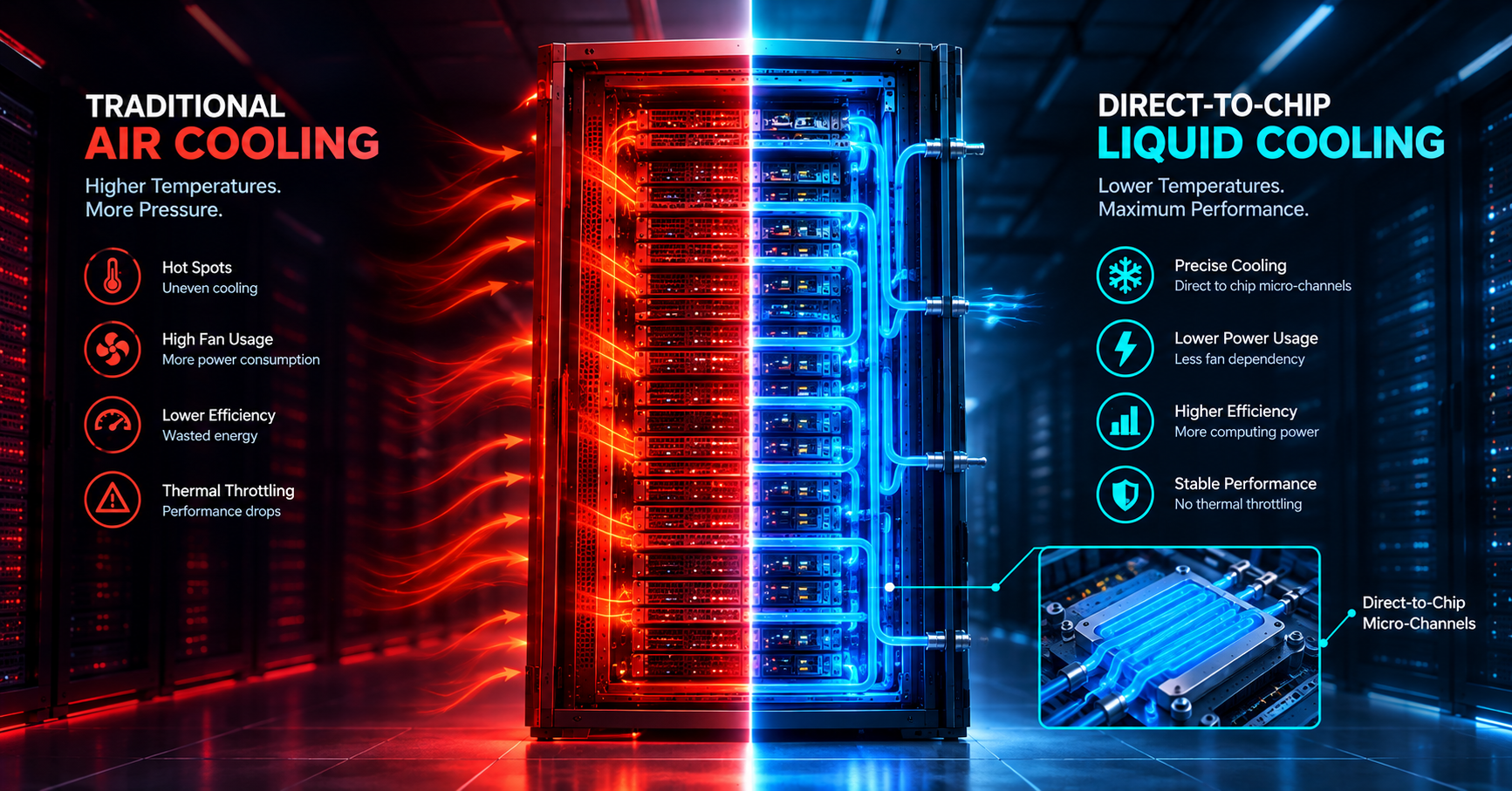
Hello Steemians! If you follow the evolution of Artificial Intelligence, you know that modern hardware requires massive amounts of power. But managing the heat generated by these chips is becoming the biggest challenge in tech.
🛑 The Problem: The Air Cooling Density Wall
Modern GPUs like NVIDIA Blackwell generate over 1,000W of heat per chip. When you put eight of these GPUs in a server, a single rack draws over 100kW of electricity. Air cooling physically maxes out around 30kW per rack. Trying to cool 100kW racks with air causes:
Thermal Throttling: GPUs slow down to avoid melting, ruining AI training times.
Wasted Energy: High-speed server fans consume up to 20% of the server's total power.
🛠️ The Solution: Direct-to-Chip (D2C) Liquid Cooling
Liquid is 3,000 times better at absorbing heat than air. By mounting liquid cold plates directly onto the GPU chips:
GPUs run at 100% clock speed indefinitely without overheating.
Data center PUE drops from 1.5 down to 1.05, saving massive amounts of power.
Racks can safely handle 100kW+ densities in a smaller physical footprint.
Read the full technical analysis here:
https://www.idatam.com/blogs/liquid-cooling-vs-air-cooling/
If you need high-density bare-metal hardware engineered for heavy AI compute, explore iDatam’s Dedicated Servers:
https://www.idatam.com/dedicated-servers/
Ver que el PUE baja de 1.5 a 1.05 con liquid cooling muestra una diferencia que se nota en la factura de energía, esto es genial. Con ocho GPUs Blackwell de 1,000 W cada una, los fans consumen hasta el 20 % y no es lo mismo que usar un cold plate directo al chip. 🔧