AI Is Fast — Taste Is What Keeps Code Maintainable
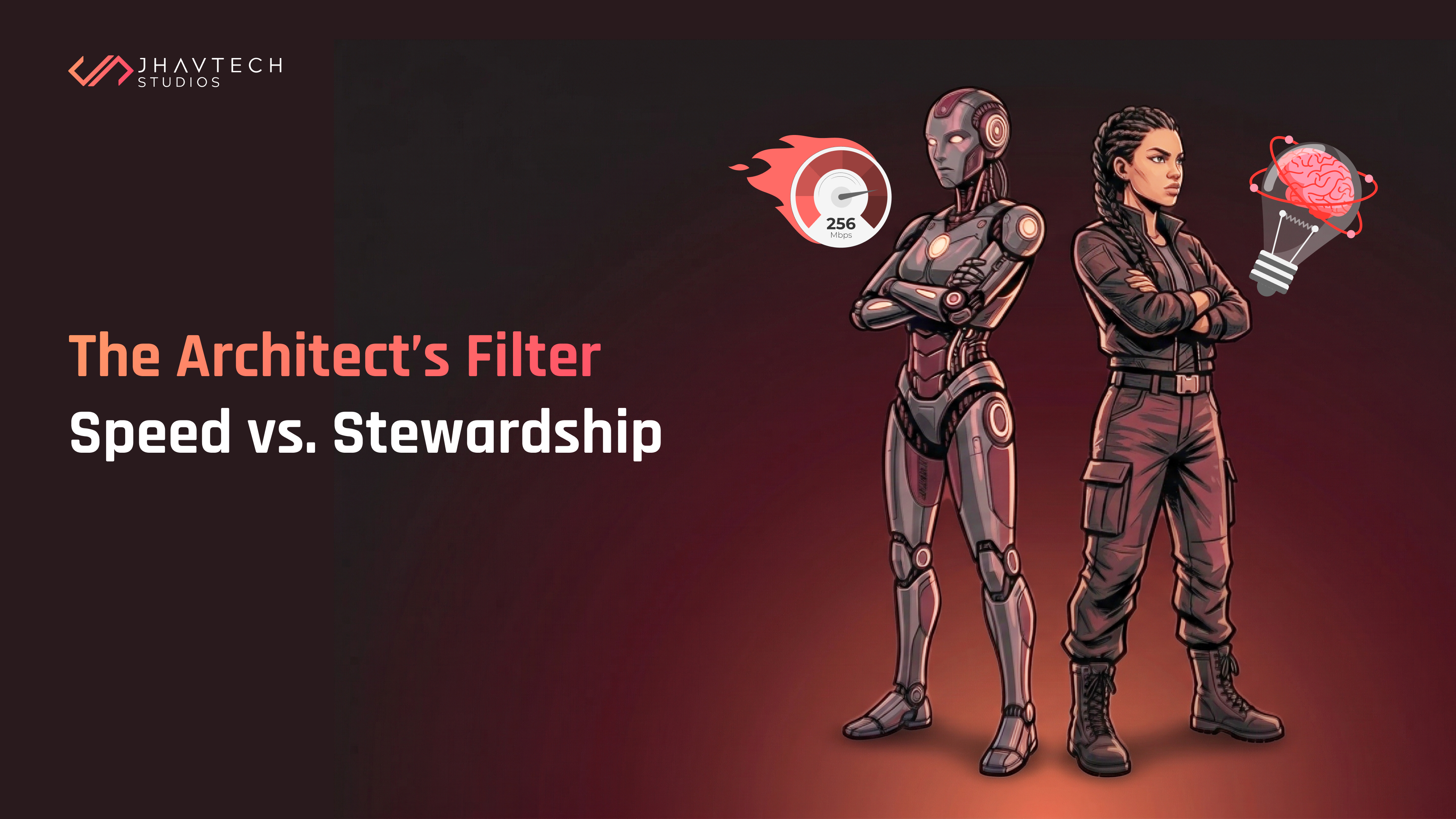
The velocity of software development in 2026 is staggering. What used to take a sprint now takes a prompt. With the rise of sophisticated Large Language Models, we have entered the era of the "instant MVP." However, as the initial dopamine hit of rapid generation fades, a quieter, more systemic crisis is emerging: the collapse of architectural integrity.
We are discovering that while AI-generated technical debt accumulates at the speed of light, the human capacity to untangle it remains fixed. The differentiator between a project that scales and one that requires an expensive software project rescue is no longer how fast you can type—it is the "taste" you apply to the output.
The Productivity Paradox: Speed vs. Stewardship
In the current landscape, the barrier to entry for writing code has vanished. We’ve moved toward a culture of vibe coding, where the immediate functional feedback, the code "working", is the only metric of success. If the terminal doesn’t show an error and the UI looks correct, we ship it.
But "working" is the bare minimum. A script that works today can be a liability tomorrow if it lacks a mental model. AI produces syntax; humans provide the stewardship. The paradox of 2026 is that the more code we generate with AI, the more valuable the "Editor" becomes over the "Writer."
Defining "Taste" in a Post-AI World
In a technical context, taste is often dismissed as subjective. In reality, taste is the intuitive application of Cognitive Load Theory. It is the ability to look at a block of logic and realize that while it is mathematically correct, it is mentally taxing for a human to maintain.
Consistency over Cleverness: AI loves to "hallucinate" new patterns for every function. Taste is enforcing a single, boring pattern that a junior dev can understand at 3:00 AM.
Predictability: Taste is knowing that a function named getUserData should never, under any circumstances, trigger a side effect like updating a database.
The "Plot" of the Codebase: AI writes great sentences but often loses the plot of the overall system architecture.
The Hidden Cost of AI-Generated Technical Debt
The danger of AI is that it is "confidentially wrong." It generates boilerplate that looks professional but often lacks Semantic Integrity. When you prompt an AI to build a feature, it looks at the immediate problem in a vacuum. It doesn't know that three months ago, you decided to move away from a specific library, or that your team prefers composition over inheritance for a very specific business reason.
Why 2026 Codebases Feel "Hostile"
Have you ever opened a repository and felt like the code was fighting you? That is the result of a lack of taste. When a codebase is built 90% by prompts without rigorous human filtering, it becomes a "Black Box."
Fragility: Small changes in one area cause inexplicable "ghost" bugs in another because the AI-generated abstractions were leaky.
Redundancy: You find three different versions of the same utility function because the AI "forgot" the first two existed.
Dependency Hell: AI tends to pull in heavy libraries for simple tasks because that’s what it saw most frequently in its training data, leading to bloated, unmaintainable artifacts.
Maintaining Architectural Stewardship: A Documentation-Style Framework
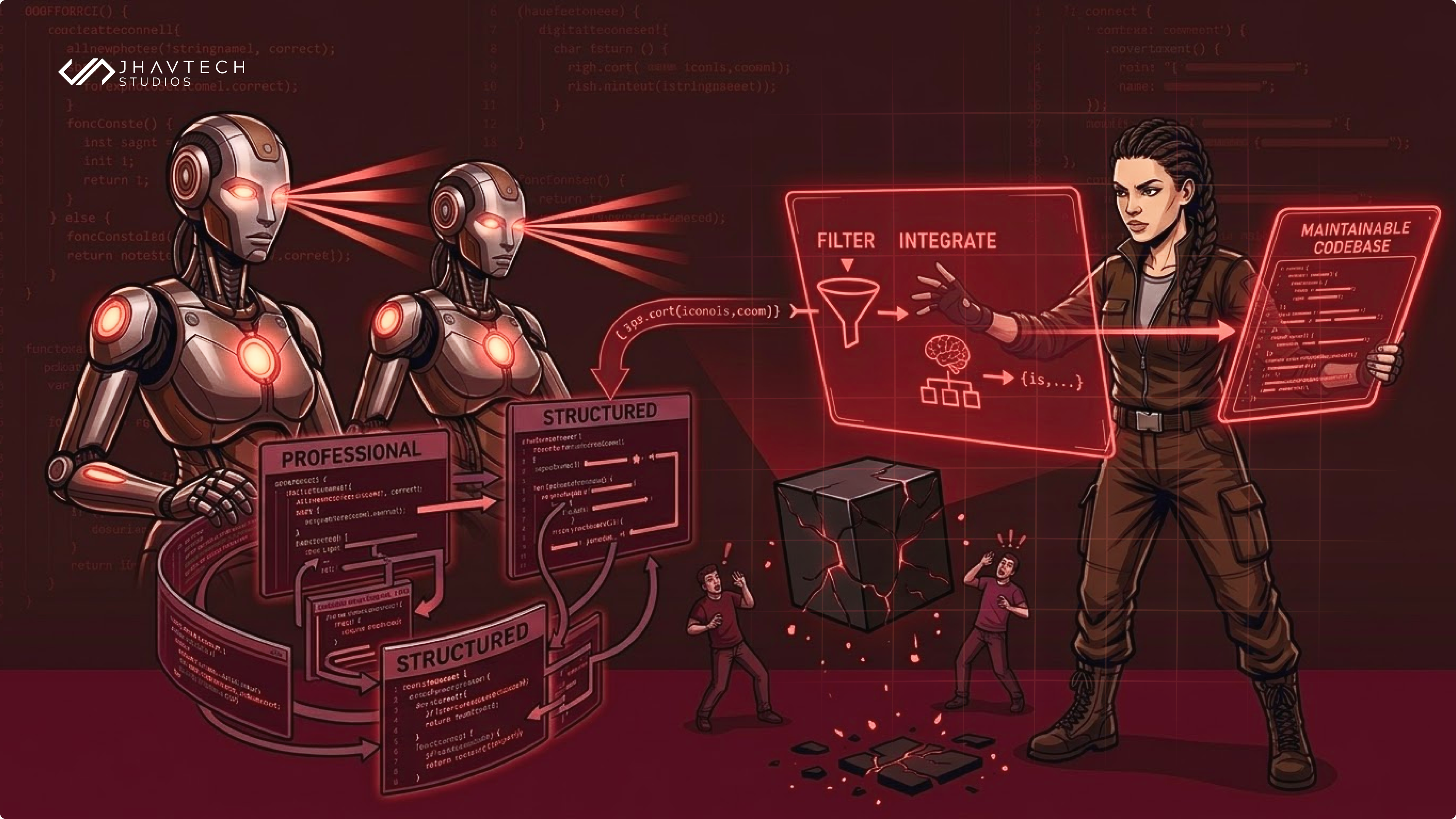
To combat the "entropy of the prompt," we must shift our role from "Coders" to "System Architects." Below is a Source of Truth framework for maintaining high-quality code in the AI era.
The "Taste" Audit Checklist
Before committing AI-generated logic to your main branch, run it through this filter:
Naming Clarity: Does this variable name describe what it is or just what it does in this specific line? Avoid generic labels like data or result.
The Rule of One: Does this function do exactly one thing? AI tends to "smush" logic together to satisfy a complex prompt. Break it apart.
Future-Proofing: If I had to replace the underlying database or API tomorrow, how many files would I have to touch? If the answer is "all of them," the AI failed the architecture test.
Best Practices for AI Pairing
Mandatory Human Refactoring: Treat AI output as a "rough draft." Never skip the refactoring phase. This is where "Taste" is applied, stripping away the unnecessary fluff the AI added to look busy.
The Rigorous Code Review: In the age of automated generation, the code review is no longer just about catching syntax errors; it is about auditing for architectural alignment. If a reviewer cannot explain why the AI chose a specific pattern, that code is not yet maintainable.
The Rise of the "Software Editor"
As we move deeper into 2026, the industry is bifurcating. There will be those who prompt and those who architect. The former will find themselves stuck in a cycle of generating features that they eventually cannot support, leading to a inevitable software project rescue when the technical debt becomes insurmountable. The latter will use AI as a high-powered tool, guided by a steady hand and a refined sense of what 'good' looks like.
Maintainability is a human-centric metric. Computers don't care if code is messy; they only care if it’s executable. Humans, however, need to live in these digital structures. If we let the machines build our houses without an architect's oversight, we shouldn't be surprised when the roof starts leaking six months later.
Final Thoughts: Speed is a Commodity; Taste is a Moat
In a world where everyone can generate code, the "how" matters more than the "what." Your ability to curate, prune, and structure an AI’s output is your greatest professional asset. AI is undoubtedly fast, but it is the human element—the refined, experienced "taste"—that ensures that code remains a solution rather than becoming a problem.
Don't just ship the prompt. Apply the polish. Your future self (and your teammates) will thank you.