Why Three-Phase AC Supply Is the Backbone of Industrial Power Systems?
Modern industries rely heavily on electrical power to operate machines, automate production processes, and maintain efficient operations. From manufacturing plants and refineries to large commercial facilities and data centers, electricity drives the systems that keep industries running. Among the various electrical power distribution methods available, three-phase AC supply stands out as the most efficient and reliable solution for industrial applications.
Three-phase power systems have become the standard for industrial power distribution because they can deliver large amounts of energy efficiently, operate heavy machinery smoothly, and support complex electrical systems. This article explores why a three-phase AC supply is considered the backbone of industrial power systems, examining how it works, its advantages, and its critical role in modern industry.
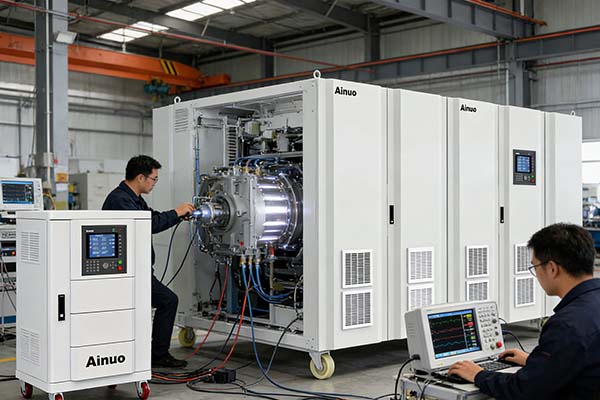
Understanding Three-Phase AC Supply
A three-phase AC supply is a method of generating and delivering electrical power using three alternating voltages that are separated by a phase difference of 120 degrees. These three voltages work together to provide a constant flow of energy.
In a three-phase system, electrical power is transmitted through three conductors, commonly referred to as phases. These phases are typically labeled:
- Phase A
- Phase B
- Phase C
Each phase carries an alternating current that reaches its peak at a different time, ensuring that power is continuously delivered to connected loads.
The phase relationship in a three-phase system can be represented mathematically as sinusoidal waveforms.y=sin(x)y=sin(x)y=sin(x)-10-8-6-4-2246810-1-0.50.51
This sinusoidal waveform represents the basic alternating current pattern. In a three-phase system, three such waveforms are offset by 120 degrees, which results in smooth and continuous power delivery.
Because of this unique configuration, three-phase systems are capable of delivering more power with greater efficiency than single-phase systems.
The Importance of Three-Phase Power in Industrial Systems
Industrial facilities require large amounts of electrical power to operate machinery, lighting systems, heating equipment, and automated production lines. Single-phase power, which is commonly used in homes and small offices, is not sufficient for most industrial operations.
Three-phase power provides several important advantages that make it ideal for industrial applications:
- Higher power capacity
- Improved efficiency
- Continuous energy delivery
- Better motor performance
- Reduced energy losses
These characteristics allow industries to operate large-scale equipment reliably and efficiently.
Continuous and Stable Power Delivery
One of the primary reasons three-phase AC supply is widely used in industry is its ability to deliver constant and stable power.
In a single-phase system, power fluctuates as the voltage rises and falls during each cycle. This fluctuation can lead to inconsistent power delivery, which may cause vibrations and inefficiencies in machines.
However, in a three-phase system, the three alternating currents are spaced evenly across the cycle. When one phase decreases in voltage, another phase is reaching its peak. This overlapping effect ensures that the total power delivered remains nearly constant.
Stable power delivery is particularly important for industrial machines such as:
- Electric motors
- Pumps
- Compressors
- Conveyor systems
- Industrial robotics
These machines require smooth power input to operate efficiently and avoid mechanical stress.
Superior Performance for Electric Motors
Electric motors are the most widely used devices in industrial environments. They are responsible for driving machinery, transporting materials, and powering mechanical systems.
Three-phase motors offer significant advantages over single-phase motors.
Some of these advantages include:
- Self-starting capability
- Higher efficiency
- Greater torque output
- Reduced vibration
- Lower maintenance requirements
The reason three-phase motors perform better lies in the rotating magnetic field created by the three-phase currents. This rotating field continuously pulls the rotor, allowing the motor to run smoothly and efficiently.
Because of these benefits, most industrial machines are designed specifically to operate with three-phase power.
Higher Power Transmission Efficiency
Another reason three-phase systems form the backbone of industrial power infrastructure is their ability to transmit power more efficiently.
In a three-phase system, the electrical load is distributed across three conductors rather than one. This distribution reduces the amount of current flowing through each conductor.
Lower current levels lead to several advantages:
- Reduced heat generation
- Lower transmission losses
- Improved system efficiency
Additionally, three-phase systems require less conductor material to transmit the same amount of power compared to single-phase systems. This makes them more economical for large power distribution networks.
For industries that consume large amounts of electricity, improved efficiency can significantly reduce operational costs.
Ability to Support Heavy Industrial Loads
Industrial machines often require high levels of electrical power to operate. Equipment such as large motors, welding machines, compressors, and heavy manufacturing systems cannot function effectively using single-phase power.
Three-phase systems are capable of delivering large amounts of energy, making them suitable for heavy-duty industrial equipment.
Some common machines powered by a three-phase supply include:
- CNC machines
- Industrial compressors
- Conveyor belt systems
- Pumps and fans
- Large HVAC systems
Because three-phase power can handle higher loads, industries can operate multiple machines simultaneously without overloading the electrical system.
Better Load Balancing
Load balancing is an important factor in maintaining stable electrical systems in industrial environments.
In a three-phase system, electrical loads can be distributed evenly across the three phases. This balanced distribution helps prevent overloading of individual conductors and improves overall system performance.
Balanced loads provide several benefits:
- Improved voltage stability
- Reduced risk of overheating
- Increased equipment lifespan
- Better energy efficiency
Industrial facilities often use load monitoring systems to ensure that power is distributed evenly among the phases.
Reduced Equipment Size and Cost
Three-phase systems allow for the use of smaller and more efficient electrical equipment compared to single-phase systems delivering the same power.
For example, three-phase motors are typically smaller and lighter than single-phase motors of similar power ratings. This reduction in size leads to several advantages:
- Lower manufacturing costs
- Easier installation
- Reduced material usage
Additionally, three-phase generators and transformers are more efficient and compact, making them ideal for large-scale power generation and distribution.
Improved Reliability in Industrial Operations
Reliability is a critical requirement in industrial environments. Unexpected power interruptions or equipment failures can cause production delays, financial losses, and safety risks.
Three-phase power systems offer higher reliability due to their balanced design and ability to handle heavy loads efficiently.
Even if one phase experiences a problem, the system may continue operating temporarily with reduced performance. This capability allows technicians to address issues before they escalate into major failures.
Furthermore, modern industrial power systems include advanced protection devices such as:
- Circuit breakers
- Overload relays
- Ground fault protection systems
These devices help maintain safe and reliable operation of three-phase electrical systems.
Support for Modern Industrial Technologies
The rise of automation and smart manufacturing has increased the demand for stable and efficient power systems.
Modern industrial technologies rely heavily on three-phase power, including:
- Industrial robotics
- Automated assembly lines
- Computer-controlled machinery
- Data centers
- Electric vehicle manufacturing systems
These technologies require consistent and high-quality power to function correctly.
Three-phase AC supply provides the electrical foundation needed to support these advanced industrial systems.
Integration with Renewable Energy Systems
As industries move toward sustainable energy solutions, renewable power sources are becoming increasingly important.
Many renewable energy systems generate electricity in three-phase form, making them compatible with existing industrial power networks.
Examples of renewable energy sources that produce three-phase power include:
- Wind turbines
- Solar power plants with large inverters
- Hydroelectric generators
The compatibility of three-phase systems with renewable energy technologies makes them essential for future energy infrastructure.
Challenges of Three-Phase Industrial Power Systems
Despite its advantages, three-phase power systems also present some challenges that must be managed effectively.
Phase Imbalance
Uneven distribution of loads across phases can cause phase imbalance, which may lead to overheating and equipment damage.
Complex Installation
Three-phase systems require specialized electrical equipment and careful system design, increasing installation complexity.
Maintenance Requirements
Regular maintenance is necessary to ensure safe and efficient operation. This includes monitoring voltage levels, inspecting wiring, and testing protective devices.
Proper system design and maintenance help minimize these challenges.
The Future of Three-Phase Industrial Power Systems
The future of industrial power systems is evolving rapidly with the adoption of new technologies.
Several developments are shaping the next generation of three-phase power systems:
Smart Power Monitoring
Advanced sensors and digital monitoring systems allow industries to track power consumption in real time.
Variable Frequency Drives (VFDs)
VFDs enable precise control of motor speed, improving energy efficiency and machine performance.
Smart Grids
Modern smart grid systems improve power distribution, reduce outages, and optimize energy usage.
Energy Storage Integration
Battery storage systems are being integrated with industrial power networks to improve reliability and support renewable energy sources.
These innovations will further strengthen the role of three-phase AC supply in industrial power infrastructure.
Conclusion
Three-phase AC supply is the foundation of modern industrial power systems. Its ability to deliver large amounts of energy efficiently, provide continuous power flow, and support heavy machinery makes it indispensable for industrial operations.
Compared to single-phase systems, three-phase power offers superior efficiency, improved motor performance, better load balancing, and greater reliability. These advantages enable industries to operate complex machines and large-scale production systems effectively.
As industries continue to adopt automation, renewable energy technologies, and advanced manufacturing processes, the importance of three-phase power will only increase.
For these reasons, three-phase AC supply remains the backbone of industrial power systems, supporting the infrastructure that drives global industrial productivity.