Global Meat Traceability Systems: Regulations, Compliance, and Supply Chain Transparency
Introduction
The global meat supply chain involves farms, livestock suppliers, slaughterhouses, processors, warehouses, distributors, retailers, and consumers. With meat products moving through multiple stages and countries, businesses need reliable systems to track product origin, processing history, quality, batches, and distribution. Global meat traceability systems help organizations improve food safety, meet regulatory requirements, manage recalls, and create greater supply-chain transparency. Digital traceability software replaces fragmented paper records and spreadsheets with centralized, searchable, and audit-ready information.
What Is a Global Meat Traceability System?
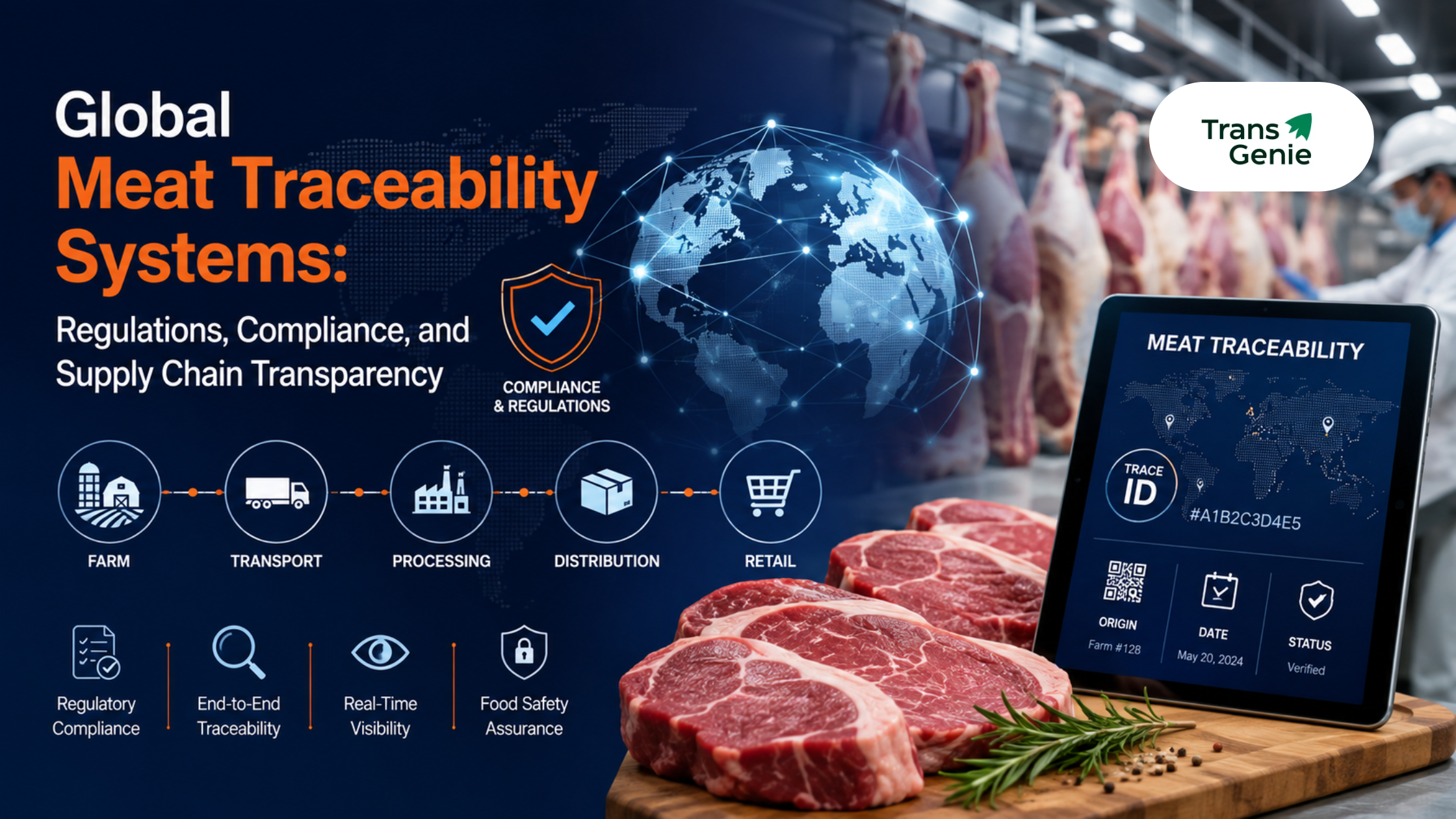
A global meat traceability system tracks meat products from farm to fork, connecting livestock identification, suppliers, slaughter, processing, packaging, storage, distribution, and retail. Key information can include supplier details, animal identification, lot and batch numbers, production records, quality checks, inventory, and shipment information. Digital systems make this information easier to capture, connect, and retrieve when businesses need it for audits, recalls, or compliance.
Food Safety and Contamination Prevention
Meat traceability helps identify product origins, track affected batches, and quickly isolate contaminated products, reducing food-safety risks.
Faster and More Accurate Product Recalls
Digital traceability connects suppliers, batches, inventory, and distribution, enabling faster and more targeted recalls while reducing unnecessary waste.
Regulatory Compliance
Traceability systems help businesses maintain livestock, processing, and product records required for audits, inspections, imports, exports, and country-specific regulations.
Supplier and Livestock Visibility
Businesses can track livestock and raw-material origins, connect suppliers with production batches, and quickly identify quality or compliance issues.
Consumer Trust and Product Transparency
Accurate traceability provides reliable information about product origin and processing, while technologies such as QR codes can improve consumer transparency and trust.
Export and International Market Access
Digital traceability helps businesses manage origin, processing, certification, and distribution records required for international meat trade and destination-market compliance.
Why Meat Traceability Matters
Meat traceability is essential for maintaining food safety and supply-chain control. It helps businesses identify the source of raw materials, trace affected batches, and respond quickly to contamination or quality issues. It also supports regulatory compliance, supplier visibility, consumer transparency, and international market access. Most importantly, accurate traceability enables faster and more targeted recalls, reducing unnecessary product withdrawals and operational disruption.
Meat Traceability Regulations by Country
Meat Traceability in the United States
The U.S. focuses on meat safety, inspection, and supply-chain traceability. USDA FSIS and applicable FDA requirements support tracking suppliers, production, lots, batches, and distribution for effective recalls and compliance.
Meat Traceability in the European Union
The EU emphasizes food-chain traceability, animal identification, and movement tracking. Businesses maintain records covering suppliers, livestock, slaughter, processing, and distribution.
Meat Traceability in the United Kingdom
The UK requires livestock identification, movement, food-safety, and supply-chain records. Digital systems help businesses manage traceability, audits, and import/export requirements.
Meat Traceability in Canada
Canada focuses on livestock identification, animal movement, food safety, and processing records. Digital traceability connects suppliers, batches, production, and distribution.
Meat Traceability in Australia
Australia's National Livestock Identification System (NLIS) supports livestock identification and movement tracking. Digital systems can extend traceability through slaughter, processing, inventory, and distribution.
Meat Traceability in New Zealand
New Zealand's National Animal Identification and Tracing (NAIT) system supports animal identification and movement tracking. Digital traceability can connect livestock information with processing and distribution.
Meat Traceability in India
India's meat industry requires strong food-safety and traceability practices across production, processing, and distribution. Digital systems help centralize supplier, batch, quality, inventory, and export records.
Meat Traceability in Japan
Japan has a detailed beef traceability system linking beef products to individual cattle identification. This supports origin verification, supply-chain transparency, and consumer confidence.
Meat Traceability in Brazil
Brazil's major beef industry places importance on cattle origin, identification, animal health, and export traceability. Digital systems help connect cattle, suppliers, processing batches, and distribution records.
Key Components of Meat Traceability
A modern meat traceability system should connect the major stages of the supply chain, including:
- Livestock identification
- Farm and supplier management
- Slaughterhouse tracking
- Lot and batch tracking
- Processing records
- Quality and inspection management
- Packaging and labeling
- Warehouse and inventory tracking
- Distribution and logistics
- Recall and withdrawal management
Together, these capabilities create a connected record of where meat comes from, how it is processed, where it is stored, and where it is distributed.
How Digital Technology Is Transforming Meat Traceability
Digital technology is changing meat traceability from a document-heavy administrative activity into a connected supply-chain intelligence system. Cloud-based traceability platforms can centralize information from multiple facilities and locations, while QR codes and barcodes can provide fast product identification and data capture. RFID can support automated identification in suitable operational environments, while IoT devices can provide additional information from connected equipment and cold-chain environments. Mobile applications allow employees to capture information directly at farms, slaughterhouses, processing facilities, warehouses, and distribution points rather than relying entirely on later manual data entry. Real-time dashboards can provide managers with visibility into production, inventory, quality, and traceability events, while AI-powered analytics can help organizations identify patterns, anomalies, and potential operational risks. Integration with ERP, inventory, quality, and other business systems can further reduce duplicated data entry and create a connected digital ecosystem.
Challenges of Traditional Meat Traceability
Paper records, spreadsheets, manual data entry, and disconnected systems can make traceability slow and error-prone. Common challenges include missing records, duplicate data, limited visibility, difficult supplier tracking, slow recall investigations, and increasing complexity across international markets. Digital systems help overcome these limitations by creating centralized and accessible traceability records.
Benefits of Digital Meat Traceability Software
Digital meat traceability software helps businesses achieve:
- End-to-end supply-chain visibility
- Faster product recalls
- Improved food safety
- Better regulatory compliance
- Reduced manual work
- Improved inventory accuracy
- Stronger supplier accountability
- Real-time reporting
- Better audit readiness
- Greater customer and consumer confidence
By connecting suppliers, production, batches, inventory, shipments, and customers, businesses can quickly understand product history and respond to supply-chain issues.
How Meat Traceability Supports Faster Recalls
A digital traceability system can simplify the recall process:
Identify → Trace → Isolate → Notify → Recall → Document
Businesses can identify the affected batch, trace its raw materials and production history, locate inventory, identify distribution destinations, isolate affected products, and document corrective actions. This allows organizations to conduct faster and more targeted recalls while maintaining a clear audit trail.
How to Choose Meat Traceability Software
When selecting a global meat traceability platform, businesses should look for:
- Multi-country and multi-location support
- Lot and batch tracking
- Supplier management
- QR and barcode support
- Recall management
- Real-time dashboards
- ERP integration
- Mobile data capture
- Audit-ready reporting
- Scalability and data security
The right platform should support current operations while remaining flexible enough to adapt to changing regulations and business growth.
How TransGenie Enables Global Meat Traceability
TransGenie helps meat businesses create connected digital traceability across their supply chains. Key capabilities include farm-to-fork traceability, supplier and facility management, lot and batch tracking, production traceability, quality and compliance management, inventory visibility, QR and barcode identification, recall-ready records, ERP integration, and centralized dashboards. These capabilities help organizations improve visibility, maintain structured records, and respond more efficiently to food-safety and compliance requirements.
Conclusion
Global meat traceability is becoming an essential part of modern meat supply chains. Although regulations differ by country, businesses everywhere need reliable information connecting origin, production, processing, inventory, and distribution. Digital meat traceability software provides the visibility and control needed to improve food safety, compliance, recalls, and operational efficiency. As global supply chains become more complex, adopting a scalable digital traceability system can help meat businesses build a more transparent, compliant, and resilient supply chain.