Textile Traceability Software: A Complete Guide to Supply Chain Transparency
Introduction
The global textile and apparel industry operates through a complex network of fiber producers, spinning mills, textile manufacturers, dyeing and finishing facilities, garment factories, warehouses, logistics providers, brands, retailers, and consumers. A single textile product can pass through numerous countries, suppliers, and production stages before reaching the final customer, making supply-chain visibility increasingly difficult to manage through spreadsheets, paper documents, emails, and disconnected systems. Businesses need accurate information about where fibers originate, which suppliers handled the materials, how yarn and fabric were produced, what processing activities were performed, and where finished products were manufactured, stored, and distributed. At the same time, growing expectations around supply chain transparency, responsible sourcing, sustainability, product authenticity, quality, and regulatory requirements are encouraging textile businesses to modernize their traceability processes. Textile Traceability Software provides a digital approach to connecting supply-chain data from raw materials through finished products, creating a centralized view of material movements, production activities, batches, suppliers, quality information, and distribution. By replacing fragmented records with connected digital information, textile businesses can improve operational visibility, strengthen accountability, simplify information retrieval, support compliance documentation, and make more informed supply-chain decisions.
What Is Textile Traceability Software?
Textile Traceability Software is a digital system designed to record, connect, and manage information about materials, products, processes, suppliers, and transactions throughout the textile and apparel supply chain. Its primary purpose is to create end-to-end traceability, allowing businesses to follow materials from their original source through processing, manufacturing, warehousing, distribution, and, where required, retail or consumer-facing product information. Unlike traditional tracking methods that often depend on spreadsheets, paper records, emails, and separate databases, digital traceability brings important information into a structured and centralized environment. The system can connect a specific fiber or raw-material batch to yarn production, fabric manufacturing, dyeing and finishing, garment production, quality inspection, packaging, and shipment records. This creates a digital chain of information that helps businesses understand what happened to a material or product at each stage. Textile traceability can cover raw-material origins, suppliers and sourcing locations, yarn and fabric batches, production activities, processing information, quality inspections, inventory movements, packaging, warehousing, logistics, and finished-product information. For manufacturers, brands, suppliers, and retailers, this connected data can provide greater visibility into supply-chain operations while supporting more efficient reporting, investigation, auditing, and decision-making.
Why Is Textile Traceability Important?
Increasing Supply Chain Complexity
Textile products often pass through multiple suppliers, factories, processing facilities, warehouses, and countries. Traceability software connects materials, suppliers, batches, production stages, and shipments, providing better visibility from fiber to finished product.
Growing Demand for Transparency
Brands, retailers, and consumers increasingly want to know where materials come from and how products are made. Digital traceability provides reliable supply-chain information and improves transparency across business networks.
Sustainability and Responsible Sourcing
Traceability helps businesses document material origins, recycled or preferred materials, suppliers, processing activities, and certifications, supporting more credible sustainability reporting and responsible sourcing practices.
Regulatory and Customer Requirements
Businesses need organized records for customer requirements, audits, certifications, and applicable regulations. Traceability software centralizes important documentation and supports compliance readiness.
Risk and Quality Management
When quality or supply-chain issues occur, traceability helps businesses quickly identify affected materials, batches, suppliers, and products, enabling faster investigations, corrective actions, and targeted recalls.
How Textile Traceability Software Works
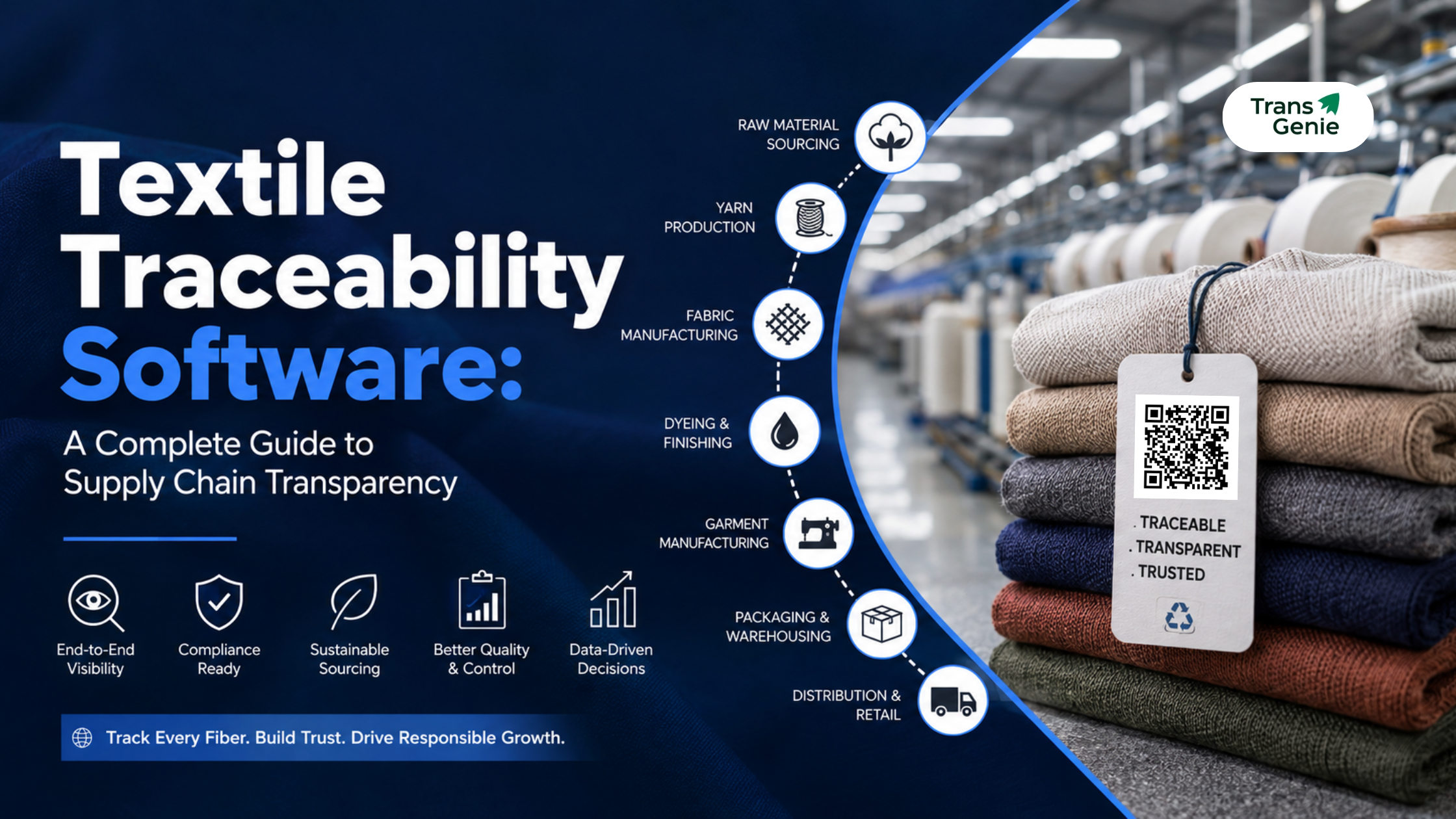
Textile traceability software creates a digital connection across the entire product journey: Raw Fiber → Spinning → Yarn → Weaving/Knitting → Dyeing & Finishing → Garment Manufacturing → Quality Inspection → Packaging → Warehouse → Distribution → Retail. At each stage, relevant information can be captured and linked to materials or products. Supplier information may be recorded during sourcing, while material quantities and batch numbers can be captured during production. Manufacturing records can then connect inputs to outputs, creating a digital chain of custody that follows the transformation and movement of materials. Data collection may include supplier details, material specifications, production records, batch information, quality results, inventory movements, shipment information, and supporting documentation. Digital lot and batch tracking provides unique identities for materials and products, allowing businesses to connect raw-material inputs with finished outputs. Digital chain-of-custody records can help document ownership, processing, movement, and transformation across multiple supply-chain stages. Technologies such as QR codes, barcodes, and RFID can further connect physical products with digital information, allowing authorized users to retrieve relevant traceability data efficiently. Together, these capabilities create a structured digital record that makes it easier to understand the history and movement of textile materials and products.
Key Features of Textile Traceability Software
Here is a shorter, professional version with a concise subtitle and one clear paragraph under each feature.
End-to-End Supply Chain Visibility
Track textile materials and products across the entire journey, from raw fiber sourcing to manufacturing, warehousing, distribution, and retail, with centralized supply-chain information.
Supplier and Material Traceability
Maintain detailed records of suppliers, material origins, sourcing locations, certifications, and material types to improve transparency and supplier accountability.
Lot and Batch Management
Assign unique identifiers to materials, yarns, fabrics, and finished products, making it easier to trace batches and connect production inputs with outputs.
Production Process Tracking
Monitor key production stages such as spinning, weaving, knitting, dyeing, finishing, and garment manufacturing while maintaining a digital record of process activities.
Quality and Inspection Management
Record quality inspections, testing results, defects, and production checks to identify issues quickly and connect quality data with specific materials or batches.
Inventory and Warehouse Traceability
Track the movement and location of raw materials, work-in-progress, and finished products across warehouses and storage facilities for improved inventory visibility.
QR Code and Barcode Tracking
Use QR codes and barcodes to digitally identify materials, batches, and finished products, enabling faster access to relevant traceability information.
Compliance and Document Management
Centralize supplier documents, certifications, material records, production data, and compliance-related documentation to support audits and information requests.
Recall and Incident Management
Quickly identify affected materials, batches, and finished products when quality or supply-chain issues occur, helping businesses investigate incidents and manage recalls more efficiently.
Real-Time Dashboards and Analytics
Use centralized dashboards to monitor supply-chain performance, production activity, inventory, batches, suppliers, and traceability data, supporting faster and more informed business decisions.
Textile Traceability Across the Supply Chain
Fiber and Raw Material Sourcing
Traceability begins with the materials used to create textile products. Businesses may need to track cotton, wool, polyester, recycled fibers, organic fibers, and other raw materials from their suppliers and sourcing locations. Recording material type, supplier information, quantities, certifications, and batch identifiers can establish the foundation for downstream traceability.
Spinning and Yarn Production
During spinning, fibers are transformed into yarn. Traceability software can connect the input fiber batches with the resulting yarn batches, production information, quantities, and quality records. This connection helps businesses understand which raw materials were used to produce particular yarns.
Weaving and Knitting
Yarn is transformed into fabric through weaving or knitting. Digital traceability can connect yarn batches to fabric production records, machine or production information, quantities, dates, and quality results. This creates a clear relationship between yarn inputs and fabric outputs.
Dyeing and Finishing
Dyeing and finishing can involve multiple processing steps that influence the final characteristics of textile materials. Traceability systems can record processing information, batch numbers, production dates, quality results, and relevant documentation, helping businesses maintain a more complete history of fabric processing.
Garment Manufacturing
During garment production, fabrics and other components are transformed into finished products. Traceability software can connect fabric batches, components, production orders, manufacturing facilities, inspection records, and finished-product identifiers. This helps brands and manufacturers understand the relationship between production inputs and finished garments.
Warehousing and Distribution
After manufacturing, products may move through multiple warehouses and logistics providers before reaching retailers or customers. Digital traceability can record inventory movements, shipment information, warehouse locations, quantities, and product identifiers, providing greater visibility into product distribution.
Retail and Consumer-Level Traceability
At the retail or consumer level, QR codes and digital product identities can provide access to selected product information. Depending on the business model and data strategy, customers may be able to view information about materials, manufacturing, certifications, or product history. This can help create greater transparency between textile businesses and their customers.
Benefits of Textile Traceability Software
Implementing digital traceability can provide significant operational and strategic benefits. Improved supply-chain transparency gives businesses greater visibility into materials, suppliers, production stages, and product movements. Better supplier accountability enables companies to maintain clearer records of supplier activities and documentation. Faster traceability and recalls can help identify affected batches and products more efficiently when quality or safety issues arise. Improved quality control allows businesses to connect inspection information with specific materials and production batches. Digital systems can also reduce manual data management by replacing fragmented spreadsheets and paper records with centralized information. Better traceability contributes to improved inventory visibility, helping teams understand where materials and products are located. It can strengthen compliance readiness by organizing relevant records and documentation, while supporting sustainability reporting through better visibility into material origins and supply-chain activities. Transparent and reliable product information can contribute to greater customer and brand trust, while centralized data and analytics enable more effective, data-driven decision-making.
Textile Traceability Software and Compliance
Traceability plays an important supporting role in the compliance and governance processes of textile organizations. Businesses may need to maintain supplier documentation, material information, certifications, production records, transaction histories, and other evidence for customer requirements, audits, or applicable regulations. Textile traceability software can centralize these records and make them easier to search, review, and report. Accurate supply-chain records help organizations understand the history of materials and products, while supplier documentation and certifications can be linked to relevant suppliers or materials. Product and material data management creates a consistent digital record, and audit readiness can be improved when information is organized and readily accessible. Digital systems can also support responses to customer and regulatory information requests. However, businesses should view traceability software as a tool that supports compliance processes and documentation, rather than as a guarantee of compliance by itself.
How to Choose the Right Textile Traceability Software
- End-to-End Traceability Capabilities
- Scalability
- Supplier Connectivity
- Integration Capabilities
- Data Security
- Reporting and Analytics
- QR, Barcode, and RFID Support
- User Experience
- Implementation and Support
Implementing Textile Traceability Software
Successful implementation begins with Step 1: mapping the existing supply chain and identifying suppliers, facilities, processes, material flows, and product movements.
Step 2: identify critical traceability data, including material origins, batch numbers, supplier information, production records, quality data, and logistics information.
Step 3: connect suppliers and partners so that required information can be collected consistently across the network.
Step 4: digitize materials, lots, and batches and establish standardized identifiers.
Step 5: integrate production and inventory data to connect physical movements with digital records.
Step 6: establish digital product identification using appropriate technologies such as QR codes, barcodes, or RFID.
Step 7: monitor traceability performance through dashboards, reports, data-quality checks, and operational metrics. Finally,
Step 8: continuously improve the system by reviewing supplier participation, data accuracy, process efficiency, and changing business requirements. A phased implementation can help organizations manage complexity and demonstrate value before expanding across the entire supply chain.
Future of Textile Traceability
The future of textile traceability will increasingly combine digital identification, connected data, automation, and intelligent analytics. AI-powered traceability can help organizations analyze large volumes of supply-chain data, identify anomalies, detect potential risks, and generate actionable insights. Digital Product Passports are expected to increase the importance of structured product information and digital product identities in relevant markets. IoT-enabled supply chains can provide additional data from connected equipment, facilities, and logistics processes, while RFID and advanced identification technologies can improve physical product tracking. Blockchain-based data sharing, where appropriate, may support specific use cases requiring shared records across multiple organizations. Real-time analytics, automated documentation, consumer-facing transparency, circular textile traceability, and data-driven sustainability management are also expected to become increasingly important. Together, these technologies can move textile traceability from basic recordkeeping toward a more intelligent and connected supply-chain information system.
How TransGenie Supports Textile Traceability
TransGenie can help textile and apparel businesses build a more connected approach to supply-chain traceability by bringing material, production, inventory, supplier, and product information into a digital traceability environment. Businesses can use the platform to connect supply-chain partners, track materials and products, manage lots and batches, digitize traceability records, monitor production and inventory, improve supply-chain visibility, support compliance documentation, and generate traceability reports. By creating connected digital records across the textile lifecycle, TransGenie can help organizations reduce information gaps and improve access to the data needed for operational control and supply-chain decision-making. The platform can also support a more structured approach to managing traceability information as businesses expand their supplier networks, product portfolios, and operational requirements.
Conclusion
Textile Traceability Software is becoming an important digital capability for businesses seeking greater transparency and control across increasingly complex textile and apparel supply chains. From fiber sourcing and spinning to fabric production, dyeing, garment manufacturing, warehousing, distribution, and retail, digital traceability can connect critical information across the product lifecycle. By replacing fragmented records with structured digital data, businesses can improve supply-chain visibility, supplier accountability, quality management, inventory awareness, sustainability documentation, and compliance readiness. As technologies such as AI, IoT, RFID, Digital Product Passports, and advanced analytics continue to evolve, textile traceability is moving toward a more connected and intelligent future. For textile manufacturers, brands, suppliers, and retailers, investing in a scalable digital traceability approach can provide the foundation for more transparent, efficient, and data-driven supply chains. With TransGenie, businesses can take the next step toward modern textile traceability and build stronger visibility from raw material to finished product.