1 Reason We Should Never Forget Our Blue Highways
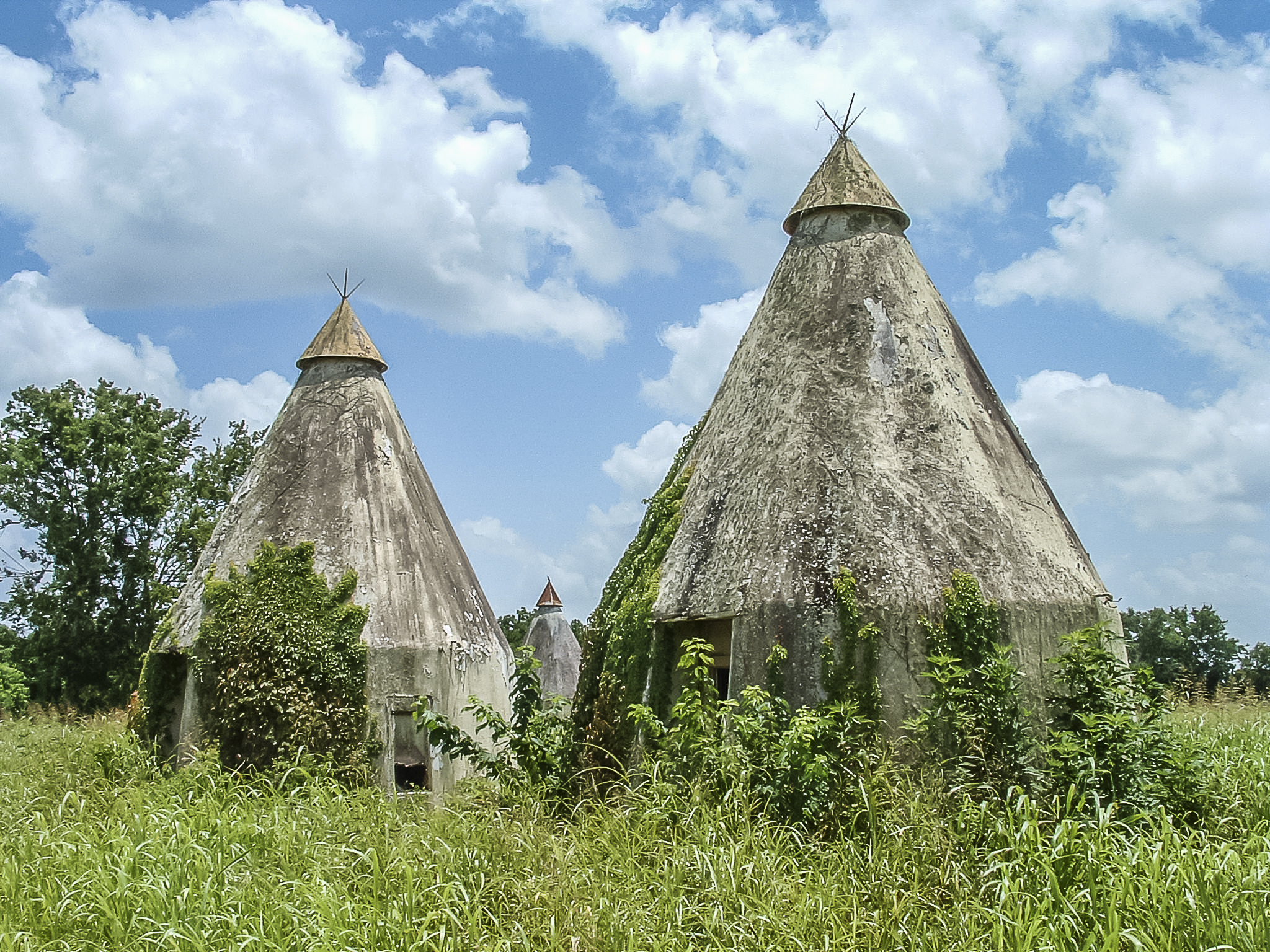
Abandoned in the 1980s, eleven concrete teepees stand as a testament to a cultural phenomenon that began crisscrossing the country in the 1930s and continued into the 1960s and early 1970s. Originally conceived in Horse Cave, Kentucky, wigwam accommodations reflected America's growing obsession with the Wild West and its developing love affair with the automobile. As it became possible for more Americans to travel the country, with the improvements to state and local highways, roadside accommodations began popping up along these thoroughfares, and as competition increased, innovative marketing strategies were needed to bring the American tourist to their door.

Originally conceived in the 1930s, a teepee-shaped restaurant welcomed the dawning of wigwam motor courts in America. Incorrectly coined, these villages were the brainchild of Frank Redford, whose original concept was patented and sold for $500 each to motel owners across the country. This new theme capitalized on tourists' fascination with the Native American culture and allowed them to experience it while on the road.
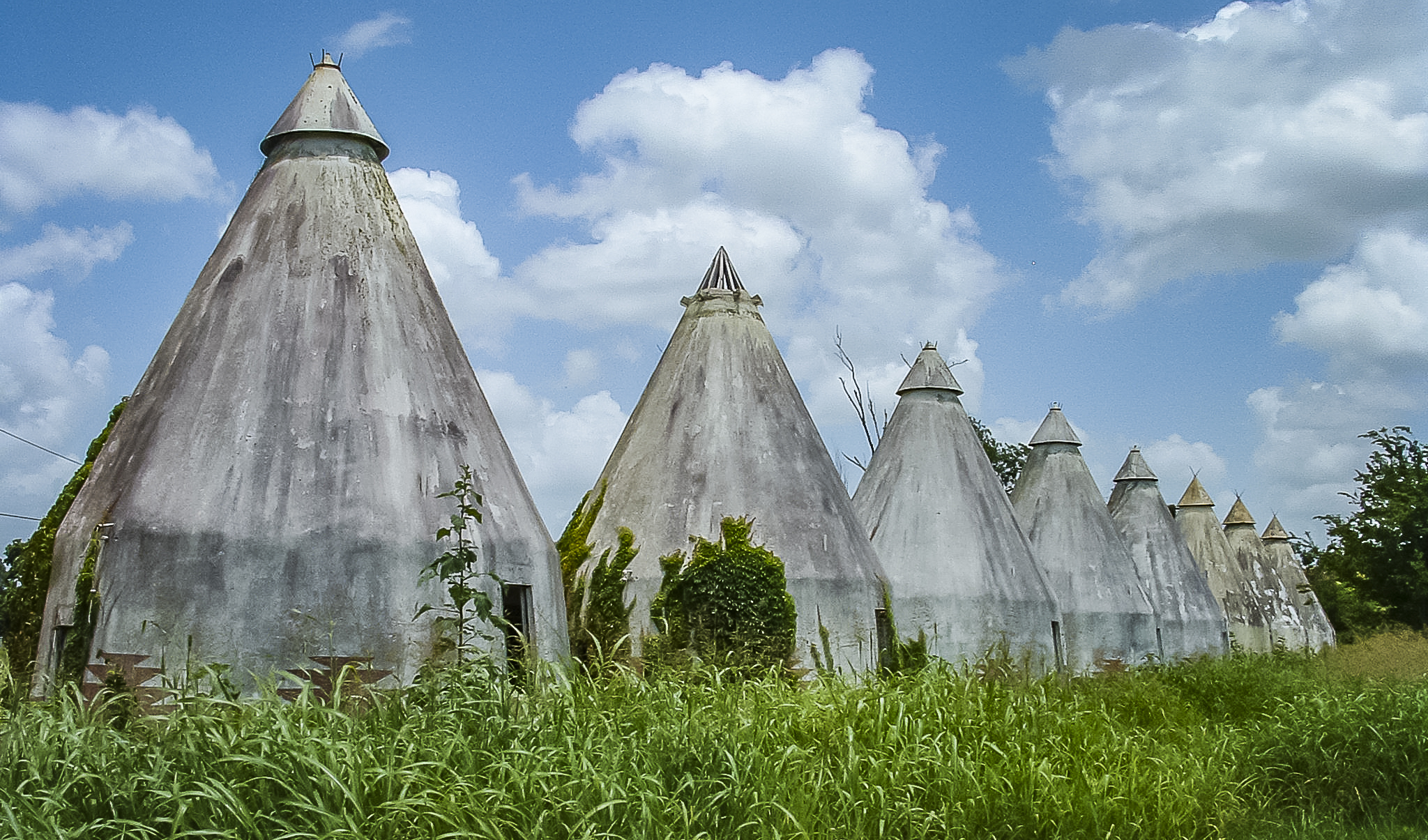
The original concept designed by Redford placed the largest teepee, office/ restaurant/ souvenir shop with gas pumps in front, with 10 -15 teepee shaped cabins circling behind. The main teepee included two smaller restroom teepees labeled "Braves" and "Squaws" along each side and all were decorated with Southwestern designs using red and white zigzag motifs painted on the inside and outside of each 10 sided teepee. Inside, the cabins offered tiled baths, hickory bark and cane furniture with Indian blankets on the bed and Indian rugs on the floor.
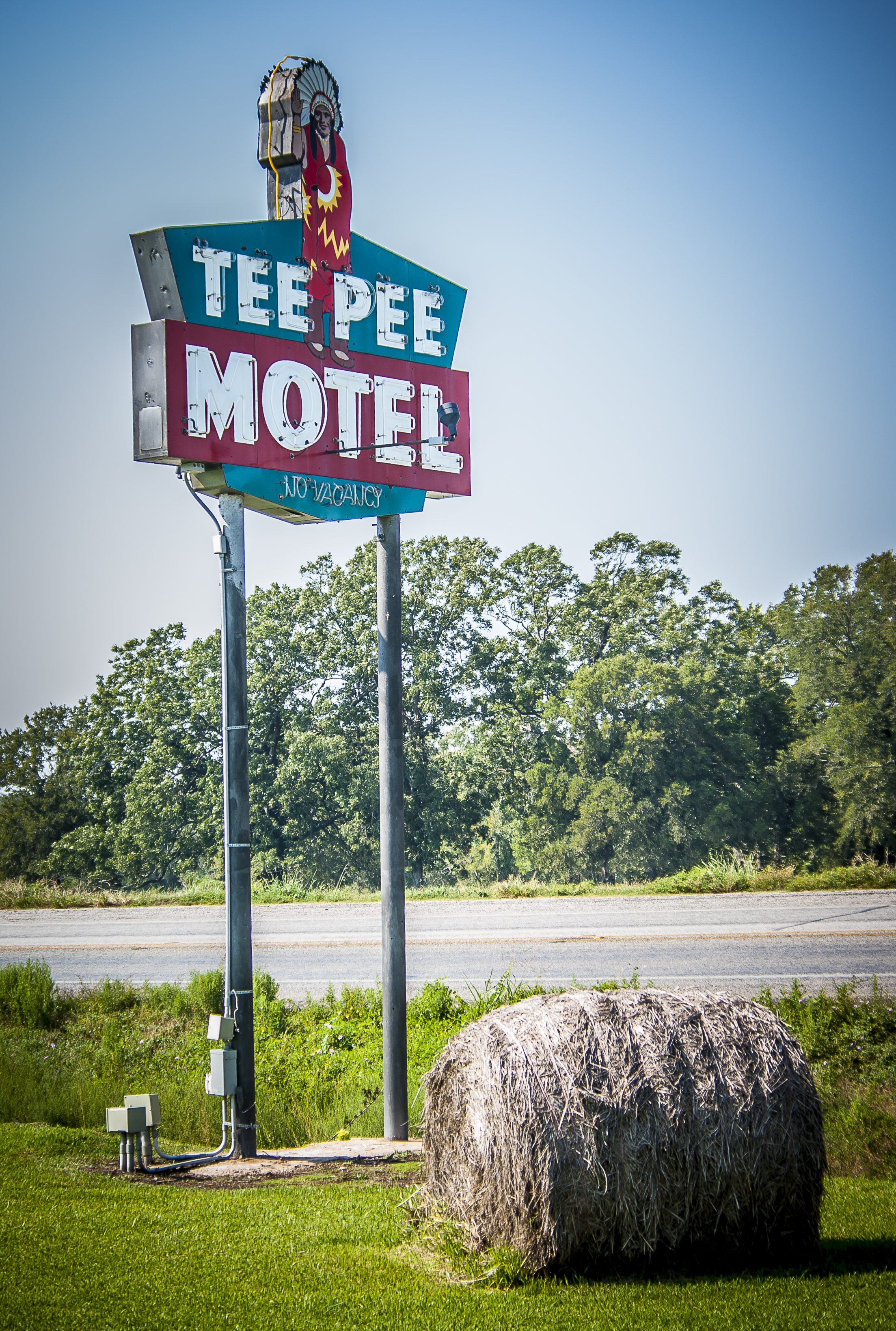
As the success of these themed motor courts grew, new, smaller chains began to appear. One lesser known chain running through Texas included the Tee Pee Courts or Tee Pee Motel which still survives as eleven units on US 59, in Wharton County. According to Joe Holley from Texas Monthly, the Tee Pee Motel was part of a small chain that had at least a dozen outposts around the country, and at one time had Texas franchises in San Antonio, Corsicana, Wharton and Port Neches.

Built-in 1937 by original owners George and Toppie Belcher, this motel was situated on 9 ¼ acres and was known as the Belcher Motor Courts. In 1942, to meet the ever-increasing national demand for wigwam accommodations stimulated by its introduction in Horse Cave, Kentucky, the Belcher's built the teepee units along with wooden carports and began charging $3.50 a night to great success.
That same year, the Belcher's changed the name from Belcher's Courts to Tee Pee Courts and finally to the TeePee Motel. At the time, it was considered one of the finest motels in Wharton County. The Belchers maintained the property until 1955 when it was finally sold. For the next thirty years, the TeePee Motel exchanged hands numerous times until 1985 when it was owned by Tom Carlson of Wharton, Texas. As newer more developed highways lead tourists away from this rural area, and as property taxes mounted, Carlson abandoned the property and allowed it to sit empty rotting in the Texas sun. By the mid-nineties, it was the last teepee motel in the state, and the aging concrete structures, though still intact, had fallen into disrepair.
With the demise of many of the blue highways as major thoroughfares, and as newer motels/ hotels began offering more amenities, these older, smaller, less well kept, and now less convenient motels became less appealing. Americans having more expendable income, and the ability to travel expected more than a flashy decor lead to the eventual decline of the themed motor courts on American's rural roads.
In its heyday, each of the 11 teepee units consisted of a bedroom and separate bathroom with shower stall, closet and toilet. The hand towels and pillowcases were each embroidered with scenes of ponies and headdresses. The exterior of each teepee was constructed of 13 sides painted with Native American designs. Although the exteriors are in decent shape the interiors were in ruin.
Gone are the wooden carports that used to complement the individual teepees but some still had faded red Native American designs. Still, even though the facility was infested with rodents, covered with native vines and weeds, the TeePee Motel still attracted considerable attention.
Beginning in the 1990s, roadside architecture began to develop a cult following and many of the abandoned sites started experiencing a revival of sorts. The Tee Pee Motel, a wonderful piece of Americana, was well positioned for its own revival even in its decrepit state. This site was considered by many of its devotees as having significant historic value worthy of restoration so that future generations could experience the same nostalgia as they had in the past. When filmmaker Adrian Lyne chose this location for inclusion in his 1995 remake of 'Lolita,' its revival seemed imminent. It was during this time the first 7 teepees were repainted to look new. Shortly afterward Lee and Debbie Van Winkle, from Sugarland, Texas, purchased the motel and acreage at a tax auction for $23,000. The Van Winkles planned to restore the facility to its original splendor, but difficulties with adjoining landowners caused them to rethink their plans. They eventually abandoned the restoration.

The Van Winkles eventually sold the motel to Wortham Smith, a local real estate investor and developer. Smith wanted to renovate the facilities as well, but he too abandoned his plans. Smith went as far as to research the possibility of moving the units to a new location but changed his mind due to its expense. Up until 2004, nothing had come to pass and the teepees remained sweltering in the hot Texas sun, eventually leading to the motel office being torn down due to its poor condition. In 2005, new investors decided to give new life to the remaining structures. This time Harrison Realtor had placed the property with 7 acres fronting Business 59 on auction for $59,950. Thankfully this treasured space was purchased, and a valuable piece of roadside Americana was kept alive.
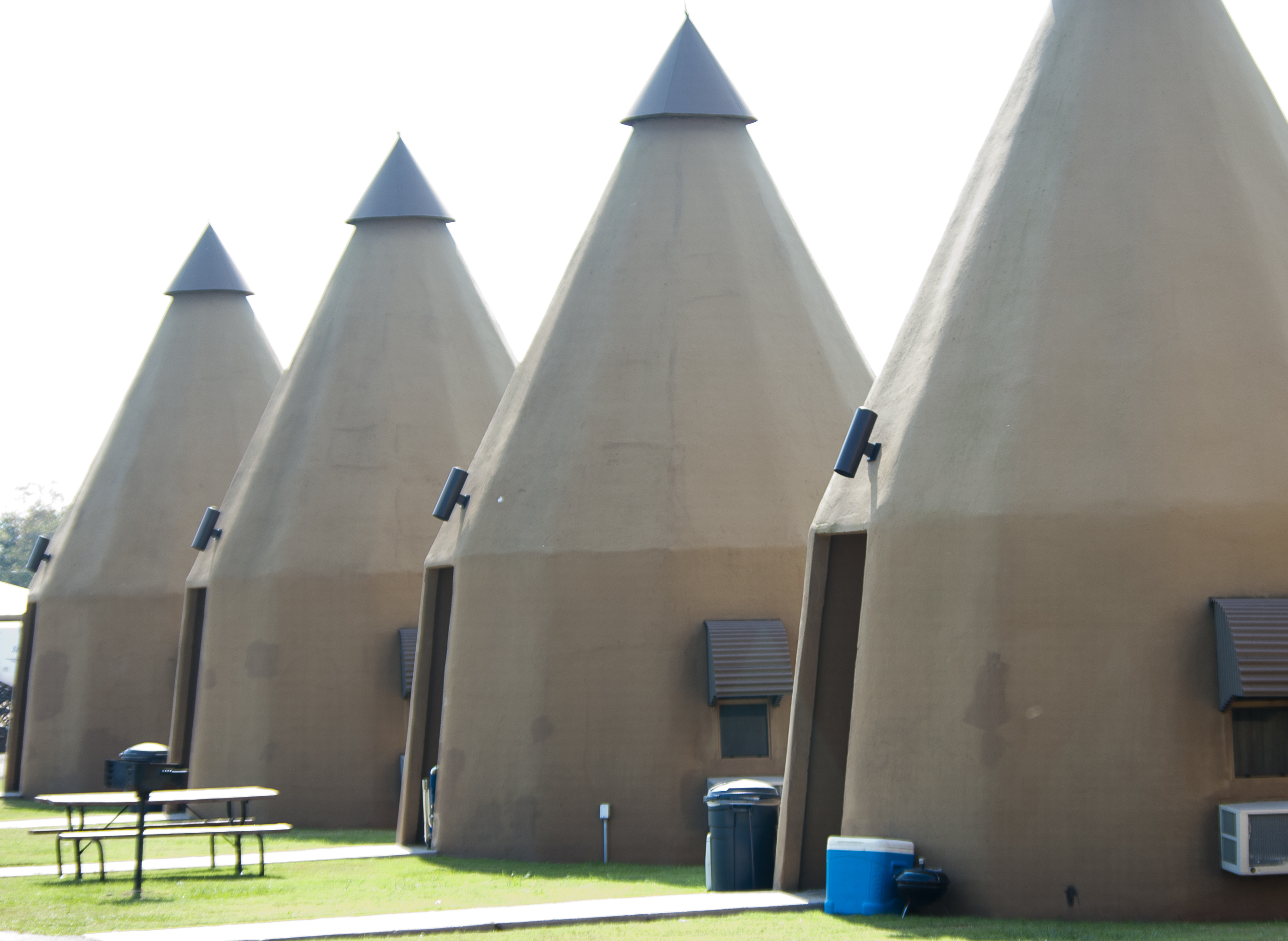
The thought that a historic property such as the Tee Pee Motel could be demolished is quite unsettling. In an age of Wal-Mart superstores, all you can eat buffets and generic super-fast foods, losing one unique piece of Americana is like losing one piece of our heritage. As more and more Americans start their own renewal along the forgotten blue highways of rural America, these roadside attractions are becoming relevant once again. As society looks to its past for signs of simpler days, these sites help them relive what they feel our country has lost. The age when families traveled together and when fun was found in the wonder of our own imagination.

For more information - Tee Pee Motel
Thank you for sharing this story and history. I really enjoyed reading. I've driven the cross country route from CA to NY a few times now, and almost all times I went the southern route. My grandparents (originally from OK) were really excited for me to drive it and I couldn't really figure out why until I got down to the historic Route 66. I saw remnants of its heyday, including a few decaying novelty teepees. It made me feel nostalgic for the times you described: the age when families traveled together. It's interesting I felt sad about their decay when I never experienced them in glory. I found myself stopping just to take pictures of old hotel signs and abandoned cafes. I'm glad your teepees had a positive ending, after changing hands so many times it really makes me happy that they will be restored!
Thanks again for checking out my work. I do appreciate the support.
Hi! I am a robot. I just upvoted you! I found similar content that readers might be interested in:
http://www.liquidtravel.org/Blog/Joys-of-the-Road-Less-Traveled
yeap, that is my website.
good post
Thanks so much @dirkzett-english for your support. I do appreciate it.
Congratulations, Your Post Has Been Added To The Steemit Worldmap!
Author link: http://steemitworldmap.com?author=liquidtravel
Post link: http://steemitworldmap.com?post=1-reason-we-should-never-forget-the-blue-highways
Want to have your post on the map too?
@Originalworks