Driving at Night in Fes: Is It Safe, and Which Roads Should You Avoid?
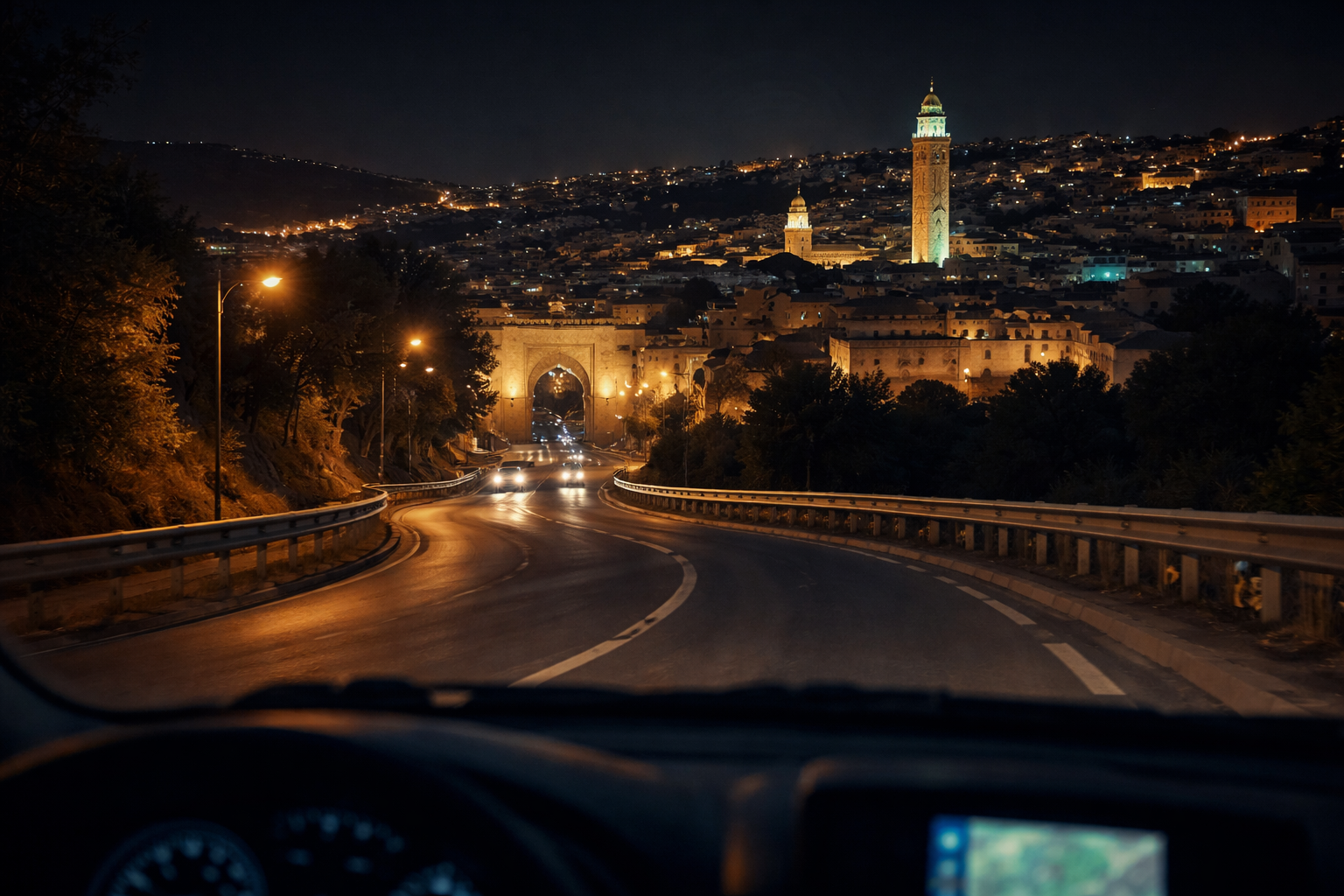
Night driving in Fes can be safe, but only if you understand what changes after dark. The city has a mix of well-lit boulevards and older, narrower streets where lighting is uneven, signage is harder to read, and “unexpected movement” becomes more common. The real question is not whether night driving is safe in a general sense, it’s whether your route, your timing, and your driving habits match the visibility you’ll have.
This guide gives you the practical reality for 2026: what feels different at night, which road types usually cause the most stress, and how to plan your trip so you avoid the routes that make visitors uncomfortable. If you want to browse vehicle options that fit nighttime driving comfort while you read, start with car rental Fes and then compare value-focused categories like cheap car rental or premium comfort options via luxury car hire Fes.
1) Is it safe to drive at night in Fes?
For most visitors, the honest answer is: yes, it can be safe, especially on main roads and newer boulevards—provided you drive conservatively and plan your route. The biggest risk factor at night in Fes is not “crime on the road.” It’s visibility and unpredictability: darker stretches, scooters that appear quickly, pedestrians crossing where you don’t expect them, and the occasional poorly lit vehicle in mixed traffic.
Fes has areas where night driving feels straightforward and modern. The Ville Nouvelle and major connecting roads can feel normal, with wider lanes, consistent street lighting, and a driving rhythm that’s easier to read. What changes the safety feeling is when you leave these zones and enter streets that are narrower, darker, more irregular, or closer to medina edges where navigation is less forgiving.
If you’re a confident urban driver and you stay on main roads, night driving is usually manageable. If you’re tired from travel, unfamiliar with the city, or heading into narrow areas, it’s wiser to reduce the complexity: choose a simpler route, avoid tight access roads, and arrive earlier when possible.
2) What gets harder after dark: lighting, signage, and “surprise movement”
The first difference is lighting consistency. Some streets are well-lit and then suddenly drop into dimmer segments. When lighting changes mid-route, drivers often keep the same speed, and that’s where problems begin. Night safety improves dramatically when your speed matches your headlight range, not your confidence.
Signage becomes harder to process quickly at night, especially if you’re relying on last-second lane changes. In daylight, you can “read the road” from farther away. At night, you have less time to interpret signs, so you want routes that keep you in predictable lanes with fewer sudden decisions. That’s one reason visitors feel more comfortable sticking to major boulevards and avoiding dense inner streets unless they’ve driven the route in daylight.
The second difference is movement. In busy zones, pedestrians and scooters are part of the normal rhythm, but at night they can appear more suddenly because you see them later. This doesn’t mean you should avoid night driving; it means you should create space: longer following distances, slower turns, and less aggressive lane changes.
3) Which roads should you avoid at night in Fes?
“Avoid” doesn’t mean “never.” It means these road types are the ones most likely to create stress for visitors after dark. The first category is narrow streets near medina access points and older neighborhoods where lanes tighten, parking spills into the roadway, and navigation relies on quick turns. At night, these streets can feel confusing because lighting and visual cues are weaker. If your accommodation is near the medina, consider parking at the edge and walking rather than attempting to drive deep into narrow streets.
The second category is poorly lit rural connectors outside the city if you’re not familiar with them. These roads can be perfectly fine in daylight, but at night they can have limited shoulder space, fewer reflective markings, and occasional slow-moving vehicles. If you’re heading toward countryside areas or small villages, it’s safer to take more predictable routes and avoid “shortcut roads” suggested by navigation apps.
The third category is any route that forces rapid lane changes close to complex junctions when you’re unfamiliar with the area. At night, last-second decisions are riskier because you see signs later. Choose routes that give you more time to position, even if they add a few minutes.
A practical strategy is to drive your intended route once in daylight if you know you’ll return at night. Familiarity is one of the best safety multipliers.
4) Speed controls and enforcement: why “quiet roads” can tempt you
Many drivers speed more at night because the road feels empty. That’s a mistake in Fes for two reasons. First, empty roads can hide surprise movement, pedestrians, scooters, animals on the outskirts, because your eyes assume nothing will appear. Second, speed enforcement can still exist after dark, and lighter traffic can make your speed more noticeable. The safest approach is steady, conservative pacing and smooth driving rather than bursts of speed.
If you’re returning late from a day trip, fatigue becomes a bigger factor than people admit. Fatigue plus darkness is a poor combination. A calm plan is to leave earlier, build margin into the return, or stay overnight closer to your destination rather than driving tired.
5) Safer night driving habits in Fes (simple, real-world)
The safest habits are the boring ones that work every time. Before you drive, clean your windshield inside and out. Dust and film can create glare that makes streetlights and headlights feel harsher. Make sure your headlights are fully on (not only daytime running lights), and set up navigation before you move so you aren’t looking down at your phone during complex junctions.
While driving, keep your speed within your headlight range and increase following distance. Brake early rather than late. If a faster driver wants to pass, let them pass safely instead of matching their pace. The goal is predictability, not competition. When approaching roundabouts or intersections, reduce speed early and scan for scooters that may appear from angles you don’t expect.
Finally, plan your arrival. A large part of “night driving stress” is parking stress. Decide where you will park before you enter tight streets. If your destination is near a narrow zone, choose a parking option outside and walk the final minutes. That single choice removes the hardest part of night driving in Fes.
6) Choosing the right car for night comfort in Fes
Any safe car can be driven at night, but comfort and confidence matter. If you’ll do a lot of night driving, a car with strong headlights and a stable ride can make the experience feel easier. That doesn’t mean you need a large vehicle. In Fes, compact cars are often easier because parking and tight streets favor smaller sizes. If your priority is strict value for simple city driving, comparing cheap car rental categories can be a smart start.
If you want a quieter cabin and smoother ride for longer routes, premium options can improve comfort. If that matters to you, explore luxury car hire Fes categories and choose a vehicle that reduces fatigue. Comfort doesn’t replace safe habits, but it can reduce stress and improve focus.
For browsing availability and matching the right car to your plan, start from car rental Fes and filter based on where you’ll drive and how often you’ll be on the road after dark.
Quick answers
Is it safe to drive at night in Fes? It can be safe on main roads when you drive conservatively and avoid narrow, confusing streets near medina access points. Which roads should I avoid? Avoid tight medina-edge streets you don’t know, poorly lit rural shortcuts, and routes that force last-second lane changes at complex junctions. What is the best way to reduce risk? Drive slower, keep more distance, plan parking in advance, and avoid driving when tired.
Night driving in Fes is most comfortable when you keep the plan simple: stay on predictable roads, reduce speed where lighting drops, and avoid unfamiliar narrow streets near medina edges. The goal is not to “avoid driving at night” but to avoid the road types that make night driving unnecessarily stressful. If you’re choosing a vehicle for your trip, start with car rental Fes, compare budget options through cheap car rental, and consider comfort-focused upgrades with luxury car hire Fes if you plan longer night routes.