The Difference Between Template and Custom TYPO3 Projects – T3Karma
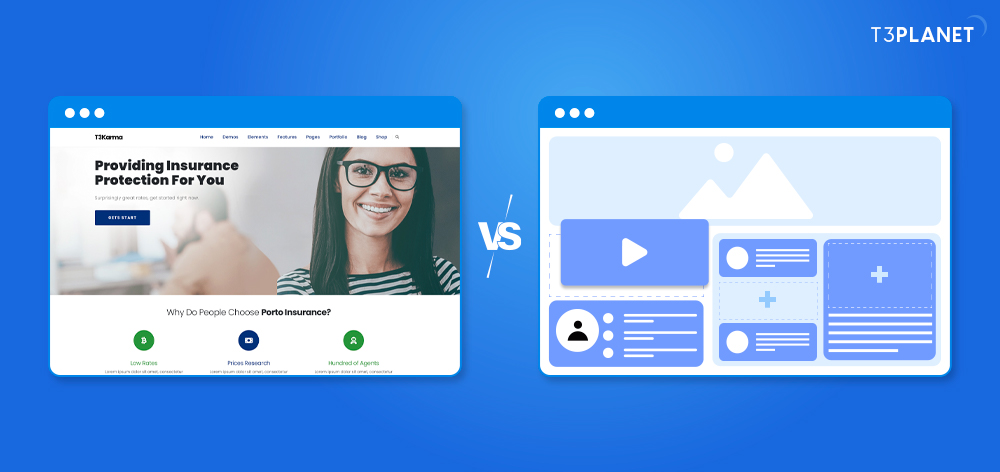
Choosing between Template-Based TYPO3 Projects vs Custom Development must be done with future scalability in mind. Templates are quick, while custom development offers more control. A method like T3Karma must be used to reduce risks while ensuring flexibility.
Who Benefits from This Comparison?
This is for TYPO3 teams who:
- Work on multiple projects with similar requirements
- Want to speed up delivery while planning for future updates
- Need to balance flexibility for developers with ease for editors
- Plan for long-term upgrades rather than one-off builds
When Is Custom Development the Best Option?
Custom development works best for:
- Projects that require unique designs or advanced interactions
- When specific business logic or integrations are needed
- Building performance-critical features that can't be achieved with templates
Challenges with custom development:
- Ongoing changes take significant developer time
- Maintenance and upgrades can become more complex
- Knowledge may be restricted to a few developers
Common Issues with Template‑Only Solutions
While templates can speed up development, they come with challenges when not used properly:
- Templates that cover too many use cases can become difficult to manage
- Editors may be constrained by too few or too many choices
- Tightly coupling design and logic can make future upgrades more complicated
Benefits of a Structured Template Approach
A balanced template system provides a middle ground by:
Standardising Layouts and Design
- Creates reusable patterns that ensure consistency across projects
- Saves time by avoiding repeated design work
- Makes it easier for both developers and content editors
Minimising Redundancy
- Shared components reduce frontend and configuration time
- Custom development is only required for specific needs
- Helps avoid repetition in different projects
Streamlined Workflow
- Predefined content elements keep editors on track
- Prevents unsupported or inconsistent designs
- Reduces the chances of errors and support requests
Separating Content and Structure
- Keeps content separate from layout logic
- Makes future upgrades easier and faster
- Ensures long-term consistency
The Impact on Long-Term Maintenance and Upgrades
As TYPO3 projects evolve:
- Custom code requires frequent updates to stay compatible with new TYPO3 versions
- Over-customised templates can complicate ongoing maintenance
- A structured approach simplifies upgrades and reduces long-term effort
Conclusion
Deciding between template-based and custom development depends on the project’s needs and future goals. A structured template approach is ideal for teams with recurring projects that require consistency and easy maintenance, while custom development remains the best choice for highly specific or performance-critical features.