Charente: A French Region Built from Stone, Vineyards and River Time
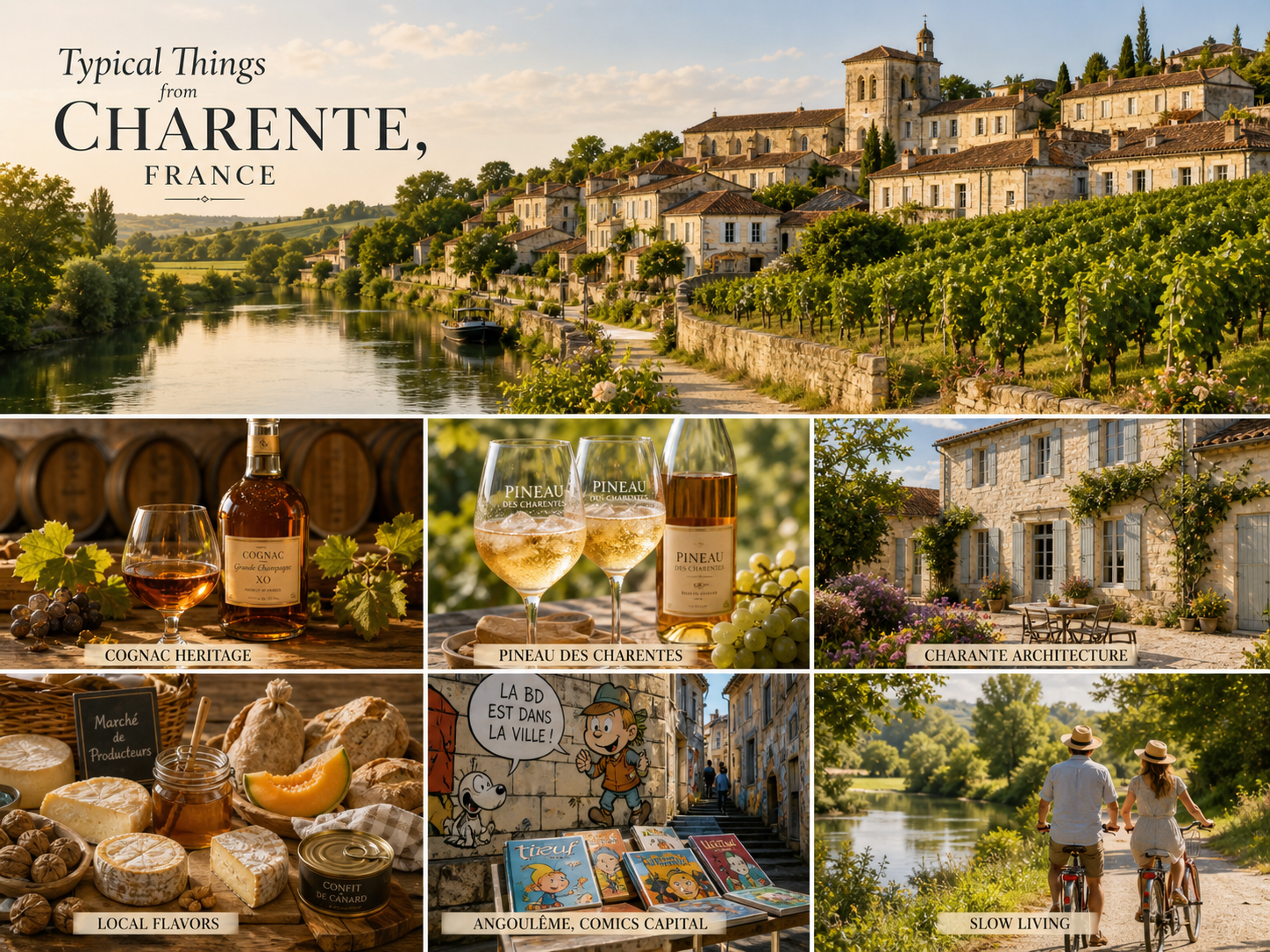
Charente has a quiet type of identity that becomes clearer when you look at how the region is used in daily life. In this part of Nouvelle-Aquitaine, the landscape is not only decorative; it produces Cognac, shapes riverside towns, supplies markets, and gives villages their pale limestone character. The result is a destination where heritage is practical, visible and still connected to ordinary routines.
This is why Charente suits travellers who like to understand a place through details rather than checklists. A morning can begin with a market basket of walnuts, cheese and bread, continue along the Charente River, and end near vineyards where distillation and barrel ageing are part of the local vocabulary. The region’s appeal is calm, but it is not empty: it is filled with craft, food, architecture and measured movement.
The Local Identity of Charente
Cognac is the most famous product connected with Charente, and its importance is technical as well as cultural. The process begins with grapes, continues through distillation, and develops through long ageing in oak barrels. Oak matters because it affects colour, aroma and texture; cellars matter because they control the environment where the spirit matures. Around Cognac, this heritage is visible in vineyard roads, historic houses, tasting rooms and production buildings.
Pineau des Charentes is another local speciality with a different purpose. It combines grape must with Cognac eau-de-vie, creating a fortified drink often served chilled before a meal. White, rosé and red versions give it flexibility for aperitifs, family tables and village gatherings. Its value is not only flavour; it shows how the region uses the same viticultural base to create a drink with a lighter social role.
What Visitors Notice in the Landscape
The built environment of Charente is one of its strongest visual signatures. Many traditional homes use light limestone, which reflects sunlight and gives façades a warm, almost golden surface. Wooden shutters, tiled roofs, barns, inner courtyards and walled gardens are common because they fit the climate and agricultural past. These elements make villages feel coherent without needing artificial styling.
Accommodation can strengthen that sense of place when it respects the original structure of the region. Restored houses with oak beams, stone walls, large rooms and preserved furniture help visitors experience Charente through real materials, not imitation décor. For travellers comparing private stays near Cognac, villas in charente can offer the useful combination of privacy, architectural character and access to vineyards, markets and riverside towns.
The Charente River adds movement to the department without creating rush. It passes through Angoulême, Jarnac and Cognac, giving each town a relationship with water, bridges and banks. Walking, cycling, boating and fishing are practical activities here because the river creates natural routes. Instead of pushing visitors from one attraction to another, it lets them follow a slower line through the landscape.
-
Cognac connects vineyards, distillation, oak barrels and regional trade.
-
Pineau des Charentes reflects local grape culture in an aperitif format.
-
Limestone villages show how native materials define architecture.
-
The Charente River supports gentle travel by foot, bicycle and boat.
-
Local markets bring together honey, walnuts, melons, cheese, duck products, vegetables and pastries.
-
Angoulême adds comics, murals, ramparts and urban culture to the rural setting.
Food in Charente is based on clear ingredients rather than complicated presentation. Market stalls often show what is seasonal and useful: fresh vegetables, regional wines, bread, pastries, local cheeses, honey and duck products. Because the Atlantic coast is within reach, seafood and oysters also fit naturally into meals. This gives the department a practical advantage for travellers who want both inland produce and coastal freshness.
Angoulême gives the region another dimension. Known for comic culture, murals and historic streets, the city brings a creative layer to Charente’s image. Its ramparts and cultural spaces contrast with vineyards and small villages, making it a good stop for visitors who want more than rural scenery. The department therefore works as a balanced itinerary: river, cellar, market, village and city can all be combined without long transfers.
A Place That Rewards Slower Attention
Charente is memorable because its typical things are connected to one another. Cognac relies on vineyards and oak; villages rely on limestone and traditional building methods; food culture relies on markets and nearby producers; river life relies on paths, banks and small towns. Nothing feels isolated. Each part explains another part, which makes the region satisfying for travellers who enjoy context.
The Value of Staying Close to the Region’s Rhythm
The strongest reason to spend time in Charente is the way it turns ordinary actions into place-based experiences. Buying bread, crossing a river bridge, sitting in a stone courtyard, tasting Pineau, visiting Cognac, or noticing the temperature inside thick limestone walls all reveal something specific. Charente is not loud, but it is precise. Its charm comes from preserved materials, local drinks, useful traditions and a pace that allows the landscape to be understood rather than consumed.